
Music Theory
-

Allegro, adagio, forte, piano: anyone who has ever opened a recorder or piano book knows them. Musical terms are Italian, and they have been for centuries. Italy led the way in music history for long enough to turn its language into the language of music, and once a standard works, nobody is in a hurry to replace it. Even composers who tried using their own language couldn’t get rid of the Italian.
-

Guest blogger Iris Siemons writes songs for both herself and for other artists and, for a long time, she just didn’t see the point in learning anything about music theory. Why learn to read notes when you can just record them and then listen back? Now that she’s a little older and a little wiser, her eyes have been opened to the beauty of music theory; how it can not only help you to become a better musician and how it can actually serve as a really helpful tool for your writing practice. Basically, music theory is about far more than just reading music.
Comments Off on Music Theory: Is it Really Worth it? | in: Guest Blogs, Miscellaneous, Music Theory, Musician -
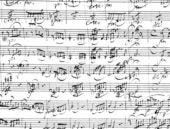
While the composer shapes the contours of the central melody and chords, it’s the arranger who, using countless tricks, colours everything in. What kind of technical colours does the arranger have in their tool box and what can you do to make even the most beautiful song even more beautiful?
Comments Off on Arranging Music: What is it and What Do You Need to Look Out For? | in: Music Theory, Songwriting & Composing -
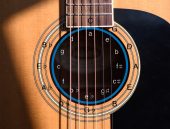
Since he once struggled to grasp music theory himself, guest-blogger Lode Habex knows exactly how to help out beginners. In this article, Lode breaks down the circle of fifths and explains why it’s one of the most practical tools that musicians can use to match scales, find notes, create chord progressions, and more.
Comments Off on The Circle of Fifths: Every Musician’s Best Friend | in: Guest Blogs, Music Theory, Musician -

In previous blogs on chord theory, we covered all the most common chords so, to make the series complete, this edition will dive into a few more special, out-there chords, including minor-majors (mΔ), augmented sevenths (+7) and diminished triads with major sevenths (oΔ). These chords are often used as transitions, so they’re definitely worth knowing about, even if they are extremely rare.
-

Digital sheet music. YouTube lessons. Guitar tab sites. Today, it’s easier than ever to learn to play a new song you’ve just discovered. This is incredibly convenient of course, especially for beginner musicians. But it also has a downside. Having access to all those great resources has made it easier than ever to neglect an important skill: figuring out music by ear. StringKick founder Just Rijna explains how learning music by ear will help you to grow as a musician.
Comments Off on How to Become a Better Musician by Figuring Out Music by Ear | in: Guest Blogs, Music Theory, Musician -

In this blog, we’re going to focus on two scales that provide an endless supply of transition tools. These magic scales are the octatonic and altered scales, and while you won’t come across them in much popular music, these scales are compulsory reading for any jazz, blues, or progressive pop and rock musicians looking for a fresh approach.
-

In this blog, you’ll get a full explainer on how to transpose musical score. Transposing basically means shifting the notes of a piece of music up or down by a semitone or more so it can be played in a different pitch. Of course, there’s plenty of software you can use to transpose sheet music, but you learn way more when you do it yourself. And, since you can pull it off in three steps, why wouldn’t you? Is it easy? Well, not at first, but if you take your time and follow these instructions, then you’ll definitely be able to do it. We’ll take a look at transposing with software; with nothing more than pen and paper; and even transposing on the spot while you’re playing. We’ll also look at how to pitch-shift audio files.
-

Do you get irked whenever you hear a successful producer proclaim: “and I didn’t even know any music theory”? Say they’re telling the truth (usually, it’s far from the truth), so what? Not everyone is going to be a natural, and just think, how good would those same producers be if they had bothered to learn music theory. Right here, right now, Guestblogger Daddynervs tells us why every producer, even humble beat producers, should arm themselves with some good old fashioned music theory – and what music theory actually is.
Comments Off on Why Every (Beat) Producer Needs to Know Music Theory | in: Guest Blogs, Music Theory, Studio & Recording -

If you’ve already devoured our blog about Rhythm, Tempo & Measure and feel ready to dive in a little deeper, here’s everything you need to know about time signatures, bar lines and repeat signs. Whether you’re here to learn to read music or just want to get a better feel for timing, you’ll find useful information here.
2 responses | in: Music Theory -

The internet is already stacked with the ready-made chord arrangements of countless songs, but what if you can’t find the song you’re looking for? No problem. There are also apps that you can download and use to pick out the right chords for you. But… regularly figuring out the chords of a song is actually a far better idea. Why? Because it’s a great opportunity to train your ear. In this blog, we explain how it’s done and how to use lead sheets.
-

In our blog explaining how chords work, we already touched on the diminished, augmented, and seventh chords. Here, we dive a little deeper into the inner workings of these chords and their function, covering everything from a normal seventh chord (the dominant seventh), to minor sevenths and major sevenths, and the difference between a diminished and half-diminished chord. We’ll also explain terms like ‘diatonic’, ‘modal’, and ‘enharmonic’, setting you up with a bank of knowledge to help you get writing.