
Live Sound
-

An acoustic guitar amp or a small PA: as a singer-songwriter, you’ll run into that question as soon as the living-room gig becomes a pub gig. For a long time I played with a combo on a bar stool behind me, and later I had a column PA in the boot. In short: the combo wins as long as you’re on your own in a small venue, and the PA wins as soon as there’s more going on on stage.
-

For years I sang with a cable attached to my microphone and never gave a wireless mic a second thought. Until the guitarist in my band suddenly turned up to rehearsal without a cable. I thought: if he can do it, so can I. Still, there’s plenty to be said for a wired connection. Let’s look at the pros and cons.
-
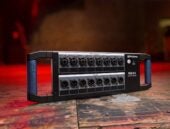
Audio over a network cable. When I first read about it, I thought: great for the big boys with a lorry full of flight cases, but not for me. I know better now. An audio network like Dante swaps that back-breaking multicore for the same little cable that sits behind your router, and that’s simply a smart move, even for a pub band or a village church.
-
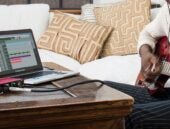
Lots of audio interfaces and mixers have an input labelled Hi-Z, Inst or with a little guitar icon next to it. So what’s it for? In short: a Hi-Z input is designed for the high-impedance signal of an electric guitar or bass, so it comes through clear and bright when you plug straight in. Plug your guitar in anywhere else and you’ll hear the difference straight away.
-

Mic in hand and off you go. How hard can it be? Yet you can instantly hear the difference between a singer who understands their microphone and one who’s just holding it. Good microphone technique on stage comes down to two things: where you point the microphone and how close you are to it. Master those two and you’ll sound fuller, and feedback will get less of a look-in.
-

Bax Music has a wide range of microphones in its catalogue. On the microphone product pages in the webshop you’ll find a list of specifications, which we’re going to take a closer look at. To understand what these specs actually mean, we need to start with the basics.
-
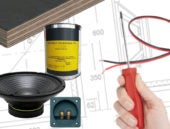
Imagine this: you’ve got some time on your hands, you’ve got some materials and tools lying around, it’s absolutely chucking it down, and you’ve got a little workshop where you can get stuck in. Then suddenly you think: “I’m going to build my own speakers!” We’ll help you get started.
No responses | in: Live Sound -
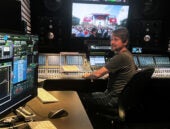
The music you hear on television sounds so good because it’s been carefully recorded and mixed. While you enjoy the beautiful sound, a lot of work is happening behind the scenes to translate that audio as well as possible to different sound systems. Who makes sure a concert sounds its best on your system at home? One of the people responsible is the broadcast audio engineer. In this blog, we take a look behind the scenes with an experienced audio engineer, as he guides us through his fascinating work.
-

You’ve been DJing at home every evening for a year on the DJ controller you bought from Bax Music. And then, suddenly, the question comes up: “Will you DJ at our party?” Even more exciting: they expect you to provide the sound and lighting yourself. Uh-oh… what kind of setup do you need, and how do you prepare? Luckily, you don’t have to reinvent the wheel. Bax Music points you in the right direction with 7 golden rules for the beginner mobile DJ.
-

You play live shows or mix music in a studio. And your big wish is for your speakers to sound deeper: more bass! So now you reckon it’s time for a subwoofer (or two). Not a bad idea. Only… how do you connect one? We’ll explain.
-

Naturally, everything has to be perfect when it comes to wedding parties. This includes the toast, the speeches given by best men and women, and of course the music — in other words, the sound system on location has to be up to snuff. Not sure what you need or where to start? No worries, wedding DJ Sebastian is here to give you some pointers and a couple of recommendations.
-
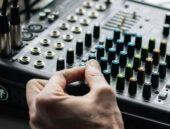
The Bax Music Helpdesk gets asked a lot of questions about everything and anything, and some them can be pretty nuts, but one of the most common questions is how to tune up a mixer, a set of speakers and an amplifier so they all work in harmony with each other and, above all, you give you stonking good sound. To help all you music-devotees get more out of your system, our canny experts explain everything in one neat blog.
No responses | in: Live Sound