
Studio & Recording
-
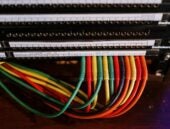
A patchbay brings all the inputs and outputs of your studio gear together on a single panel at the front of your rack, so you can use short cables to decide which signal goes where. It sounds like something reserved for big studios, but as soon as you combine a few pieces of outboard, a synth or two and a small interface, a panel like this quickly pays for itself in time saved and frustration avoided.
-

How many keys you need doesn’t depend on how good you are, but on what you want to do with them. A producer recording basslines will get by fine with a couple of octaves, whereas someone learning the piano will hit a wall within a few months. In between lies a whole range of options, and each size suits its own kind of musician.
-

Studio monitors in the living room: is that allowed? I regularly get this question from friends who are torn between a set of active monitors and a pair of bookshelf speakers. My answer: it can work perfectly well, as long as you understand that a monitor is designed to be honest and a hi-fi speaker is designed to sound beautiful, and that you need to be the kind of listener who suits that. The rest comes down to setup, budget and taste.
-

Large diaphragm or small diaphragm: it’s the first choice you face when you’re looking for a condenser microphone. The chunky ‘side-address mic’ and the ‘slim pencil’ work in the same way, but the size of the diaphragm determines what they’re good at. The large diaphragm captures quiet sources better and sounds a little fuller in the low end; the small one is better for sound arriving from the side and for stereo. That said, the difference is smaller than you might think.
-

Lots of audio interfaces and mixers have an input labelled Hi-Z, Inst or with a little guitar icon next to it. So what’s it for? In short: a Hi-Z input is designed for the high-impedance signal of an electric guitar or bass, so it comes through clear and bright when you plug straight in. Plug your guitar in anywhere else and you’ll hear the difference straight away.
-

The Arturia KeyStep isn’t a keyboard with built-in sounds, but a MIDI controller that you connect to your computer, synthesizer or modular gear. The original appeared around 2016, and it was an instant hit: affordable keyboards with both MIDI and CV output were scarce at the time. Since then, the range has grown with new models and MK2 versions. So what do you choose: KeyStep or KeyStep 37? MK1 or MK2? What’s the difference with the -Lab series and the BeatStep? Let’s take a look.
-
Stems – this music format from Native Instruments is sometimes called ‘the future of DJing’. Especially at launch, three years ago now. Still, our DJ and studio expert Marc van den Hurk gets the feeling the concept hasn’t quite broken through. A shame, he thinks, because it has so many possibilities! But is that really the case? And does it actually have a future? Marc takes you into the world of Stems!
-
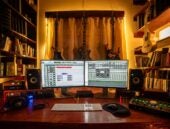
You open a laptop, click a button and start recording a track. That sounds like the most natural thing in the world, but behind that simple action lies fifty years of technological leaps. How did digital recording and MIDI come together in the device now sitting on your desk? This is the story of two developments that began separately and eventually became completely intertwined.
-
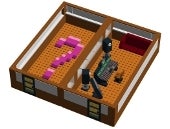
On the technological side of the glass, everything is properly sorted. A sizeable mixing console, a couple of vintage valve amps, high-end studio monitors and a solid PC running DAW software. You’re ready to have a performer on the other side of the glass sing or play into that equally expensive microphone. Right?
-

Bax Music has a wide range of microphones in its catalogue. On the microphone product pages in the webshop you’ll find a list of specifications, which we’re going to take a closer look at. To understand what these specs actually mean, we need to start with the basics.
-
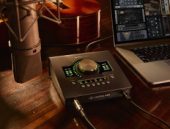
Suppose you’re ready for a different audio-interface or you want to upgrade your current one. In that case, it may be worth taking a look at the options that include an external DSP chip. DSP stands for Digital Signal Processing, and the DSP chip (co-processor or accelerator) takes some of the load off your computer when you’re working with plug-ins. You might already know that this is what you want, but have you also heard of FPGA? This blog post can help point you in the right direction when choosing your new audio interface.
-

The impulse response (IR) is a relatively new technology that can simulate a specific environment—a hall, room, studio space, the body of an acoustic guitar, and so on. At first, impulse responses were used for reverb effects, such as plug-ins in a digital audio workstation (DAW). These days, they’re also used for other applications.