
-

Effects are a great way to make the most of an electric guitar, which is why a lot of guitarists kit themselves out with a pedalboard and furnish it with can’t-go-wrong effects like overdrive/distortion, modulation and reverb/delay. However, there’s a host of stompboxes that you won’t find on most pedalboards that are no less inspiring than the aforementioned fan-favourites. Pitch-shifters and harmonizers are a great example and will be the focus of this first article in a series on special guitar effects. Also, if you don’t have a pedalboard yet and you’re not sure where to start, it’s probably a good idea to look at our Pedalboard Buyer’s Guide first!
-
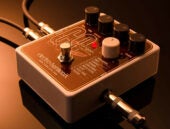
When building their first pedalboard, most fresh-faced guitarists will go for the same type of pedals: an overdrive pedal for souped-up rock sounds, a reverb or delay pedal for fuller tone, and possibly a modulation pedal for warping the sound to taste. In reality, there are many more flavours to choose from, including effects that you don’t come across all the time but are actually a lot of fun to play with and can easily get your creative juices flowing. Last time, we looked at pitch shifters and harmonizers. Today, we’re checking out organ simulators!
-

A lot of drummers suffer from back and wrist injuries, and often unnecessarily since a lot of afflictions can be quite easily prevented. There are just a handful of things you have to pay attention to in order to get through long practice sessions and physically demanding gigs without trouble. Read on to learn five simple tips.
-

One of the oldest instruments in the world, the frame drum comes in various shapes and sizes these days. Just about every region of every country seems to be home to its own unique frame drum. Some are equipped with loads of jingles, while other types only have a few jingles or none at all. One thing that all frames have in common however, is a drumhead. Let’s take a quick trip around the world and look at a number of well-known frame drums.
-
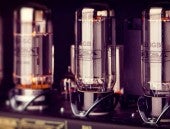
If you’ve got a valve guitar amp, you’re no doubt well aware that the specific valves inside it largely determine your sound. You might also know that there are roughly 25 different valves used for guitar amplifiers, four of which you’ll bump into all the time. What you might not know, however, is that there’s a very specific valve that kick-started what we now call ‘vintage’ sound way back when: the rectifier valve. And guess what? It’s regaining popularity again!
-

Made it through our previous article on the CAGED system and want to learn more? Great! By the end of this one, you’ll have five major and five minor chord shapes at your disposal that you can move up and down the fretboard of your guitar.
-
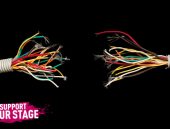
Can you imagine? You’re about to perform on stage and suddenly your signal drops out because the cable broke. Fortunately, every gigging musician’s worst nightmare can be easily avoided. Here’s five tips for preventing cable breakage.
-

While most people play a musical instrument because they simply love making music, it’s worth pointing out that starting out at a young age has several positive side-effects on the brain. In other words, that starter kit that you got your kid for Christmas last year might yield some unexpected results in the long run!
-

Acoustic drum kits are often configured to match a specific style, which is why rock-based drummers usually opt for a rock-configured kit, while jazz drummers are more likely to go for a little bebop kit. That said, there’s no reason why you can’t lay down jazz patterns with a rock kit or vice versa. Besides, a good drummer will always make sure that the sound of their kit matches the style of music, no matter how the kit is configured. Want to pull a more jazzy sound out of your kit? Read on for a few tips and tricks.
-

If you like going for a walk with your headphones on, the first thing that you probably do every time you step out of the door is turn the volume up to drown out the sound of traffic. But if you’re doing this regularly, you actually run the risk of causing hearing loss or worse. Thankfully, technology has paved the way for noise-cancelling headphones and noise-cancelling in-ears, which actually eliminate the need to turn the volume up to max. Time for a closer look.
-
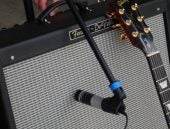
Re-amping is a studio recording technique that’s been picking up more and more speed. Compared to recording electric guitars, guitar amps, drums and other instruments the traditional way, re-amping offers a number of benefits which I’ll tell you all about by using guitarists, who re-amp the most out of all musicians, to illustrate the idea.
Comments Off on What’s Re-Amping and How Does It Work? | in: Guitarist, Musician, Studio & Recording -

If you’ve already read my other blog on FM synthesis, then you’re ready for part two: an extensive tutorial on how to design sounds using FM synthesis. To give ambitious beginners a helping hand, I’ll be covering terms like operator, carrier, modulator, envelope, scaling and feedback, giving you all the basic knowledge you need to use either FM-based hardware such as real synthesizers, or FM-based software such as the Native Instruments FM8 virtual synth (included with Komplete) to sculpt your own sounds.
Comments Off on How to Sculpt Sounds With FM Synthesis | in: Keyboardist, Musician, Studio & Recording
About Bax Music
Bax Music is your go-to online music store in the UK with more than 48,000 bits of gear and accessories in stock. More than 1,000 brands and a 26,000m2 warehouse packed with musical instruments, DJ and studio gear, headphones, speakers and lighting. Ordered before 10 PM? Receive delivery in 2 - 4 business days.
Subjects
Sign up for the Bax Music Blog Update!
Just fill in your email address and we'll drop a fresh instalment of blogs in your mailbox every month so you never have to miss out again.