
Successfully recording in the studio – how a musician does it
Published on Tuesday 12 May 2026
Guest blogger and multi-instrumentalist Nigel Hubée explains (following on from his previous blog about the setup of his studio) how a musician can prepare for a successful recording session—whether that’s in their own studio or someone else’s. He covers both physical and psychological aspects. These are inextricably linked and play a major role in the end result. Nigel hopes that thinking through the tips below will lead to better musical performances and help you avoid unpleasant surprises!
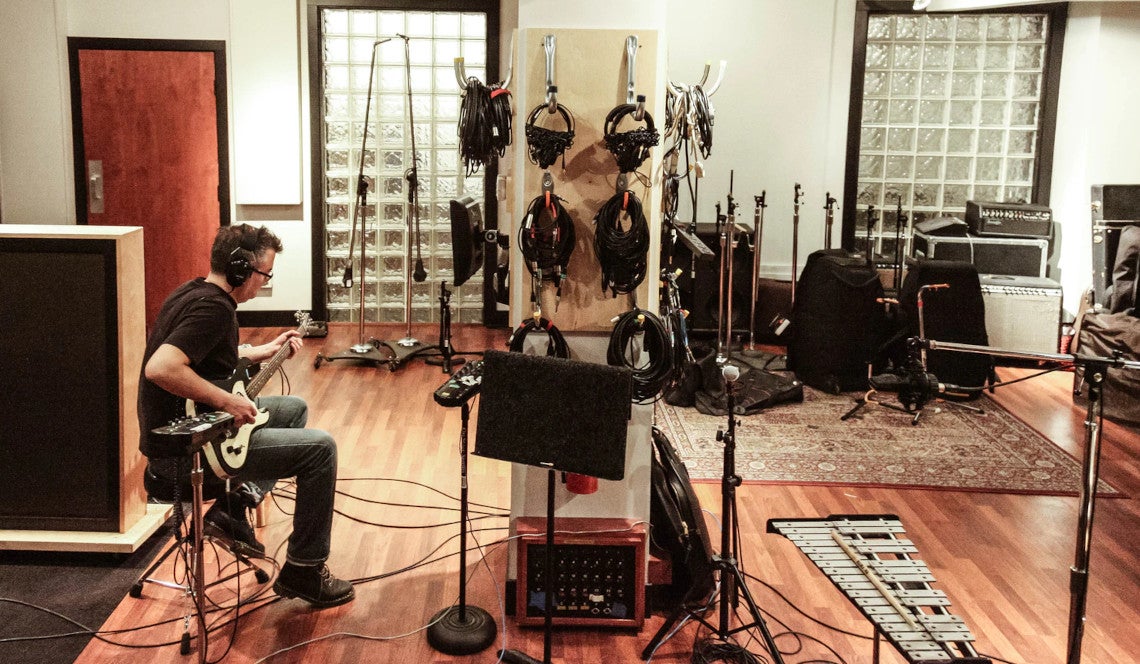
Prepare properly
Good preparation sounds like a no-brainer, but unfortunately, for many musicians it’s not a given.
- First of all, learn your own vocal or instrument parts inside out.
- Agree clearly with your fellow musicians who’s doing what, and when.
- At the same time, build in some flexibility in case someone asks on the day whether you can do something slightly differently—or you come to that conclusion yourself.
- Before recording, check the condition of your instrument(s).
- Bring enough spare strings, reeds, cables, batteries, or other parts/accessories.
- If you sing too, make sure you warm up your voice for at least 15 minutes beforehand—if necessary in the car on the way to the studio. Also try starting every day with a warm-up, ideally before you even start talking. It puts your voice into ‘singing mode’, as it were, and makes it easier to switch back into it later in the day.
- It also helps if you get the rest of your body moving beforehand, so you’re not rolling into the studio straight from bed or the sofa. And the other way round: consciously adopting good posture also helps mentally. In that context, take a look at Amy Cuddy’s interesting TED Talk, which explores this.
Listen (and/or watch) yourself back
Especially if you sing, it’s essential to get used to listening back to your recorded self in front of other people. There will always be something vulnerable about listening to your own voice—especially when it’s played back ‘dry’ and isolated. After all, you sound different through speakers or headphones than you do inside your own head. Something you always thought sounded great can suddenly be disappointing. So record yourself (for example, on your phone) and listen back until you’re happy. You may notice that every little mistake is magnified by the recording process. So use the opportunity to improve things if needed. Let other people listen too—ideally those who know a thing or two—and learn from their feedback. Do you film yourself as well? Then think about camera placement. It’s usually not very flattering to film yourself straight on from a low angle with your phone or tablet on the coffee table. So invest in a mount and a tripod and experiment with it. Also think about your clothing and what’s visible in the background.

Dealing with criticism
In my view, this may well be the most crucial part of making music successfully in a studio. Criticism is essential for getting good results, but at the same time it can be potentially destructive and demotivating. You will absolutely be confronted with it, so how do you deal with it? I distinguish three types of criticism.
Criticism from fellow musicians
Performance pressure can lead to strange outbursts. Agree with each other what you can and can’t say, so a needlessly negative comment is less likely to be made, and a well-meant one is less likely to be taken the wrong way. For example, “maybe you could tweak this riff” is far more helpful than “that was terrible—do it again, properly this time”. Laughing is another one. Laughing together about something that’s gone horribly wrong can be relaxing and lift the mood, but laughing at someone can spell the end of your long-awaited recording session. Getting irritated? If possible, keep it to yourself and, if you can, go and grab a cup of coffee or a drink for a moment. As a rule, assume you all share the same goal: getting the best possible result—and that criticism is mainly meant to stop you putting something out into the world that you’ll regret later. If you work alone and record yourself, I’d also strongly recommend seeking out and accepting criticism from knowledgeable people around you.
Feedback from third parties
For example, recording engineers. Start by assuming they know what they’re talking about. Let them choose the vocal microphone they think suits your voice. Let them decide the band setup they know they can record well. If asked, play one of their instruments because they can’t get a good signal from yours. Pushing back too much won’t get you a good result here, so go with the flow.
Criticism of yourself
Self-criticism is fine, but too much will make you insecure and actually stops you from performing well. The only thing that helps here is thorough preparation of your part(s) and a timely warm-up, so you build some confidence and have more energy left to fully focus on the music you want to make, rather than any possible mistakes.
Read also: The Musician’s Ego: Learn to Give & Receive Criticism

When is something good enough?
Your situation plays a big role here.
Are you working in your own space?
Then you can afford to push a take that just isn’t happening to another day. We find it surprising every time how much of a difference that can make. As a rule of thumb, we postpone the recording if, after three takes, a song doesn’t have the right vibe when we listen back. Below is an example of a recent recording on our YouTube channel that we worked on for a few days, because when we listened back, we weren’t entirely happy with the original arrangement. Once we’d rehearsed the changes, we felt that the third take below had the vibe we were after:
Have you booked a day in a commercial studio?
Then there’s more pressure to deliver on the day. Clear agreements help. Discuss with the studio what a realistic number of songs is to record in the booked time. Better fewer songs of good quality than more songs of mediocre quality. Decide in advance what order you want to record them in and start with an ‘easy’ song. Also let them know in advance how long each song is, and which instruments are involved, plus how many singers. Also ask whether you need to—or are allowed to—bring your own amp(s). And if the studio tells you you’ve done something well, trust that and move on to the next song.
And then: mixing
Finally comes the mixing stage. If you mix it yourself, take your time and build in regular breaks. After an hour of intense mixing, your ears will already be fatigued and you’ll start making the wrong decisions. I personally take at least a week for a mix, because I find I listen differently again the next day. When that effect has gone, the mix is done as far as I’m concerned. If you outsource the mixing, try to make your wishes as clear as possible at the start. Usually you’ll quickly get a rough mix—either soon after, or straight after your recording day. Listen to it on different devices and say what you like and what you’d like to change, but at the same time bear in mind that the mixing engineer is under time pressure, so keep it realistic.
Read also: A 5-Step Guide to Clean Recordings for Budding Mixing Engineers
I truly hope my tips help you get great results. Best of luck! I’m also curious about your own experiences—leave a comment below!
 Want to turn LPs into MP3s? Here’s How to Digitise Your Vinyl
 How to Breathe: For Vocalists & Musicians
 Playing Keys in a Band: What You Need to Know
 Everything You Need to Know About Making a Podcast
 Setting Up the Band with a PA System? Here’s What You Need to Know
 Vocal Damage: How Does it Happen?
No comments yet...