
-
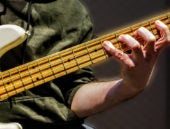
Learning to play arpeggios and understanding how they work is an essential skill if you want to write some solid bass lines. Basically, arpeggios are what happen when you play the single notes of a specific chord in succession. They’re well worth learning, since an arpeggio will always match perfectly with the chord that the guitarist or key-player is hitting. So, for a bassist, practising and nailing a small library of arpeggios is actually a better first step than memorising scales, because it immediately sets you up with a full kit bag to work with when it comes to writing your own bass lines. So grab your bass and start drilling.
-
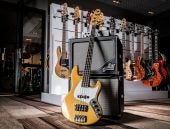
A band is rarely complete without a bass, and while the bass provides the sonic foundation for the rest of the band and is an essential part of the rhythm section, it’s often overlooked – unless the bassist misses a beat or fluffs a line, of course. Here we find out exactly why the bass is so important; present its illustrious history; and cover some handy techniques and tips.
-
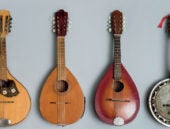
A traditional folk, bluegrass, country, and classical instrument, the bright, complex, and sparkling sound of the mandolin has even managed to hit the charts every now and then. This plucky little string instrument has an entirely unique sound and its own rich history.
Comments Off on The Mandolin: The Basics | in: Musician -

There are so many different guitars available these days, so if you’re a complete beginner looking for your first study-buddy, you might be asking yourself: how many strings does a ‘normal’ guitar actually have? What’s a ‘normal’ guitar anyway? And if I want to start lessons, how many strings should my guitar have?
-
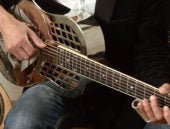
Everyone has their own associations upon hearing the sound of a certain instrument. Without doubt, most of us will link the sound of a resonator guitar (also known as a dobro) with the rocky landscapes of the American South – the place where the resonator guitar found its home in bluegrass, country, blues and other styles characterised by the authentic sound of this steel-stringed instrument.
-
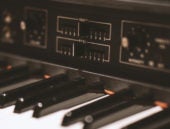
Our shared obsession for vintage instruments is as timeless as the gear itself. From the Rhodes, Hammond and Wurlitzer to the Yamaha CP series, the Clavinet and the Mellotron, the signature sound of these old-school units can be heard in countless chart-toppers, which goes to show just how big of a mainstay these revered keyboards are.
-

“I want to be a drummer!” This is one of those moments when you’re unable to look at your kid just in case they spot the panic in your eyes. While the alarm bells ring, you let out the internal scream… ‘WHHHHYYYYYEEEE??! What’s wrong with being a pianist or a guitarist? What about the triangle?’
-

A humble percussion instrument, at first glance, you don’t need much to make a cajon sound good. That said, there are plenty of tricks you can use to get even more out of your cajon. Maybe you want to expand the percussive range with some add-ons and set yourself up with a broader dynamic array and sound that’s unique to you? In this blog, we serve up five short-cuts to your own signature cajon sound.
-
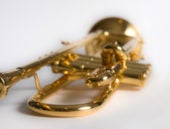
While the trumpet is centuries old, it’s more than proved its staying power across multiple genres. The trumpet is an unmissable element of classical music, and when it comes to jazz, it’s probably the most iconic of all time. Even countless popular songs have included its unique voice, all the way from seventies reggae and ska to more recent EDM bangers. Here, we cover the history, take a deep dive into the anatomy, have a look at the many variations and playing techniques, and list some legendary masters of this popular yet notoriously difficult brass instrument.
Comments Off on The Trumpet: The History, Models & Techniques | in: Musician -

Guestblogger Celine Gaurier-Joubert is the founder of the Institut de Musique de Paris and has a wealth of experience teaching adults to play the piano. During her career, she has met hundreds of enthusiastic students who, just after a couple of months of lessons, have given up on their dream to play the piano. In this blog, Celine reveals why so many adults give up and why it’s far better to just keep at it!
-

If you want to make a living from music – partly or entirely – then it’s worth having a good think about where exactly the money is going to come from. Almost every professional musician and music-maker has multiple sources of income, which in business-speak is referred to as a ‘revenue model’. To help you build yours, Guestblogger, Maaike lines up ten possible money-making options for your consideration.
Comments Off on Ten Ways to Make Money from Music | in: DJ, Guest Blogs, Marketing & Business, Musician, Songwriting & Composing, Studio & Recording -

While the bass looks a lot like the guitar, it demands an entirely different playing technique. In this blog, we’ll take you through some bass-playing basics, starting with the absolute fundamentals: the correct playing posture, both sitting and standing; the right-hand technique, where you’ll learn how to pluck the strings with your index and middle fingers and with a plectrum, and you’ll also learn to mute the unplayed strings and remove all that nasty low-frequency rumbling from your sound (a technique that actually involves both hands, but more on that later). Then, we’ll close with the left-hand technique to make sure that your thumb learns to rest against the back of the neck and that your other fingers are always ready and waiting in just the right spot, setting you up with a solid bass-playing foundation.
About Bax Music
Bax Music is your go-to online music store in the UK with more than 48,000 bits of gear and accessories in stock. More than 1,000 brands and a 26,000m2 warehouse packed with musical instruments, DJ and studio gear, headphones, speakers and lighting. Ordered before 10 PM? Receive delivery in 2 - 4 business days.
Subjects
Sign up for the Bax Music Blog Update!
Just fill in your email address and we'll drop a fresh instalment of blogs in your mailbox every month so you never have to miss out again.