
-

Audiobooks are on the rise, and since they’re so popular, audiobook producers are in high-demand. Here, Guestblogger Marc Graetz offers a professional insight into the world of recording audiobooks and explains how to narrate them and the equipment you’ll need.
-

If you think you’re ready to start submitting work to labels and get them interested in your work, then unfortunately it’s not going to be good enough to just present a sketch of a track for consideration – no matter how good it is. What you really need to come with is a near-enough flawless demo. But what do we mean by flawless? Here Guestblogger Tom Peters – co-founder of proshare.audio – is busy submitting demos to labels on a daily basis and here, presents his very own step by step plan so you can polish up and fully prep your demos for consideration.
-

When you hear the word piano, most people may still think of an acoustic upright or a big majestic grand piano. But for decades already, digital pianos have been on the rise and they’re only getting better. Also known as electric pianos, what are the main differences between digital and acoustic pianos, and which one would suit you best? In this blog, I hope to help you find out.
-

Jazz doesn’t just include putting some great techniques under your fingers, but if you really get into it, finding the right guitar for the job can be a nice little journey in itself. Since many different genres sit under the jazz umbrella, some guitars will suit one sub-genre better than another. In this little blog, we talk about the most common jazz guitar models and the jazz genres where you’re most likely to find them. Before we get into it, and for all the beginner jazz-guitarists out there: if you’re looking for your first jazz guitar, the best place to start is by looking at the model that’s in the hands of your hero.
-
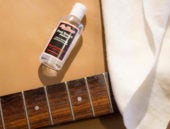
The fretboard, or fingerboard, of a stringed-instrument is the surface that the strings are held against to change the pitch and produce different notes and chords, whether you’re playing an electric or acoustic guitar or bass, ukulele, or similar stringed-instrument. Why should you keep your fingerboard clean? How exactly do you clean a fretboard? And what happens if you don’t clean your fretboard? Our Guestblogger, Karylynn explains it all in this handy article and reveals that anyone can clean the fretboard of their instrument, no matter their level of experience, and that the hardest part is removing and replacing the strings.
-

Already put in the hours honing your skills on your DJ controller, turntable, or full DJ-set-up and built yourself a massive collection of floor-fillers and bangers? Then it’s about time you booked your first gig and took your set into the booth. Courtesy of our in-house DJ-specialist, Matt (AKA DJ Konna), we kit you out with some tips and tricks for booking your first gigs.
-

In our blog explaining how chords work, we already touched on the diminished, augmented, and seventh chords. Here, we dive a little deeper into the inner workings of these chords and their function, covering everything from a normal seventh chord (the dominant seventh), to minor sevenths and major sevenths, and the difference between a diminished and half-diminished chord. We’ll also explain terms like ‘diatonic’, ‘modal’, and ‘enharmonic’, setting you up with a bank of knowledge to help you get writing.
-
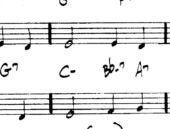
In our blog covering chord theory, we looked at how chords are built, and here, we’ll see what happens when you place one chord after another to build a chord progression and why some combinations work better than others. We’ll talk about intervals, how to build tension, what leading notes do, resolutions and sus-chords. There will be a bit of studying involved, but in the end, it’ll only speed up your writing process.
-

Solo-podcasting isn’t all that difficult. A simple USB microphone or an XLR microphone-plus-audio-interface set-up alone gets you pretty far. Throw in a pair of headphones and some recording-and-editing software and you’re practically all set. However, things get a lot more complicated the second you invite one or more guests to your podcasts. Luckily, with the help of this blog, you should be able to build a set-up that can accommodate them – whether they’re in the same room or calling in via Skype or Zoom!
-

If you’ve already read our Drumhead Buyer’s Guide and you’re ready to learn more, this article is the logical next step since I’ll be covering drumheads and the various ways in which these help to shape the sound of a drum kit. While it all boils down to simply trying different things, the info in this blog is essential reading for creating your own signature drum sound.
-

If you want to dampen your drums, this can mean one of two things: 1) you want your drums to sound as quiet as possible so you can practise at home without incurring the wrath of the neighbours, or 2) you just want to reduce the natural sustain and resonance of your drum kit to get a more focussed sound. Of course, there’s plenty of gear you can buy to help solve either problem, but there are also plenty of much cheaper tricks you could try using nothing but stuff you can find lying around the house.
-

As satisfying as it is to watch your stompbox collection grow, the more crowded your board, the more you need to start thinking about the order of the effect chain, otherwise, there’s a big chance that your sound quality will start to suffer. In this blog, I’ll offer five tips to help you set up your effects pedals in the best possible order and make sure you’re getting nothing but the best possible sound.
About Bax Music
Bax Music is your go-to online music store in the UK with more than 48,000 bits of gear and accessories in stock. More than 1,000 brands and a 26,000m2 warehouse packed with musical instruments, DJ and studio gear, headphones, speakers and lighting. Ordered before 10 PM? Receive delivery in 2 - 4 business days.
Subjects
Sign up for the Bax Music Blog Update!
Just fill in your email address and we'll drop a fresh instalment of blogs in your mailbox every month so you never have to miss out again.