
-

So, you’ve just picked up your first guitar and are itching to play a little something. You may already be able to pick out a simple melody, but what you really want is to play that rich sound shaped by multiple notes at once – also referred to as chords. In this blog, I’d like to help beginners on their way to learning, reading and playing their first guitar chords.
-
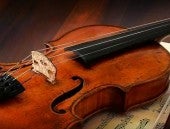
Violins are known for their beautiful and versatile sound, but they’re also complex instruments that require quite a bit of practice to master. Just like lessons, violins are often expensive, which is why a lot of people opt for a cheaper study model so they can find out if they like it enough to make a bigger financial investment once they have the basics down. For beginners and other dare-devils looking to step into the magical world of bow-string instruments, we hereby offer five useful violin tips.
-
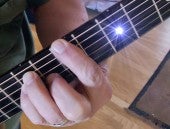
Most guitarists only ever learn to play open chords and two types of barre chords. The latter can be used all along the fretboard by sliding your fret hand up and down, which gives you two, maybe three different options to play the same chord. But what many players don’t know is that with only three extra chords, you can actually play each chord in five different ways. This is called the CAGED system.
-

Are you tired of being dependent on music books? Then you might want to browse through this blog and look at some of the strategies and tips that can help you memorise sheet music and play pieces off the top of your head. Next time you walk by a piano at a railway station, you’ll be able to sit down and steal the show!
-
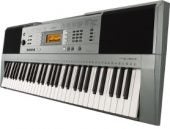
Have you always wanted to learn to play the keyboard and are you finally ready to find out what you’d need to make a solid start? Awesome, because in this blog we’re going to give you a small list of the things you’ll need!
-
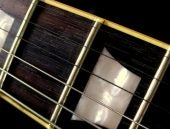
If you’ve read our guitar and bass guitar buyer’s guides, you might be wondering how important the wood used for the fretboard is. Since it actually helps shape the sound, look and feel of almost every guitar and bass, maybe the question should be: which type best suits you? Dip into this blog and you’ll learn the most important differences, making picking out your new guitar that bit easier!
-

To make recordings on your computer, you need software. The natural thing to do would be to turn to a DAW, or digital audio workstation, which is used to produce music with the help of samples and virtual instruments. In the DAW universe, there are a lot of teams claiming they have the best software, and if you’ve never used one before, you might think they look quite complicated. To ease you in, I’ve written this blog that can help you find the perfect beginner DAW.
-
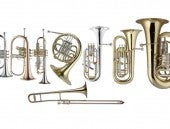
Brass wind instruments feature in many different styles of music and are a source of confusion when it comes to what they’re called and how they sound. In this blog, we’ll sort them by pitch and go over the differences.
2 responses | in: Musician -

To end up as a drummer for a big band, you can’t escape beginning with a couple of basic rhythms. While the ones you’ll want to play are likely to depend on your stylistic preference, there are a few simple beginner drum rhythms that can be used in any style. In this blog, I’ll discuss four quintessential rhythms that offer endless experimentation and variation.
-
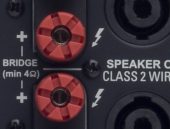
2 Ohms; minimum load 4Ω; 8-kOhm; 16Ω…when you enter the world of audio amplification, there’s no way around terms like these. They’re often found on the backs of speakers, guitar cabinets and amplifiers, so in this blog, I’ll try to clear up the role of impedance (resistance) and explain what the numbers that go with it actually mean.
26 responses | in: Live Sound -
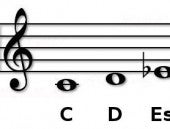
Introducing the C-minor scale, this blog follows up on the ‘Learning to Read Music: The C-Major Scale’ blog and aims to teach you how to play the scale in different keys (D, E, F, G and A). Again, it doesn’t matter if you play piano, recorder, guitar or violin – any instrument can be used here.
-
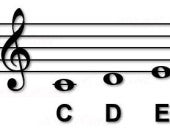
It makes sense to feel deeply impressed whenever you see and hear a musician play a complex piece of music reading it from a sheet of paper. A justifiable feeling on one hand, because it’s likely they have practiced and studied intensely to hone their skills. On the other hand, reading music actually isn’t all that difficult. No matter if you play piano, keyboard, guitar or drums, any instrument can be used to start with the basics, which include the commonly used C-major scale, also called the key of C. Don’t freak out now, it’s easier than you think!
About Bax Music
Bax Music is your go-to online music store in the UK with more than 48,000 bits of gear and accessories in stock. More than 1,000 brands and a 26,000m2 warehouse packed with musical instruments, DJ and studio gear, headphones, speakers and lighting. Ordered before 10 PM? Receive delivery in 2 - 4 business days.
Subjects
Sign up for the Bax Music Blog Update!
Just fill in your email address and we'll drop a fresh instalment of blogs in your mailbox every month so you never have to miss out again.