
-
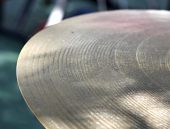
By simply adding the right cymbals, any drum kit will sound entirely unique compared to other kits, and that’s exactly why drummers spend quite a bit of time and effort finding the perfect set of cymbals. The fact is that at some point, just like us mortals, cymbals will one day reach the end of their life. In this crash course on cymbal maintenance, I’ll let you in on a few secrets and show you how you can delay the inevitable.
-

Solo-podcasting isn’t all that difficult. A simple USB microphone or an XLR microphone-plus-audio-interface set-up alone gets you pretty far. Throw in a pair of headphones and some recording-and-editing software and you’re practically all set. However, things get a lot more complicated the second you invite one or more guests to your podcasts. Luckily, with the help of this blog, you should be able to build a set-up that can accommodate them – whether they’re in the same room or calling in via Skype or Zoom!
-

If you’ve already read our Drumhead Buyer’s Guide and you’re ready to learn more, this article is the logical next step since I’ll be covering drumheads and the various ways in which these help to shape the sound of a drum kit. While it all boils down to simply trying different things, the info in this blog is essential reading for creating your own signature drum sound.
-
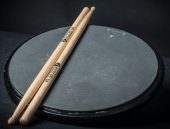
Even if you’ve been drumming for a while, there’s a chance you’ve never thought about the way you hold your drumsticks. Since there are a few rules of thumb that can actually help you hone your skills, we’ve compiled a humble list of stick-based tips and tricks for you in this blog.
-

So, you play keyboard and you’d like to sing along. But is it even possible to plug a microphone directly into your keyboard? That depends entirely on your keyboard, but even if it does have a microphone input there are still a few things to bear in mind or look out for.
-
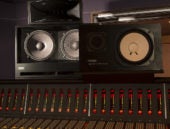
So, you just entered the world of studio gear and you want to pick up a pair of studio monitors. How different are these compared to your old hi-fi system or that CD player catching dust in your living room? How does a studio setup work? And do I need an amplifier with my new set of speakers? Answers to these questions and more below!
Comments Off on Do I Need An Amplifier With My Studio Monitors? | in: Studio & Recording -

Granted, the ideal drum kit set-up is highly personal. But that doesn’t mean there aren’t a few guidelines that you need to follow. To help you find a comfortable, practical and most of all style-matching set-up, I’m going to show you a couple of different takes on the standard drum kit configuration!
-
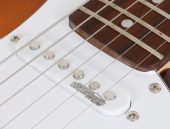
Whether it’s a single-coil or a humbucker, practically all electric guitar pickups and bass pickups are equipped with a magnet that captures the vibrations of the strings. While magnets don’t boast any sonic properties of their own, the specific type of magnet inside any guitar or bass pickup certainly helps to shape the overall sound of the instrument. Since most pickups feature either an alnico or a ceramic magnet, I’m going to highlight the differences between both and tell you how the well-known Alnico V models compare to Alnico II variants.
-
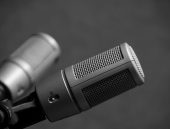
Stereo recordings often have the kind of three-dimensionality you just can’t replicate using reverb or delay effects or the pan controls of your DAW software. Most stereo recordings are made using a pair of condenser microphones loaded with cardioid pickup patterns, though omni-directional and bidirectional microphones aren’t uncommon either. Usually, more high-end microphones can even toggle between all three patterns so you can pick one depending on the situation. If you want to know which microphone set-ups are best for recording in stereo, just read on!
-

Throwing in solid drum fills can be pretty difficult for beginners. Some go too fast while others over-complicate things – two habits that are hard to kick without the help of a drum teacher. In addition, not being able to time your fills right can be extremely frustrating, whether you’re rehearsing or just jamming, and not just for you, but for any musicians you’re playing with as well as anyone listening. So, in this blog, I’m going to teach you various simple drum fills and show you some very useful tips!
-
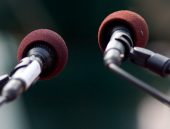
Say you’ve finished recording all of the instruments and vocals and you want to mix everything down. The individual tracks sound great, but once you start playing with the faders, it sounds like all parts of the recording are working against each other. The mix is all but up to snuff, and a phase issue is most likely to blame. In this blog, I’m going to explain what phase is, what it causes and how you can get rid of it, so you can prevent or fix any phase issues as they pop up while you’re working on your studio projects.
Comments Off on How to Prevent or Fix Phase Issues in the Studio | in: Microphones, Studio & Recording -
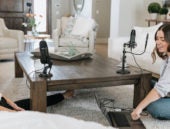
Everyone who’s privileged enough to have access to broadband internet and a fairly fast computer can launch a podcast or even an internet radio station of their own for a relatively small amount of money these days. However, the microphone built into your laptop isn’t going to cut it, and the acoustics of your soon-to-be studio space could probably do with a little treatment too – so read on to find out how you can get pro-grade podcast audio quality on a budget!
Comments Off on How To Make a Pro-Grade Podcast on a Budget | in: Studio & Recording
About Bax Music
Bax Music is your go-to online music store in the UK with more than 48,000 bits of gear and accessories in stock. More than 1,000 brands and a 26,000m2 warehouse packed with musical instruments, DJ and studio gear, headphones, speakers and lighting. Ordered before 10 PM? Receive delivery in 2 - 4 business days.
Subjects
Sign up for the Bax Music Blog Update!
Just fill in your email address and we'll drop a fresh instalment of blogs in your mailbox every month so you never have to miss out again.