
Fazley Core-FX2 or Core-FX3: which multi-effects pedal is right for you?
Published on Friday 9 October 2026
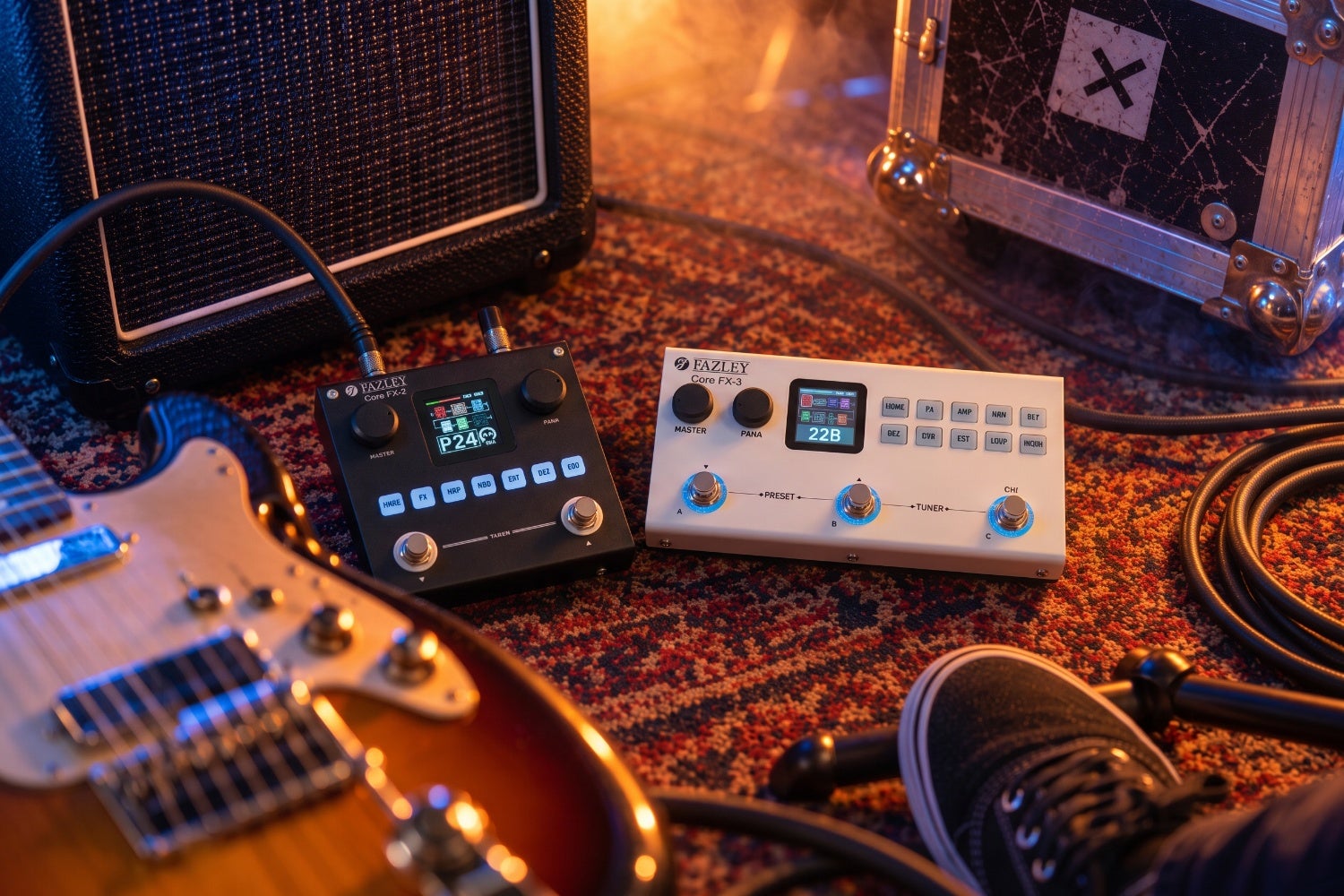
The Fazley Core-FX series consists of two multi-effects pedals for guitar and bass: the compact Core-FX2 and the more extensive Core-FX3. Both pack amp models, effects, NAM captures, a USB audio interface and a rechargeable battery into one small box. The main differences are how many sounds you get and whether you want to use the pedal on stage.
What is the Fazley Core-FX series?
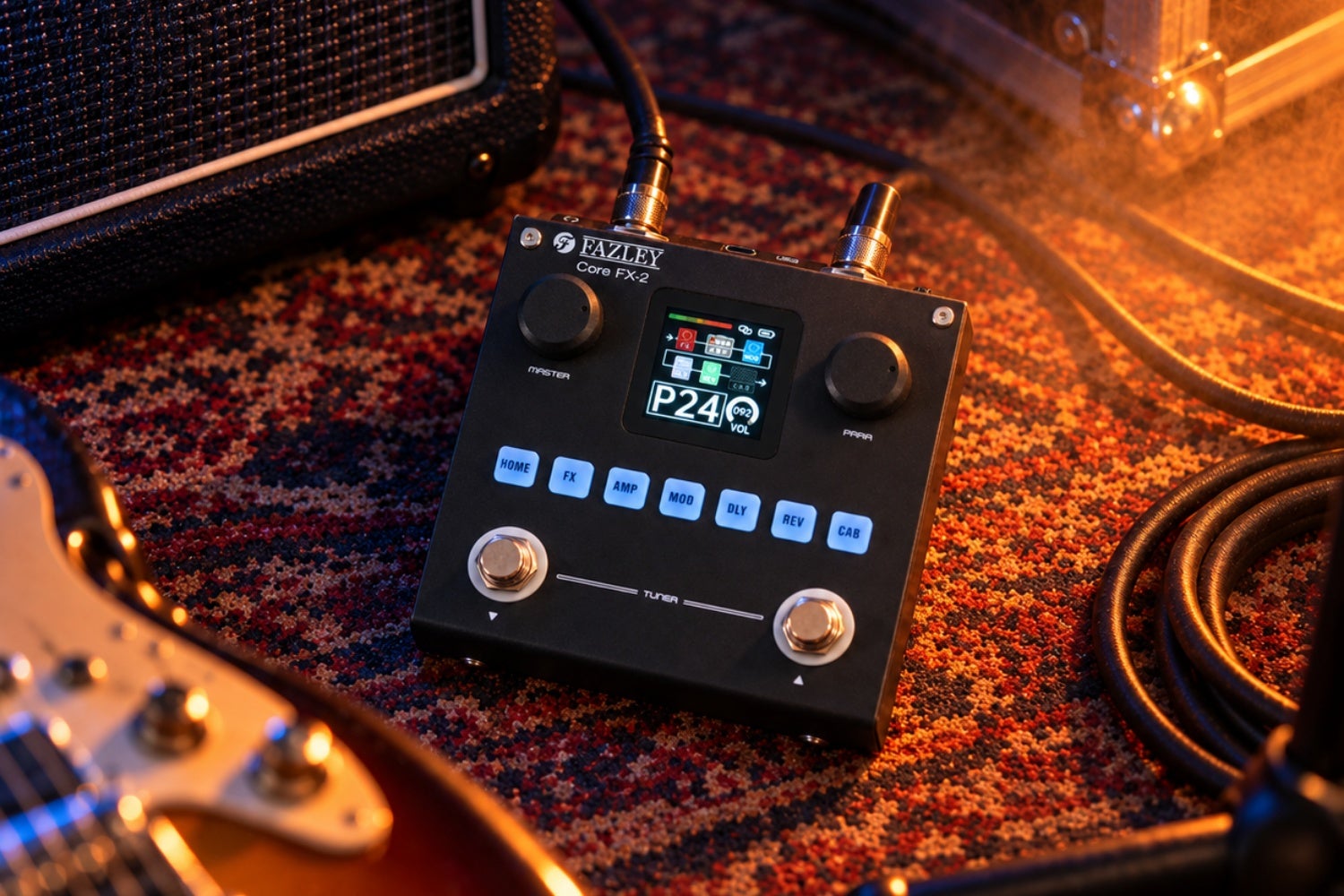
A Core-FX is amp, speaker cabinet and pedalboard emulation in one box that fits under your foot. Plug in your guitar or bass, choose an amp model, a cabinet simulation (IR) and a chain of effects, and the pedal sends the result to your headphones, your amp or your computer. You decide the order of the effects modules yourself, so your drive can sit before or after your delay.
Both pedals are built for guitar and bass, and you can see that in the layout: the amp models and IR slots are split into a guitar section and a bass section. So you’re not switching on a guitar amp and hoping it’ll work for bass too. With a dynamic range of 105 dB, there’s room for gently picked cleans as well as fully cranked high-gain.
» View all multi-effects pedals
» View all Fazley products
Features you wouldn’t expect at this price
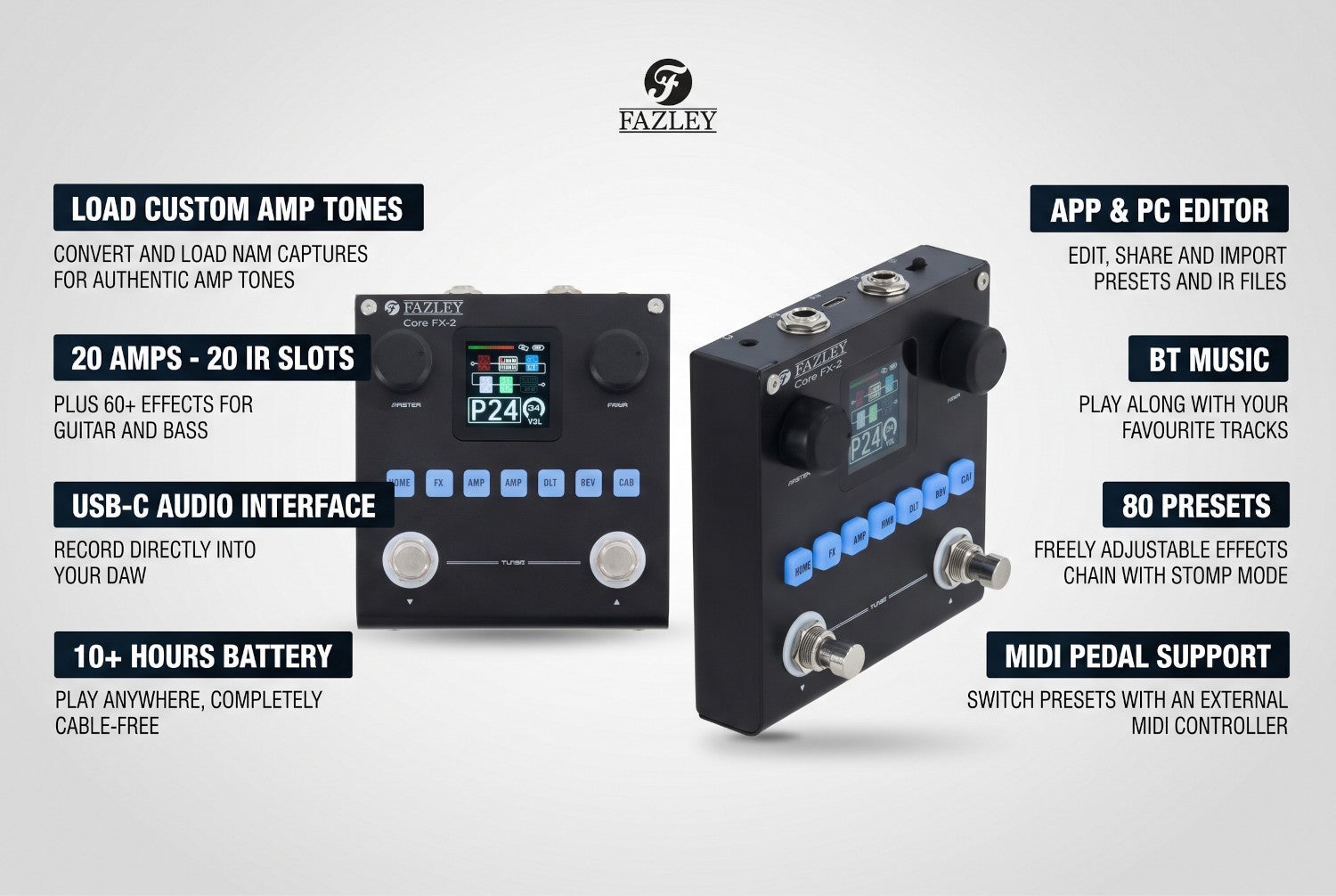
The most striking feature is support for NAM captures. Neural Amp Modeler is a free, open-source system that lets musicians digitally capture and share real amps, cabinets and complete rigs. Using the app, you load one of these captures and convert it for use on the pedal. In short, the built-in models are just the starting point: you can keep expanding endlessly.
On top of that, every Core-FX pedal is a USB audio interface. This means you can connect it to your computer or smartphone (OTG) with the included USB-C cable and start recording straight away in 24-bit / 44.1 kHz quality. Switch on ‘loopback’ and the sound from your computer is included in the recording; handy for a quick demo over a backing track. So you no longer need a separate interface for your first recordings.
The built-in 2000 mAh battery makes the pedal cable-free. Just like with a cordless drill, you can work anywhere without hunting for an extension lead first: the FX2 lasts well over ten hours, the FX3 well over eight. Pair your phone via Bluetooth and you can play along to your favourite songs on headphones without anyone else in the house hearing a thing.
Reasons to choose a Core-FX
#1. Everything you need in one small box. For an extremely competitive price, you get amp and cabinet simulation, more than sixty effects, a recording interface and a headphone output in a single housing. So you don’t need to buy anything extra to practise, record and play, and you’re not lugging around a bag full of separate pedals and cables.
#2. Capture your ideas instantly. Late in the evening, you come up with a new riff while playing and want to record it before it slips away. You plug a pair of headphones into the 3.5 mm output, connect your phone via USB-C and hit record. No need to look for a plug socket, because the battery is still full. It’s exactly in situations like these that the pedal shows what it’s worth.
#3. You won’t outgrow it any time soon. With NAM captures you can keep adding new amp sounds, and in the app you can edit and save presets and import your own IR files. The external pedal input lets you connect an expression pedal for wah or volume control with your foot. And if you play bass too, the dedicated bass models are ready and waiting for you.
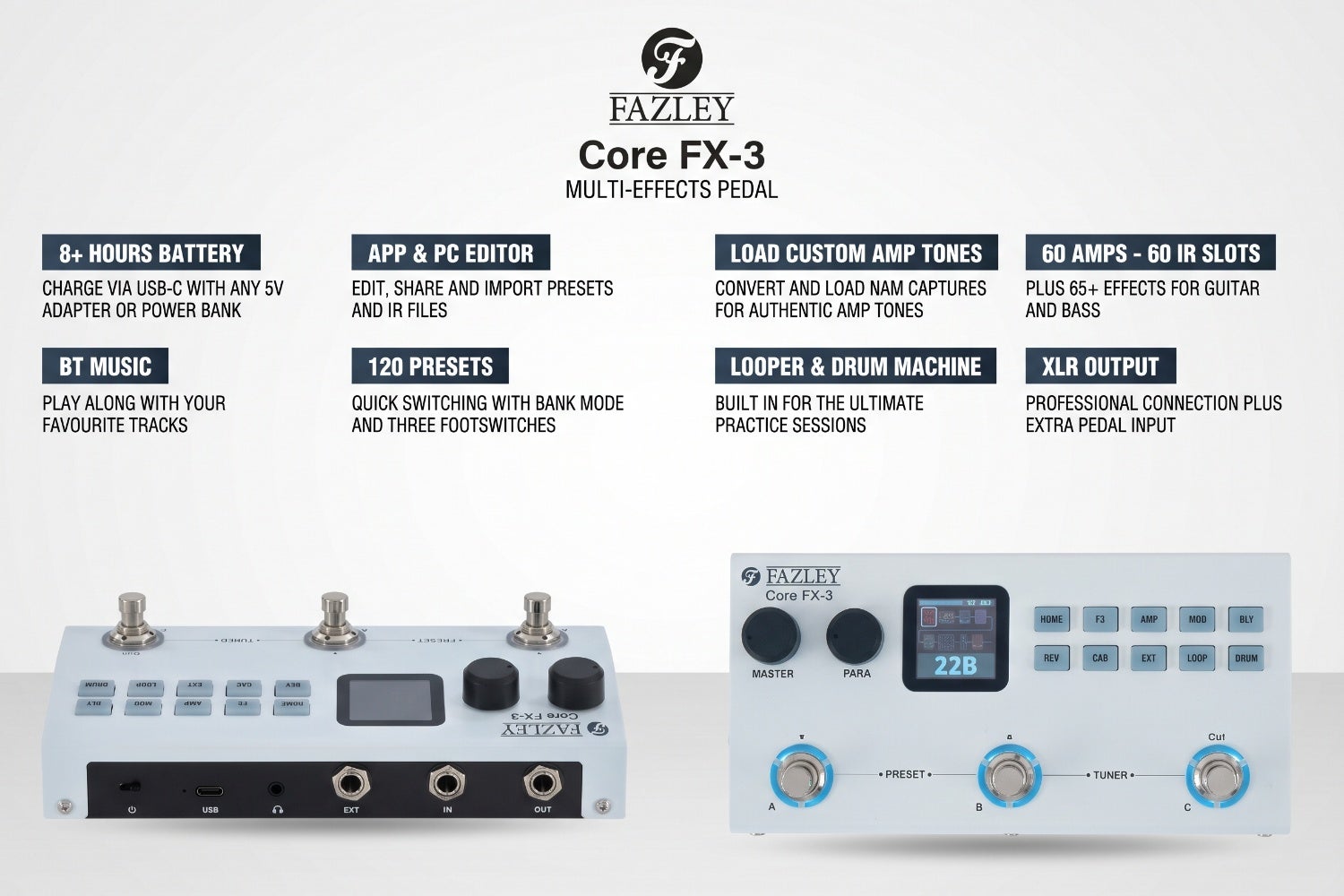
Core-FX2 or Core-FX3: which one is right for you?
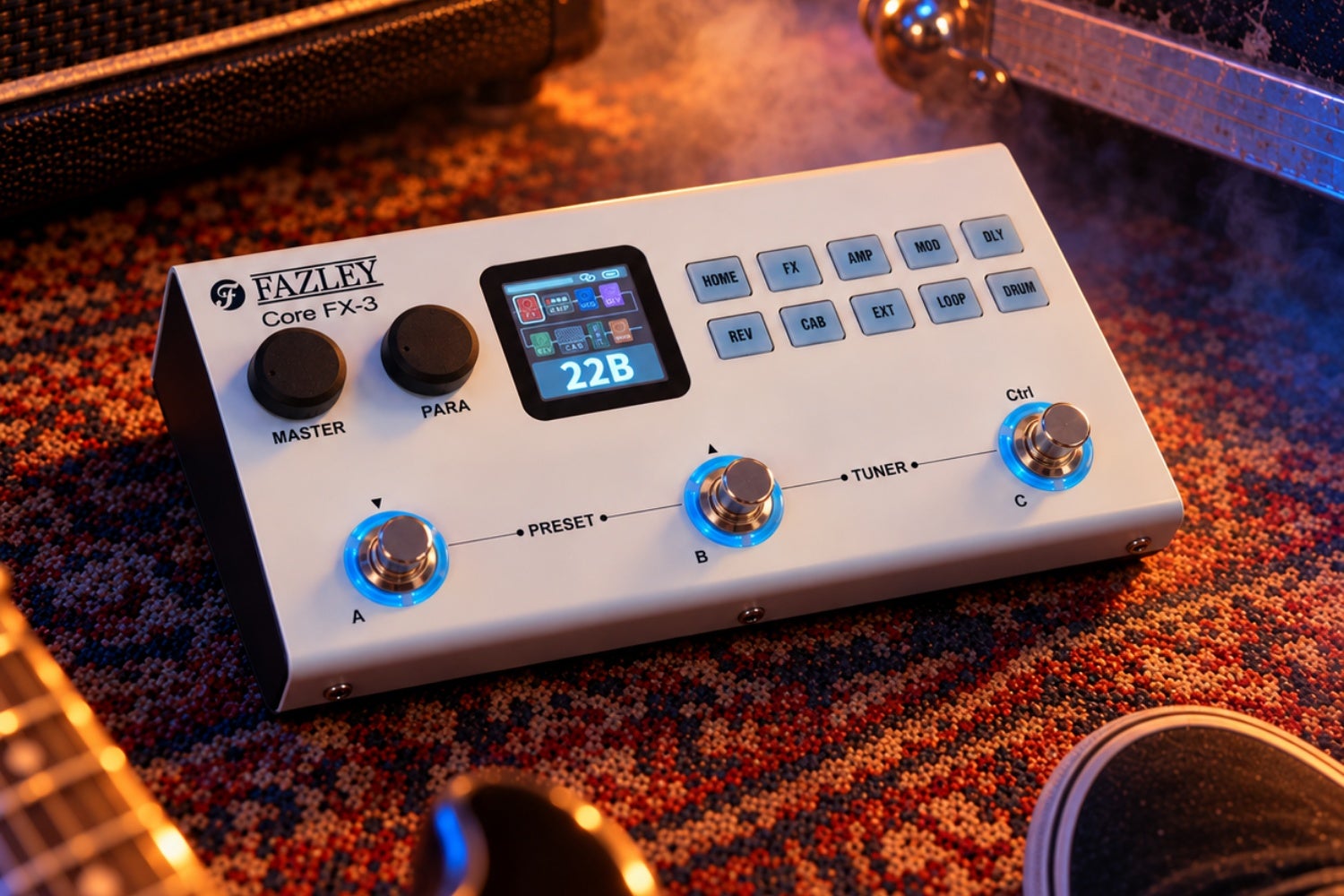
The FX3 has more of everything, but the FX2 is smaller, lighter and a few tenners cheaper. For the extra cost, you get 60 amp models instead of 20, 60 IR slots instead of 20, seven effects modules instead of six, 120 presets instead of 80 and 65+ effects compared with 60+.
Whether you have 20 or 60 outfits in your wardrobe, you’ll mostly wear your five favourites anyway, and amp models work the same way. The difference you’ll actually notice day to day lies in the extras. Only the FX3 has a balanced XLR output that lets you go straight into the mixing desk, plus a built-in looper and drum machine to practise with.
Do you mainly practise at home with headphones, record the occasional idea and want to be able to fit the pedal in your gig bag? Then go for the FX2. It measures 113 x 109 mm, weighs 410 grams and lasts well over ten hours on a single charge. It still has NAM conversion and the audio interface on board, and live you simply use the jack output.
Do you play live regularly, want to go straight into the PA without an amp, or like having a drum machine and looper to hand for practice sessions? Then the FX3 is well worth the extra cost. At 200 x 100 mm and 644.5 grams it’s slightly larger and heavier, and at well over eight hours the battery runs out a little sooner. But in return, you get a complete studio under your feet!





No comments yet...