
How long do bass strings last? Replacing, cleaning and boiling
Published on Wednesday 28 October 2026
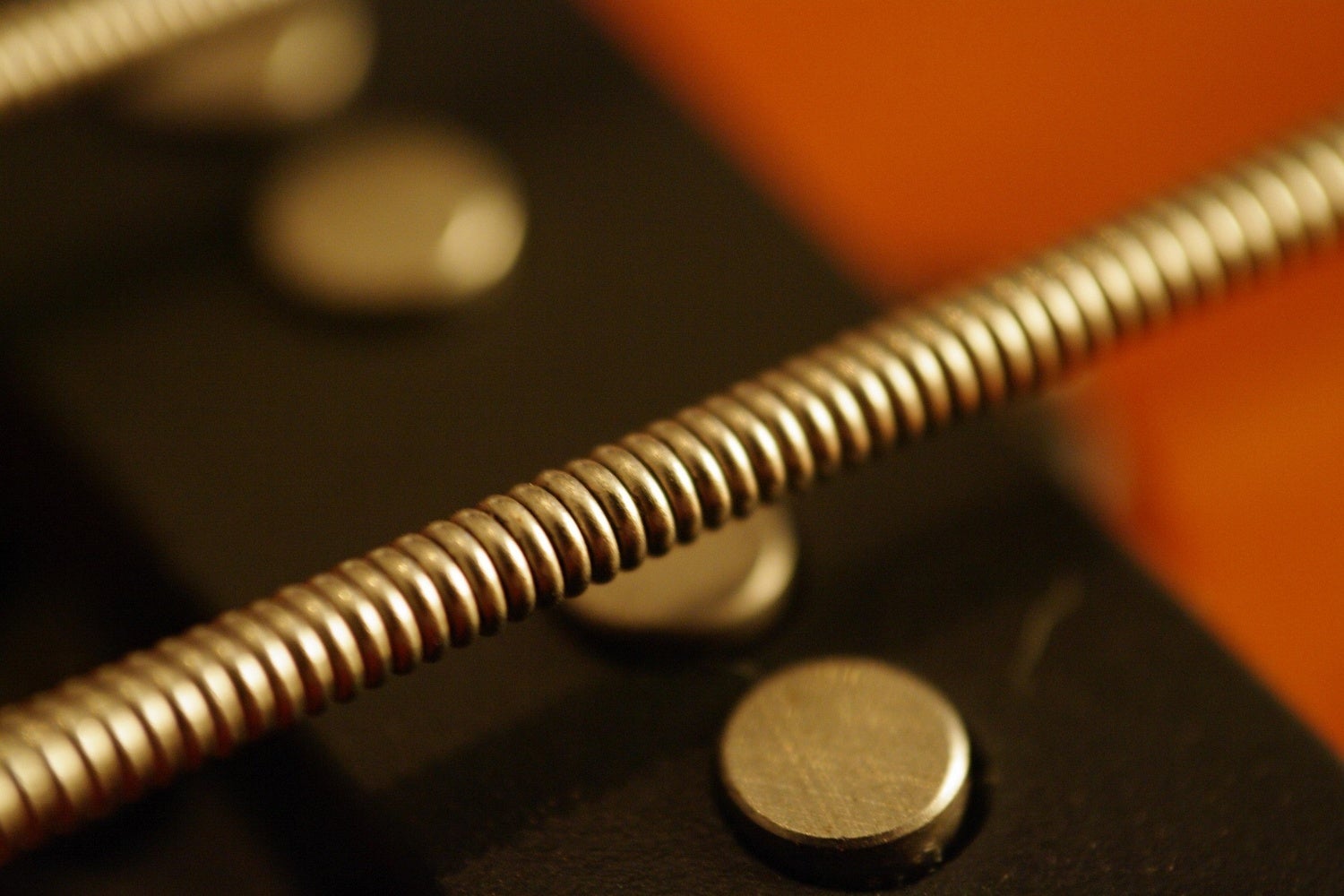
Bass strings last a long time, but not forever. New strings sound bright and punchy, and that sparkle slowly fades without you even noticing. How quickly that happens depends on your hands, your playing style and your taste.
How to hear and feel that your bass strings are dead
You can spot a fresh set of bass strings straight away: a crisp attack, overtones that ring out and a punch you can feel right across the rehearsal room. Dead strings sound dull and flat. You turn up the treble on your amp a bit further and it only half helps. The annoying thing is that it creeps up on you. Listen back to a recording from a few months ago and you’ll suddenly hear how much sparkle has gone.
You can feel it too. Old strings become sticky, and a cloth wiped over them comes back grey. The main culprits are sweat, skin oils and dirt building up in the windings. A bass string is a spiral winding around a hexagonal core, and all sorts of things get left behind in those tiny grooves. A laboratory test with artificial sweat showed that corrosion caused by sweat measurably affects a string’s harmonic spectrum, and that the effect gets worse as the corrosion increases. So your ears weren’t lying.
Dirt isn’t the only cause, though. Every time the string hits a fret, the metal wears down slightly, and metal fatigue plays a part as well. It’s a bit like an old toothbrush: you can clean it, but the bristles are still sticking out in every direction afterwards. That’s why cleaning brings some of the sound back, but never all of it.
» When should I change my guitar strings?
» View all bass guitar strings
How often should you replace bass strings?
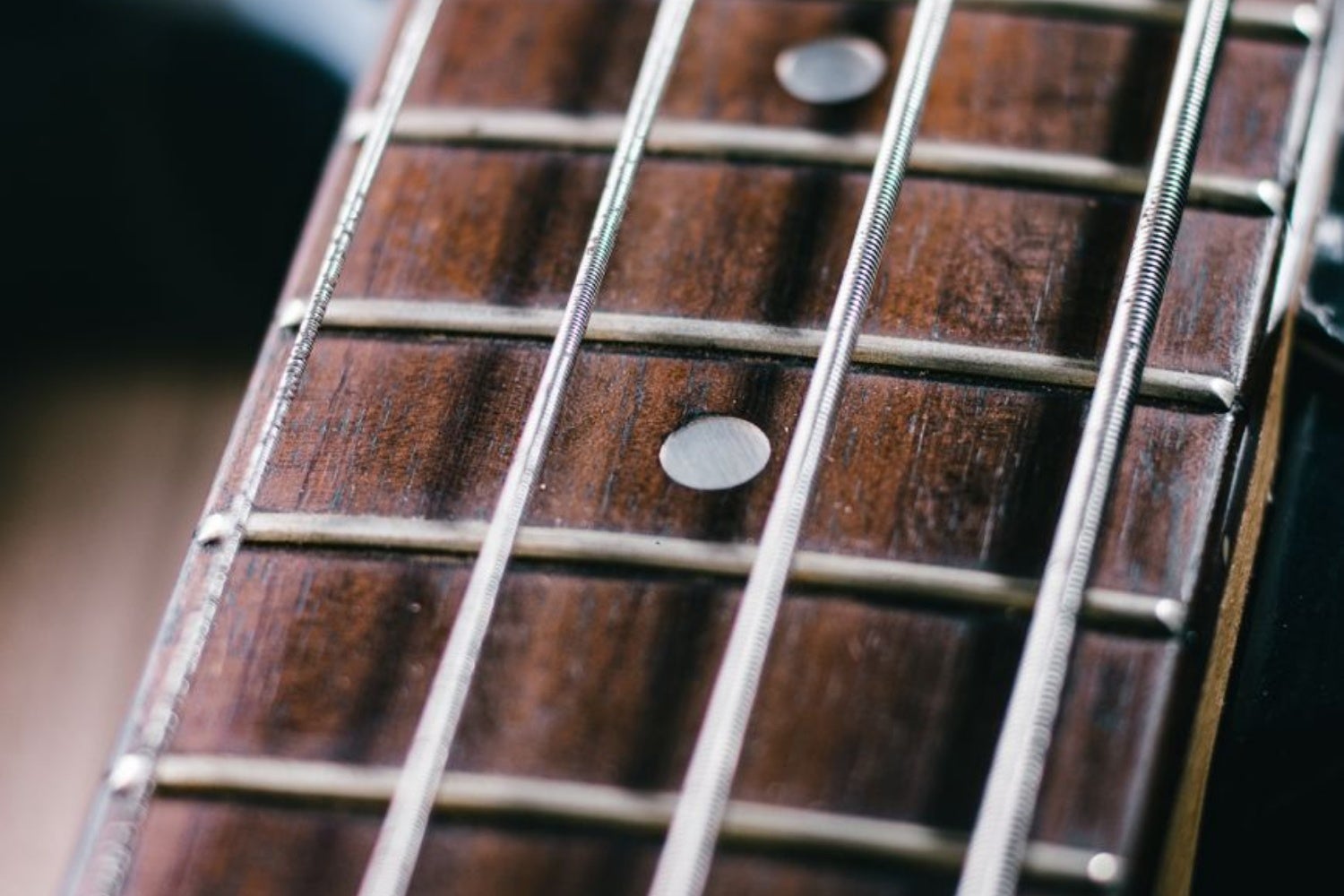
There’s no magic number, however much you might want one. One bassist wants strings that are a week old at most, while another thinks dead strings sound best. Phil Chen, who followed James Jamerson’s example, played heavy flatwounds and rarely if ever changed them; the older, the better, he reckoned. Two camps, and both have a point. The only useful rule of thumb: your ears decide, not the calendar. If you’re missing the punch and clarity you’re used to, it’s time.
What does come into it is the price. Bass strings are quite a bit more expensive than guitar strings, and with a five- or six-string bass the cost soon adds up. That’s why some bassists deliberately choose cheap sets that they change often, so they always sound fresh. Others go for coated strings: they last longer, but feel and sound different from regular roundwounds. Give them a try and decide for yourself whether that bothers you.
» Try the Interactive Bass Guitar Strings Advisor
What cleaning achieves
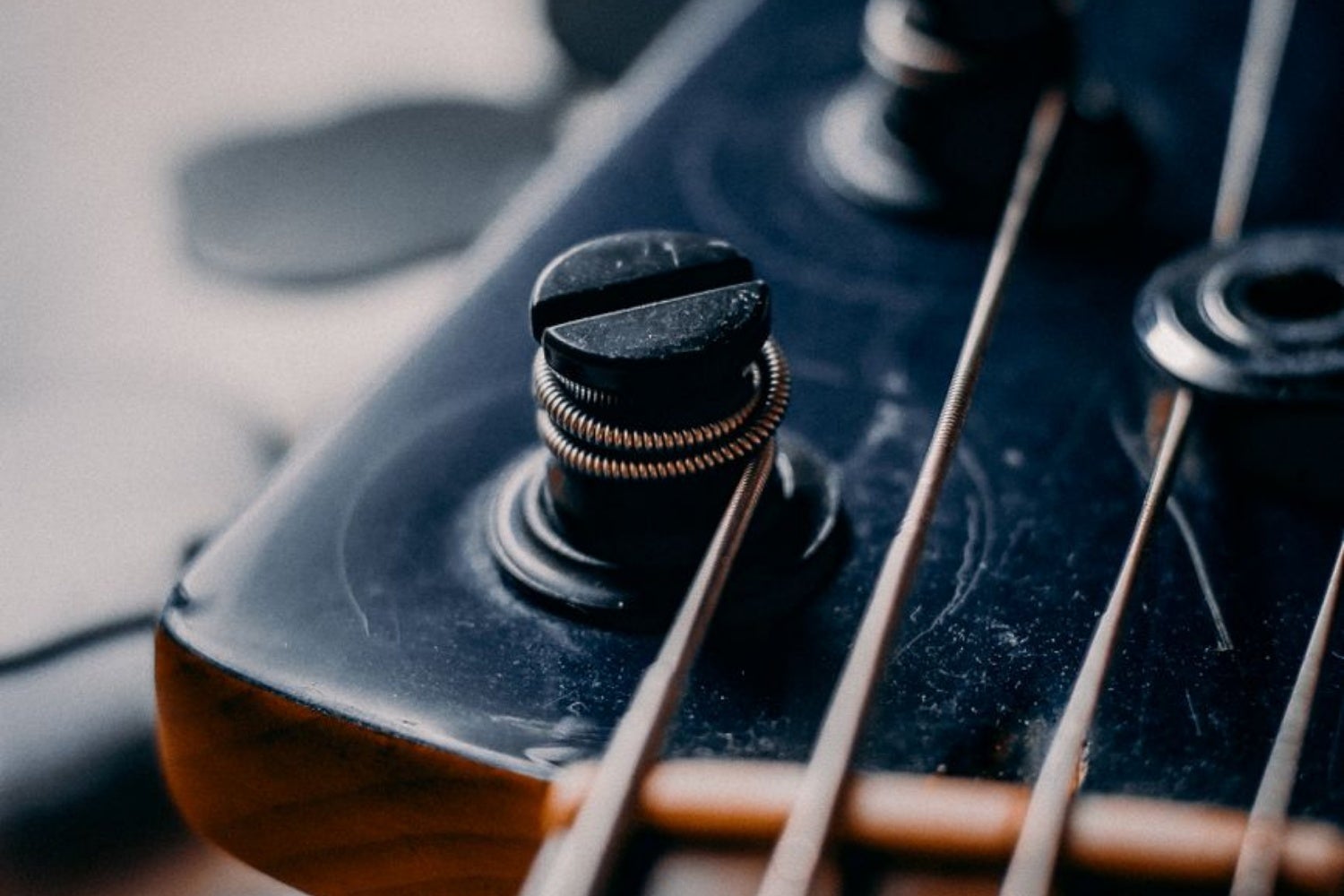
The simplest measure is also the best one: keep a cloth in your case and wipe it over the strings after playing. It takes ten seconds and keeps sweat and grease out of the windings before they get stuck there. If you do this consistently, you’ll get noticeably more life out of the same set.
If the strings are already dull, alcohol is the go-to remedy. Wiping the strings with a cloth dampened with isopropyl alcohol already gives you audibly more clarity. Want to go further? Take the set off the bass and let the strings soak in methylated spirits for a while.
Ready-made string cleaners are available too, in all sorts of forms: as a spray, as a wipe, in a bottle or as a liquid in an applicator. Keep an eye on the ingredients, as they’re not all the same. Some contain oils or light silicones and should only be used on the strings, while another product in applicator form is silicone-free and can also be used on the fingerboard and the back of the neck. So check the label before you go anywhere near your neck with it. Many of these products cost less than a tenner, by the way.
Keep your expectations in check. Cleaning tackles the dirt, not the wear from the frets or metal fatigue. Think of it as postponing a string change.
» View all guitar/bass guitar care products
Does boiling strings really work?
The story has been doing the rounds in rehearsal rooms for decades: put old bass strings in a pan of boiling water and they’ll sound as good as new. It’s partly true. Hot water flushes a lot of dirt out of the windings, and a boiled set genuinely sounds brighter afterwards than before. But compared to a new set, boiled strings still lack attack, and whatever you gain soon fades again.
There’s also a practical drawback. Water and steel aren’t the best of friends, so after boiling you need to dry the strings completely, or you’ll end up with rust as a bonus. That’s why many bassists prefer to soak them in alcohol instead.
So boiling isn’t nonsense, but it’s certainly no miracle cure. A brief pick-me-up versus the effort and the risk of rust: that’s the trade-off.
But, er… if you really want your bass strings to sound like new again, you’ll ultimately end up with – who’d have guessed – a new set!





No comments yet...