
Short scale bass guitars: who is a shorter neck the best choice for?
Published on Wednesday 28 October 2026
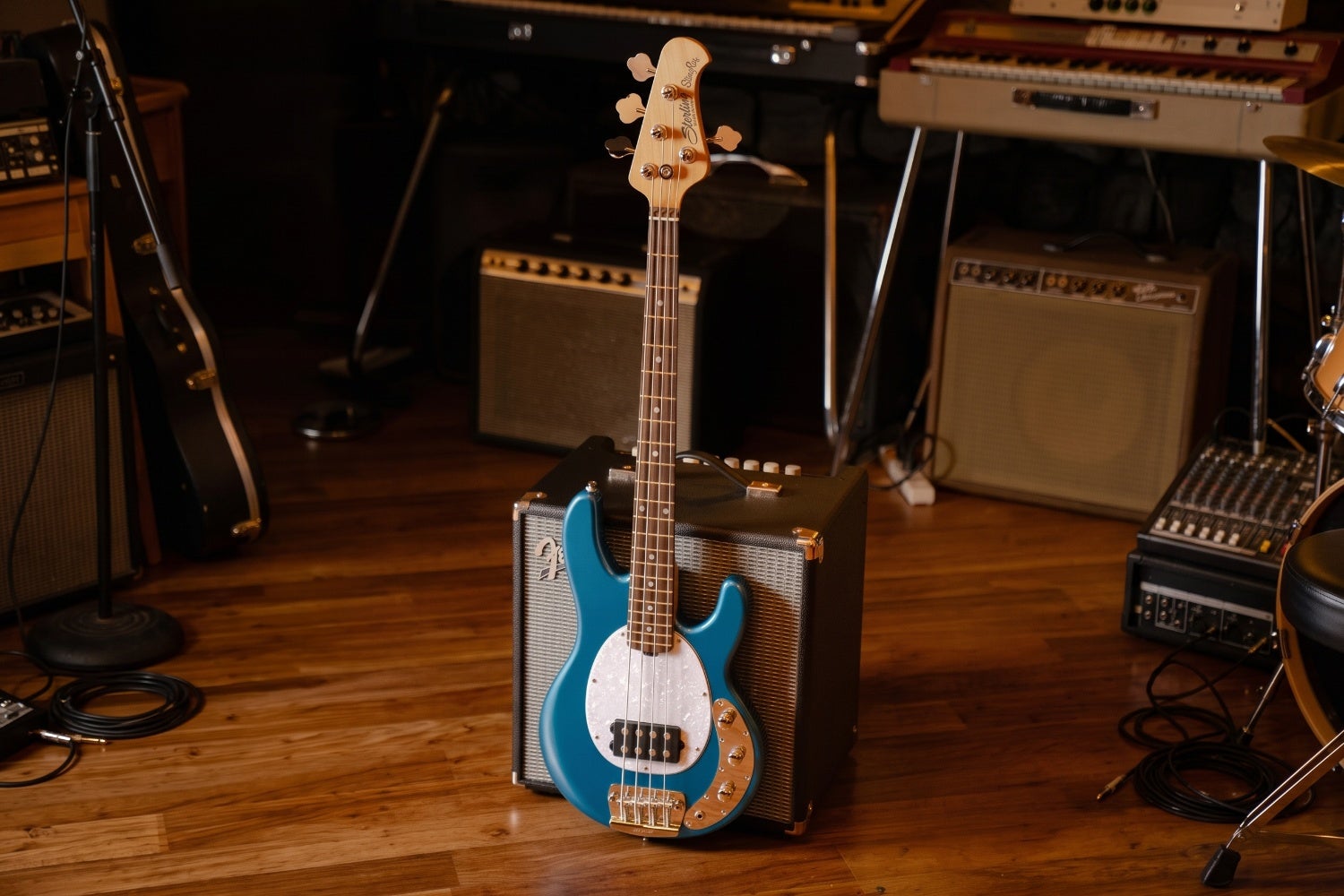
A short scale bass guitar has a scale length of around 30 inches instead of the usual 34 or 35 inches, and that makes more of a difference than you might think. For years, a short neck was dismissed as a kids’ bass or an entry-level model, but if you’d rather stretch less, want to spare your shoulder or are coming over from guitar, you’re often better off with one. High time that image got an update.
Who is a short scale the best choice for?
Young beginners are the most obvious group. With string instruments, starting on a smaller size is perfectly normal, and the same goes for bass: a neck that fits stops a child from giving up after three lessons because the instrument is too big. A smaller bike frame doesn’t make a worse bike either, just one that fits.
Then there are the guitarists. A guitar neck is quite a bit shorter than a bass neck, so if you’re coming from guitar, you’ll feel at home on 30 inches much sooner than on 34. The distances are closer to what your fingers already know. It’s no coincidence that the short models of the sixties were also aimed at guitarists.
And the grown-up bassist with big hands? If you fall in love with the feel and sound of a short scale, there’s absolutely no reason to hold back. Tina Weymouth of Talking Heads, Jack Bruce of Cream, Paul McCartney and Owen Biddle built careers on them, and session bassists often reach for one in dense mixes because that warm low end sits so nicely in place.
A short scale isn’t a stopgap but a fully-fledged choice, and for small hands, aching shoulders and guitarists making the switch, it’s actually the best one.
» Browse all short scale bass guitars (acoustic)
» Browse all short scale bass guitars (electric)
Even shorter: mini basses and bass ukuleles
At 30 inches, we haven’t hit rock bottom yet. On the electric side there are mini basses (the Squier Mini and Ibanez miKro are the best known) with a scale length of around 28.6 inches. Acoustic models go a step further: small travel basses and bass ukuleles come in at 20 to 25 inches. That’s shorter than the scale length of a regular guitar. And yet… almost all of them are neatly set up in standard E-A-D-G tuning. Every run, every riff you know from a regular bass guitar works here too. No transposing, no hassle.
So how do you get a low E out of such a short string? Three ways: thicker, heavier or slacker. A bass ukulele goes for thick: rubbery polyurethane strings that feel like a sturdy elastic band. Acoustic mini basses take a different approach, with metal-wound strings around a flexible nylon or multifilament core. They look like regular bass strings and play like them too, just a lot looser. Electric mini basses usually don’t need extra-thick strings: they simply come with a standard set (think .045-.105), but at a lower tension, so they do feel different. Each type plays quite differently, so get your hands on one before you decide.
Now for the honest truth about the volume of acoustic models: there’s barely any. A soundbox that size simply can’t get a low E moving. On the sofa you’ll hear yourself just fine, but as soon as someone picks up an acoustic guitar, you vanish. That’s why nearly every model has a built-in pickup. Unplugged it’s fun, but plugged in it becomes a real bass. And plugged in, an acoustic bass ukulele sounds surprisingly full, with a hint of double bass character too.
Who buys something like this? Bassists who want to practise on the go without lugging around a metre-long gig bag. Guitarists who want to feel what a bass part does to a song. Anyone who’d rather take something on holiday than nothing at all. And simply anyone who fancies a ‘little bass on the side’.
» Which acoustic bass guitar is best for me?
» Browse all acoustic bass guitars
What is scale length and where does the standard size come from?
Scale length is the section of string that actually vibrates: from the nut to the bridge. The headstock with the tuners and the bit behind the bridge don’t count. So a large headstock or a compact body tells you nothing about the scale length. All that matters is the distance between nut and bridge.
The 34-inch standard dates back to 1951, the year Fender launched the Precision Bass: the first mass-produced electric bass, designed for double bass players looking for something more portable. Anything under 31 inches is now called short scale, usually around 30 inches. In between there’s also medium scale, from 31 to 33 inches, which you come across less often.
Short scales aren’t a modern invention. Gibson and Höfner deliberately opted for a shorter neck on their basses right from the start, and in the mid-sixties Fender itself introduced short models for students, children and guitarists. That’s where the ‘beginner’s bass’ label comes from, and half a century later it’s still stuck on.
» Browse all short scale bass guitars
Playing comfort: less stretching, fewer aches
Four inches shorter sounds like nothing, but on a bass neck you feel every centimetre. The frets are closer together, so a run that demands a hefty finger stretch on 34 inches sits comfortably under your hand on a short scale. For small hands that makes a huge difference, and players with a smaller build can reach the nut without hiking up their shoulder.
That last point matters. Bass teachers regularly see students with wrist or shoulder complaints, and some of them improve remarkably after switching to a shorter neck. Less reach means less strain on your left hand and shoulder, and you really notice it after a two-hour set. Added bonus: a short scale fits easily on the train or in a cramped car.
» Browse all short scale cases and bags
String tension, tone and the right strings
A shorter length of string at the same pitch means less string tension, and you can both hear and feel that lower tension. It’s pure physics: shorten the string, and the tension has to drop to reach the same low E. The string vibrates in a wider arc and therefore sounds warmer and softer, with a fatter low end.
Many bassists picking up a short scale for the first time describe the strings as ‘floppy’. Bends and hammer-ons are easier, but if you’re used to the resistance of 34 inches, it takes a bit of getting used to. A slightly heavier string set helps, and a string-through-body bridge gives a tension that feels more familiar and responds more directly.
Don’t buy strings blindly. Bass strings come in different lengths, and a long scale set is often so long on a short scale that the thick, wound section ends up wrapped around the tuning posts. That section is too stiff for this, and the steel core is prone to snapping. The reverse is just as annoying: with a set that’s too short, the thin tapered end rests on the nut instead of the full winding, and that sounds dull. Check the packaging to see whether the set is intended for short scale, or measure your old set before you order.
Then there’s the reputation for floppy strings and poor intonation. That dates back to the sixties, when short scales were all the rage and the market was flooded with cheap, sloppily built basses with dreadful electronics. Modern building techniques have largely put an end to that, although a good setup is still half the battle.
» Browse all short scale strings
» Setting up a bass guitar: a beginner’s guide




No comments yet...