
Setting up and adjusting your hi-hat: getting the clutch, height and gap right
Published on Wednesday 14 October 2026
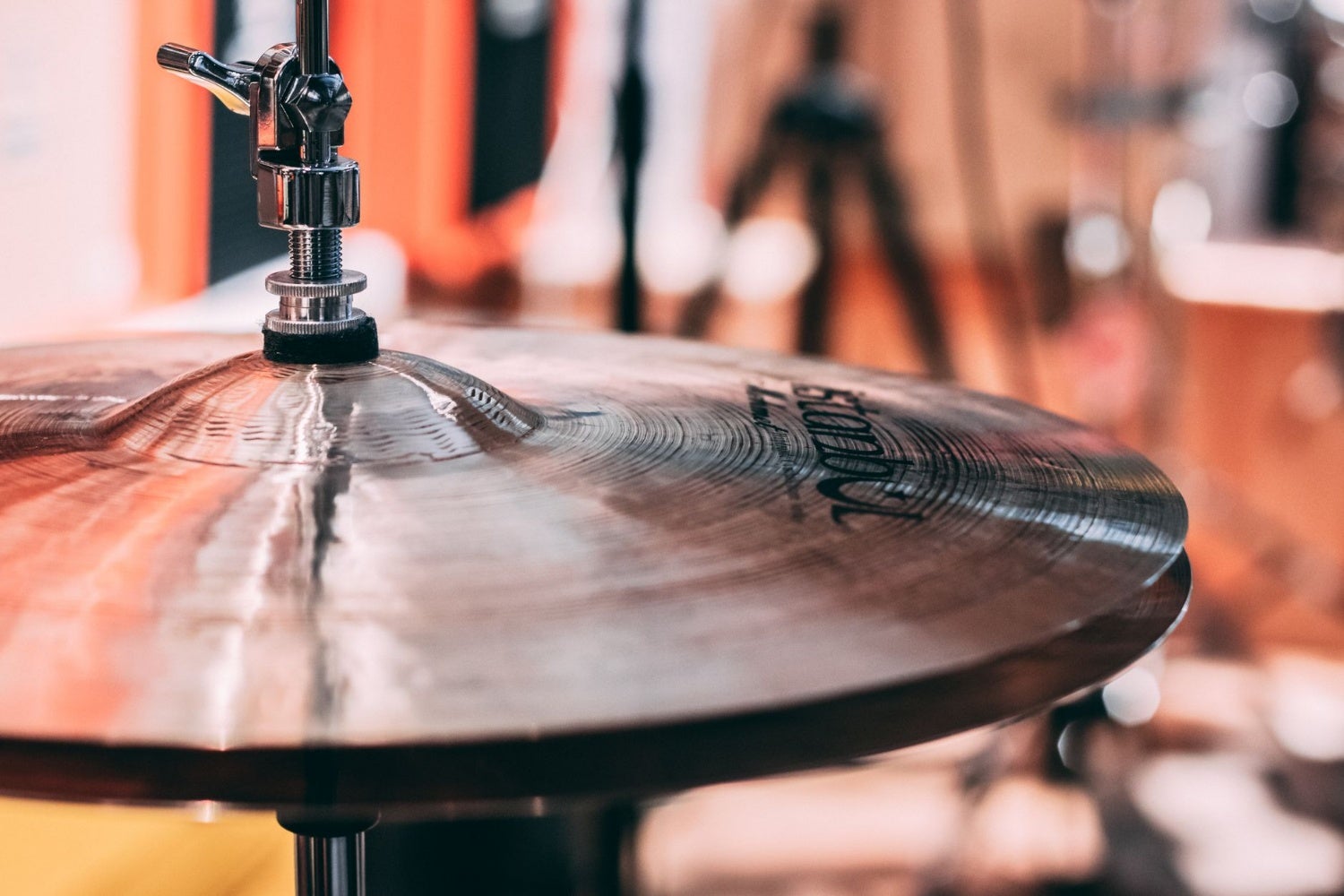
The hi-hat is the piece of hardware on your drum kit that moves the most, which also makes it the piece where things go wrong most often. A clutch that won’t grip, a bottom cymbal lying dead flat or a spring that fights against you: you’ll hear it in your sound. Once you understand how a hi-hat stand is put together, you can have it dialled in within a few minutes.
Assembly: how a hi-hat stand is put together
• A hi-hat stand consists of an outer tube with a separate pull rod inside it that’s connected to the pedal.
• The bottom cymbal rests on a fixed seat on top of that tube and never moves from its spot.
• The top cymbal hangs from the rod via the clutch, and only that top cymbal moves when you press the pedal. That’s why you feel every turn of the clutch or rod directly under your foot.
Putting it together follows a set order:
• First, fold out all the legs fully, so the feet and pedal sit evenly on the floor. A stand balancing on one and a half legs will creep away from you.
• Next, screw in the rod and slide the bottom cymbal over the rod onto the felt with the bowl facing down: the domed side points towards the floor, so the edge of the bottom cymbal will line up neatly with the edge of the top cymbal later on.
• Finally, fit the clutch with the top cymbal attached.
Securing the clutch: two felts and three nuts
The clutch is the holder that clamps the top cymbal, and it’s the part most often set up incorrectly. The cymbal sits between two felts. Below those felts is a nut or collar that you tighten all the way. Above them are two thin, knurled nuts that you tighten against each other so they lock one another in place and don’t rattle loose after a session of heavy pedal work.
Those top nuts determine how freely the cymbal sits in the clutch. That’s a matter of taste, but there are two limits. Never tighten the felts hard against the cymbal, because then it can’t move and it sounds dead. Don’t let it hang extremely loose either, because then you’ll have little control. Next, tighten the clutch’s wing nut onto the rod; that’s what sets the distance between the cymbals.
» View all hi-hat parts
» View all hi-hat clutches
Height, gap and the tilt screw
A hi-hat has two heights. The wing nut halfway up the tube determines how high the bottom cymbal sits, and therefore how far everything rises above your snare. The clutch determines where the top cymbal sits on the rod. The difference between the two is your gap. So set the height of the tube first and only then touch the clutch, otherwise you’ll end up doing the job twice.
You set the gap by tightening the clutch while the bottom cymbal is fixed in place. A common starting point is around 2.5 centimetres with the pedal released; from there, find what suits your taste. A small gap sounds tight and half-closed, with a controlled sizzle; metal drummers go for this so that during double bass drum parts, when the left foot is off the pedal, the hi-hat doesn’t wash out wildly. A larger gap gives you more expression, from a light sizzle to almost a ride sound. Light foot pressure gives more sustain and volume, while more pressure shuts everything down.
Many stands have a tilt screw under the bottom cymbal, sometimes with a locking nut. It lets you angle the bottom cymbal slightly, and not because it looks nice. If both cymbals sit perfectly horizontal on top of each other, you trap a cushion of air when you press the pedal and get a flat, flappy ‘chick’. A slight tilt lets that air escape: more contact, more bite and more volume from your left foot.
Spring tension, a hi-hat that won’t open and the drop clutch
Inside the tube is a spring that pushes the rod back up after every press, just like the brake lever on your bike springs back as soon as you let go. You set the tension with a knurled nut at the bottom of the stand. Light tension means easy to press but slower to spring back; heavy tension means more effort but a quicker return. Which you choose mainly depends on how fast your left foot works.
Hi-hat not opening when you release the pedal? Work from the top down, which saves a lot of fiddling with the wrong nut. Start with the clutch: if it hangs so low that the cymbals are already touching with the pedal released, there’s simply nothing to open. Does the rod come up, but the top cymbal stays resting on the bottom one? Then the clutch isn’t gripping. Usually the wing nut is loose, the bottom nut has fallen off completely, or a drop clutch is still disengaged (more on that in a moment). If the rod itself doesn’t move a millimetre, leave the tension knob alone. It makes the pedal lighter or heavier, but never switches the spring off. In that case the spring is broken or has come loose, or the rod is sticking somewhere, for example because it’s bent.
That leaves one more suspect: the drop clutch. It has a release mechanism that lets the top cymbal drop, so the cymbals stay closed without your foot having to stay on the pedal. Handy with a double bass drum pedal, when both feet are busy. A tap on the clutch re-engages it and you get your normal open and closed hats back. Forget to do that, and your hi-hat will seem broken when it’s doing exactly what you asked it to.






No comments yet...