
Volume pedal vs. the volume knob on your guitar: which suits you best?
Published on Monday 16 November 2026

A volume pedal and the volume knob on your guitar basically do the same job: they take your signal from silent to full. So why spend money on a pedal? The difference lies in how you control them and where they sit in your signal chain. Your foot simply works differently from your little finger, and you can put a pedal wherever you like.
What exactly does a volume pedal do?
In short, the same as the volume knob, except you operate it with your foot. A standard passive volume pedal without a buffer is really just a potentiometer in a housing, the same kind you’ll find in your guitar. Pedal all the way back means silence, pedal all the way forward means full volume. In between, the level rises gradually.
That means you can create volume swells with either. You strike a note or chord with the volume turned down, so the attack disappears, and then bring the volume up. The note seems to swell out of nowhere. Many guitarists add delay and reverb afterwards for a floating, ambient sound. Is it easier with your little finger or with your foot? Opinions differ.
Why guitarists choose a volume pedal
The biggest advantage is that your hands can just keep playing. A swell with the volume knob means picking and turning with your little finger at the same time, which is multitasking with one hand. With a pedal, your foot takes over that job, so your picking hand can focus purely on playing. That makes a real difference in passages where you bring in lots of notes one after another.
On top of that, many players find the response of a pedal smoother than that of the knob on their guitar. A slow, consistent sweep with your little finger is tricky, especially if you have to repeat it many times in a row. Most guitarists find it easier with their foot.
There are downsides too. A pedal costs money, takes up space on your pedalboard and means yet another cable. And if you like to roam the stage, you’ll have to keep heading back to your board to adjust the volume.
» View all volume and expression pedals
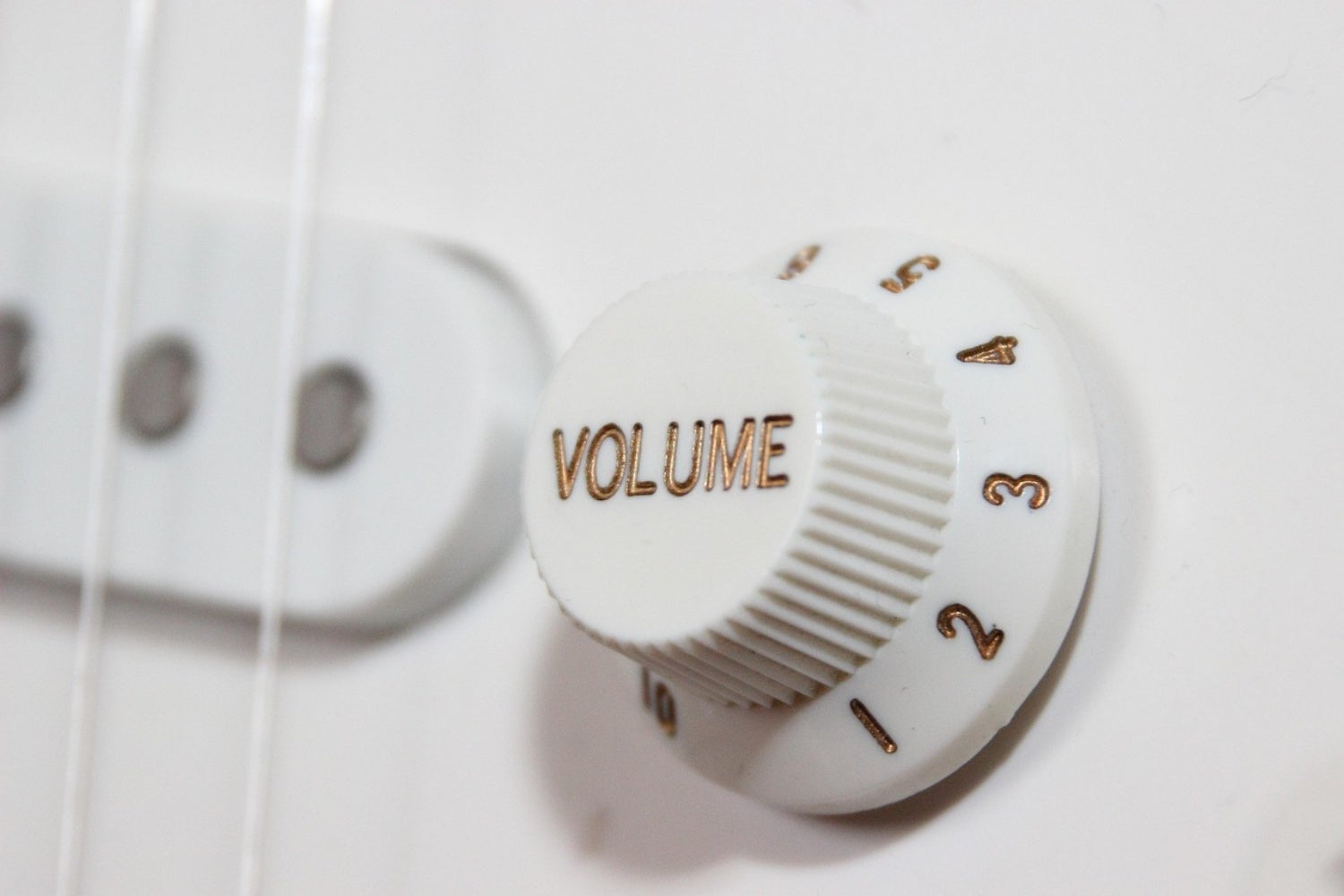
The volume knob: free and always at your fingertips
The knob is already on your guitar. So it costs nothing and doesn’t add any extra kit to the floor. Eddie Van Halen showed just how much it’s capable of. On ‘Cathedral’ from Diver Down, by his own account, he played hammer-ons with his left hand while turning the volume knob of his 1961 Stratocaster with his right.
How handy the knob is does depend on your guitar. On a Telecaster, you can roll it up and down with your little finger without much effort. On a large Gretsch, you have to reach quite a way for it, and a swell soon turns into a gymnastics exercise.
Many players also notice they lose clarity as soon as they roll back the volume knob. The guitar gets quieter and sounds a bit duller at the same time. A treble bleed softens that effect: a small capacitor on the volume pot, often paired with a resistor. You can do the mod yourself or have a guitar tech do it for you.
» View all guitar potentiometers
Where you control the volume makes an audible difference
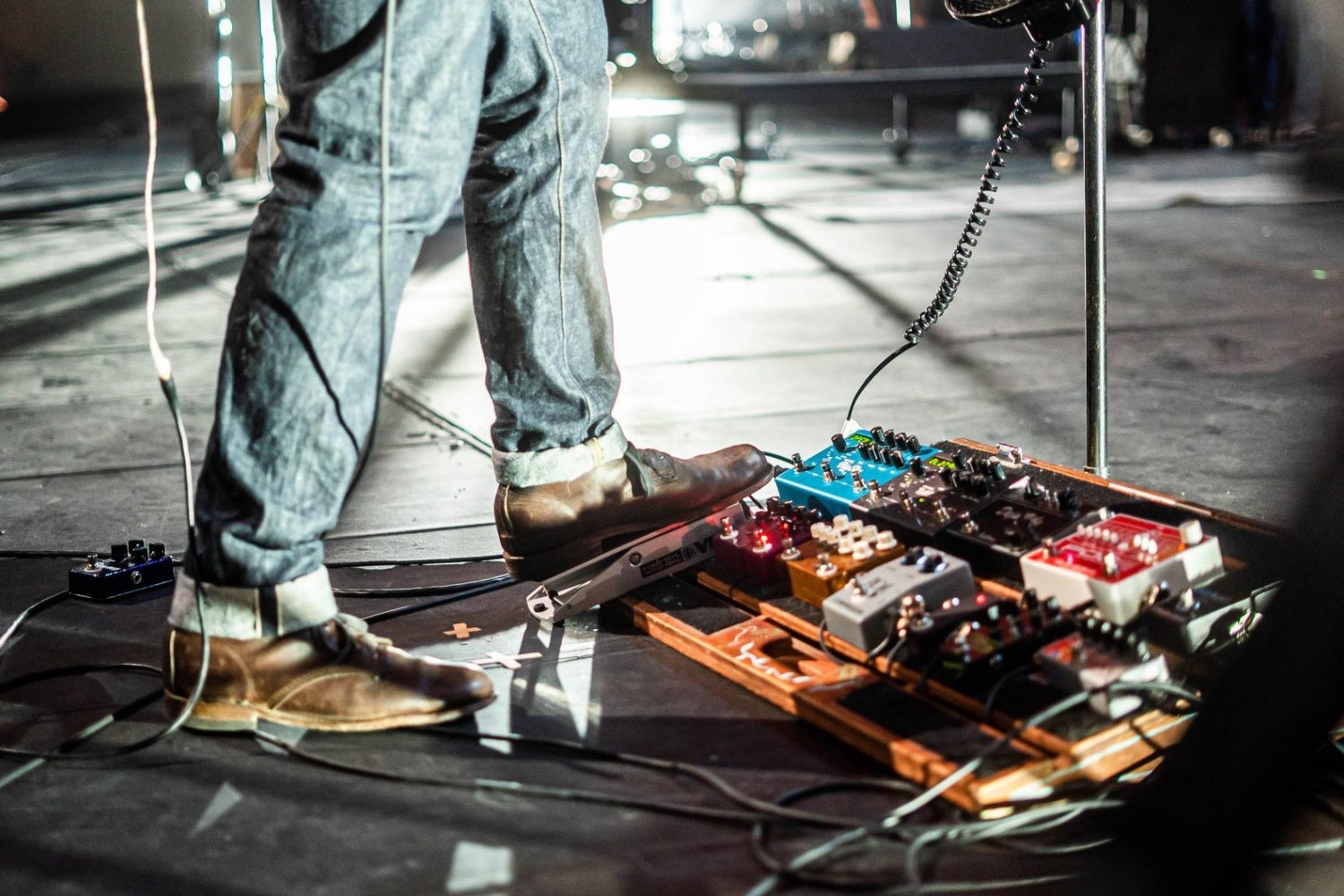
The volume knob is always right at the front of your chain, because it’s built into your guitar. A pedal can go anywhere, and then it matters whether it sits before or after your drive. Before the drive, you mainly control the gain: backing off makes your sound cleaner first and only then quieter. After the drive, the distortion stays the same and you only adjust the volume.
Think of it as shouting less loudly versus closing the door. If you shout more quietly, the character of your voice changes. If you close the door, you hear the same shout, just less loud. Many guitarists combine the two: the knob on the guitar for gain, the pedal after the drive for volume. For swells, the pedal often goes after the overdrive and before delay and reverb.
Pay attention to impedance when buying, too. Boss, for example, makes the FV-500 in an H version for high-impedance instrument signals and an L version with low impedance. If the pedal goes directly after your guitar, a high-impedance model is the obvious choice.






No comments yet...