
What is a noise gate pedal?
Published on Wednesday 13 May 2026
Noise gate pedals are especially popular with metal guitarists. A noise gate is really handy for removing that typical buzz, unwanted noise and other background sounds from your signal chain, while still playing with high gain. Guest blogger Alexousky explains exactly what a noise gate does and how to set one up.

How does this pedal work?
The idea of a noise gate is to suppress noise. Literally, it’s a “noise gate”, where the gate that lets sound through is normally closed. It only opens above a certain volume level. The pedal cuts the signal again when it drops below a certain level: the so-called threshold. Of course, you can set this threshold yourself. All frequencies above this threshold are let through, so the gate effectively “opens”. With a noise gate, you can eliminate all unwanted sounds that sit below that threshold. This is often the hum and buzz you might hear from, for example, amplifiers when you’re not playing or playing very softly. When amps are set loud (or with lots of gain), you’ll often get plenty of those annoying extra noises, which you can clamp down with this pedal to keep your signal as clear as possible. As mentioned earlier, a noise gate is mainly used by metal fans, but you’ll definitely also find one on the pedalboards of plenty of djent and progressive rock guitarists!

Controls
- Threshold: with this knob, you set the volume level from which the sound should become audible.
- Release: the higher this value, the longer it takes before the signal fully disappears again. This can be useful if you only want to tame noise when you’re not playing. With a shorter release time, you’ll get a ‘cleaner’ result while you play.
- Reduction/ratio: this lets you decide how much the unwanted signal is reduced. So rather than cutting it off completely, you can choose to still let a little through.
Where do you place the pedal in your effects chain?
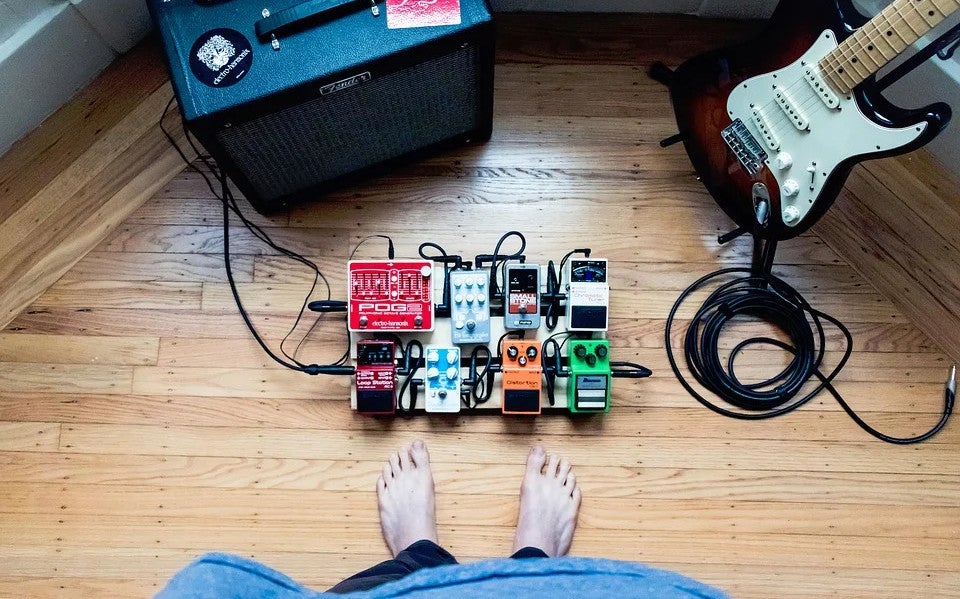
Simply put, place this pedal where you need to reduce the most noise. So it’s up to you to decide where in the signal chain, and at what moment, you want to switch it on. Most of the time, you’ll place it after pedals that significantly boost your output level. So you could, for example, put the noise gate after a fuzz or distortion pedal. It’s not recommended to place a noise gate before time-based effects like reverb or delay, because you don’t want to chop off the “tail” of those effects. These are just a few tips—definitely experiment with different setups to create your own sound!
Some great pedals
Bax Music has an extensive range of noise gate pedals.
Conclusion
A noise gate pedal is ideal for guitarists looking for a cleaner sound that isn’t coloured by hum from their amp and/or effects chain. Some people prefer a volume pedal to create a kind of manual noise gate, but that approach is a lot more limited. If you want to clean up your sound even further, a noise gate is definitely a must-have for your pedalboard!
 Want to turn LPs into MP3s? Here’s How to Digitise Your Vinyl
 How to Breathe: For Vocalists & Musicians
 Playing Keys in a Band: What You Need to Know
 Setting Up the Band with a PA System? Here’s What You Need to Know
 Everything You Need to Know About Making a Podcast
 Compression: What is it and How Do You Use it?
No comments yet...