Music Theory: Is it Really Worth it?
Published on Wednesday 26 February 2025

Guest blogger Iris Siemons writes songs for both herself and for other artists and, for a long time, she just didn’t see the point in learning anything about music theory. Why learn to read notes when you can just record them and then listen back? Now that she’s a little older and a little wiser, her eyes have been opened to the beauty of music theory; how it can not only help you to become a better musician and how it can actually serve as a really helpful tool for your writing practice. Basically, music theory is about far more than just reading music.
Chord Progressions
I usually just write out chord progressions on a sheet of paper. With pop songs, this works just fine and, if you’re a songwriter working in a recording studio with session musicians, whether it’s a guitarist, bassist or keyboard player, as long as your chord progressions are clear, they’ll be able to follow them. If you haven’t added a time-signature to your chord sheet, then people will automatically assume that it’s in 4/4 but, it can be useful to include the tempo in BPM (beats per minute) so that everyone has an idea of the speed they need to play at. I also often draw on the expertise of the musicians I’m working with and try out any suggestions they might have to make something better, or take on any insights they might have. The truth is, they are the experts when it comes to their own instrument, while my job is to retain a clear overview of the project and keep up the ‘art of omission’.

Do You Really Need to Read Music?
You really do need to be able to both read and write music if you need to ask a session musician to play a really specific melody or riff. This is definitely the case with any classical music, but it can also be the case if you’re working on three-part vocal harmonies, a violin part or a guitar or keyboard solo. However, in pop music you can more and more often get away with just sending over a pre-recorded example of what you want to be played in advance. This does make more work for the musician, however, because most conservatory trained musicians will transcribe the score for themselves to make life easier when they get into the studio. In classical music, notation is the standard, which makes sense, because there is a far less fixed structure involved with classical music when compared to genres like verse-chorus-verse-based pop.
Music Theory: More Than Just Notes
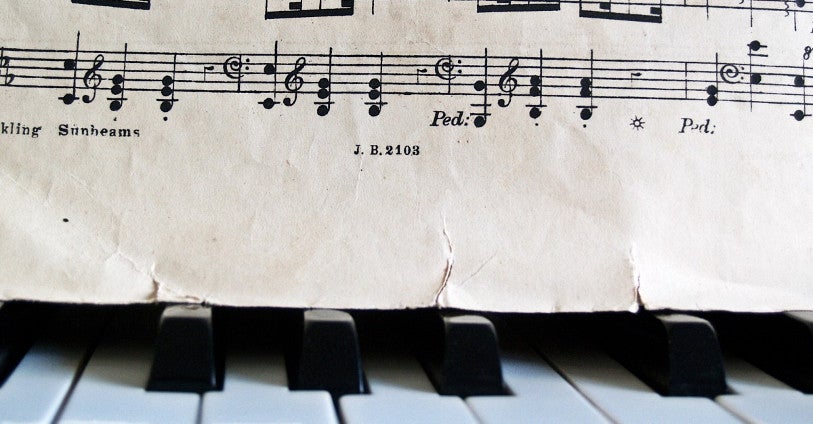
If you apply for any music course – even just guitar or piano lessons, then learning to sight read will be part of the curriculum. However, when learning music theory, you learn far more than just how to read music. For example, you can learn to train your ear to recognise different intervals; how to clap out and write down different rhythms; as well as the logical structure of chords and scales. Before I turned up to study music, I had been doing everything by ear. I was studying singing and couldn’t play anything past a couple of guitar chords. To me, music theory looked like some kind of mathematical witchcraft and the very thought of having to eventually take an exam on the subject gave me a headache. It was way too complex to bother with. I also just didn’t understand why you would want to place some mathematical model behind something that you feel and experience. It can’t be something you can calculate, right?
The Fundamentals
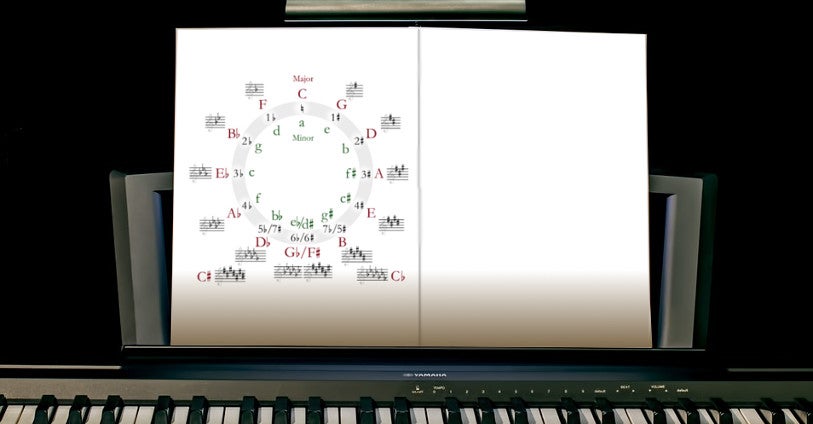
I now realise that, when you actually understand the system of scales and chords, it can be fundamental to both your experience of music and your music-making process. Music stops being something that’s conjured and becomes something that you can fill with all of these flavours, colours and other possibilities. All of this is mega-valuable for any creator. Of course, up until pretty recently, writing music down was the only way of recording and preserving music at all. Now, we all have a smartphone in our pocket that we can pull out and record anything with in an instant, so writing it down on paper seems a bit cumbersome and obsolete. But still, there are some songs that feature broken chords, which is where the notes of the chord are played individually. The order in which you play those notes is important so, being able to write something like that down would be pretty useful. Especially if you’re having to figure it out by ear using a recording with lots of other instruments in the background. If there are a number of parts making up a song, it can be really difficult to pick them out of a recording, so being able to write them down simply makes sense.
Training Your Ear
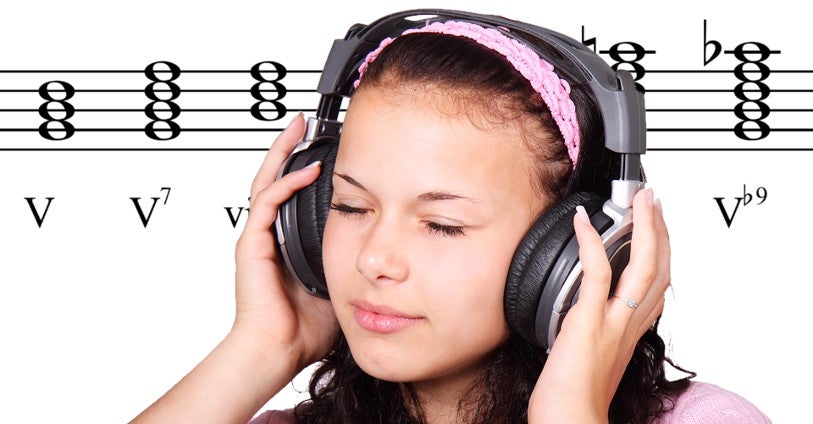
I still regularly train my hearing using free programmes you can find on the internet. Can you hear if something is in major or minor? Is that a 7th chord or an 11th? A Sus4 or a Sus2? Put in enough hours and you can learn to hear in the same way that you can learn to play the piano. Training your ear will make it much easier to talk to other musicians and to producers in the studio. It also helps me to pin-point exactly what I like and what I know isn’t working.
What’s your experience of music theory? Useful or a lot of fuss over nothing?
See also
» Learning to Read Music: The Minor Scale and Keys
» Reading Music: Rhythm, Tempo & Measure
» Chords: Theory and Chord Symbols
» How to play basic piano chords
» Songwriting Tips for Beginners