
Musician
-
In our other blog about modulation effects, three mod-based taste-makers were conspicuously missing and, even despite their instantly recognisable sound, these effects are used more often than you might think. If you want to take your guitar sound a little further than your more standard modulation effects can, then why not consider throwing a little tremolo, a bit of vibrato or a rotary effect into the mix?
-

While most people play a musical instrument because they simply love making music, it’s worth pointing out that starting out at a young age has several positive side-effects on the brain. In other words, that starter kit that you got your kid for Christmas last year might yield some unexpected results in the long run!
-

Acoustic drum kits are often configured to match a specific style, which is why rock-based drummers usually opt for a rock-configured kit, while jazz drummers are more likely to go for a little bebop kit. That said, there’s no reason why you can’t lay down jazz patterns with a rock kit or vice versa. Besides, a good drummer will always make sure that the sound of their kit matches the style of music, no matter how the kit is configured. Want to pull a more jazzy sound out of your kit? Read on for a few tips and tricks.
-
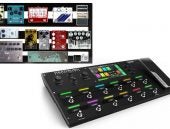
While the sound of nothing but your guitar and amplifier is undeniably awesome, sometimes you might want to be able to throw in a touch more variation. By sticking a few effect pedals between your guitar and amp, you can put a whole world of sound at your feet. But do you go for a bunch of separate stompboxes loaded onto a pedalboard or would you prefer a more one-stop-style solution in the form of a multi-effects unit? In this blog, we take a look at both, so you can kit yourself out with exactly what you need, whether you’re a guitarist, or a bassist who wants to be more than just part of the rhythm section.
-
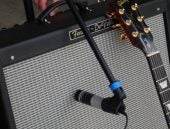
Re-amping is a studio recording technique that’s been picking up more and more speed. Compared to recording electric guitars, guitar amps, drums and other instruments the traditional way, re-amping offers a number of benefits which I’ll tell you all about by using guitarists, who re-amp the most out of all musicians, to illustrate the idea.
Comments Off on What’s Re-Amping and How Does It Work? | in: Guitarist, Musician, Studio & Recording -

If you’ve already read my other blog on FM synthesis, then you’re ready for part two: an extensive tutorial on how to design sounds using FM synthesis. To give ambitious beginners a helping hand, I’ll be covering terms like operator, carrier, modulator, envelope, scaling and feedback, giving you all the basic knowledge you need to use either FM-based hardware such as real synthesizers, or FM-based software such as the Native Instruments FM8 virtual synth (included with Komplete) to sculpt your own sounds.
Comments Off on How to Sculpt Sounds With FM Synthesis | in: Keyboardist, Musician, Studio & Recording -

Music: it’s an art. It’s an emotion. Close your eyes, drift away on a fluffy little cloud and just feel the music. Music can’t be quantified, it can’t be measured. Music isn’t mathematics. Music can’t be judged – that would destroy it. But let’s be honest.
Comments Off on Good Music Can Be Measured | in: Musician -

A brass section, or horn section is usually made up of one or two saxophones, trumpets and trombones and can fit pretty much anywhere in the music landscape, but in some genres, like soul and funk, having a horn section is an absolute must. In any case, when you add a brass section to the band, you can really make the music explode. A brass section brings in extra soloists, makes everything sound thicker and fatter and looks nothing short of awesome on the stage. But… adding horns into the mix is actually a tougher process than you might think. Here, we offer up eight tips to help you form the perfect collaboration.
Comments Off on Want to Add a Brass Section to the Band? Here’s 8 Tips for the Perfect Collab | in: Musician -

If you just treated yourself to your first guitar, digital piano, drum kit, DJ controller or music production software, then chances are you’re already dreaming of performing on a stage one day. To get there though, you’re going to need a good way to hone your skills. Nowadays, there’s plenty of wisdom to be found online, ranging from tutorials on YouTube to free courses, which raises the question: how does self-teaching stack up against going for lessons with a real teacher?
Comments Off on Learning to Play an Instrument: Self-Teaching vs Real Teachers | in: Musician -

Our guitar specialists could probably spit out a thousand-and-one facts about acoustic guitars but, since no one’s got all day, we’ll stick to just five!
-

Strumming is something that every ukulele player is familiar with. Whether it’s the calypso strum, the split stroke or just a simple down-up-down-up, what could be more enjoyable than strumming away on your ukulele and singing a song? But, as our guest blogger Matthew Quilliam explores, many people neglect to consider the fact that how they strum can change depending on what finger (or something else) they are using…
-

The venerable experts of Bax Music could offer up a thousand-and-one fascinating facts about the piano, but since no one has time for that, we’ve hand-picked just five!