
Rosining your bow: how often and how much rosin do you need?
Published on Monday 26 October 2026
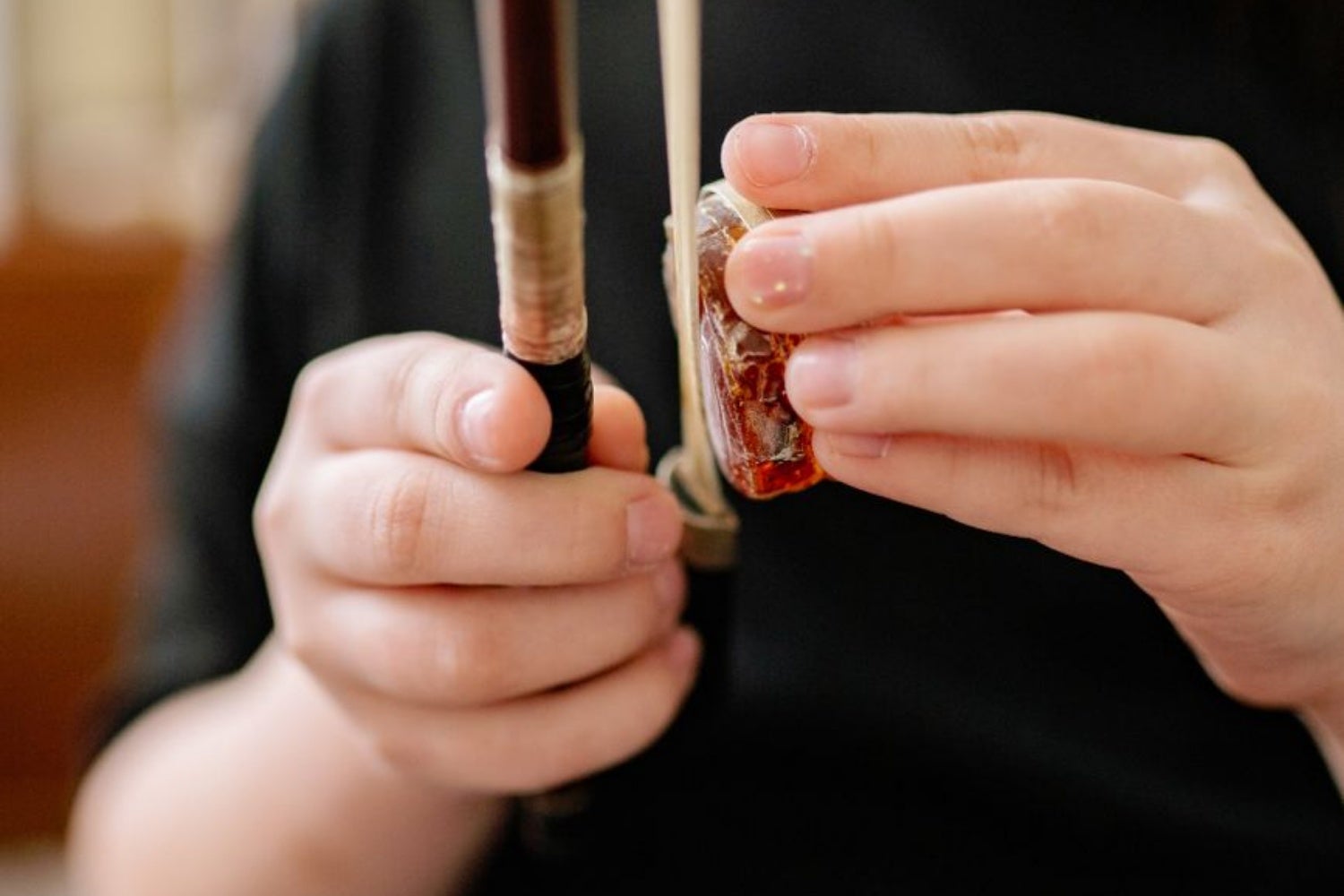
Rosining is the most underestimated job for string players, and the one that most often goes wrong. With students I see the same thing almost every time: far too much rosin, far too often, and a violin that sounds as if there’s sand between the strings. A bow needs less rosin than you think, but at the right moment and of the right kind.
Rosining a new bow, and how often after that
Without rosin, nothing happens. A new or freshly rehaired bow glides straight over the string and produces little more than a whisper. Rosin gives the hair the grip to catch the string and release it again, hundreds of times per second. That is your entire tone.
At room temperature, rosin is brittle, like a bar of dark chocolate straight from the cupboard. As soon as the bow moves across the string, frictional heat makes the rosin layer soft and sticky, after which the friction drops until the hair grabs the string again. For that, you need a thin, even layer, not a thick crust.
New hair takes patience. Fresh hair doesn’t take rosin well at first, so draw the cake calmly along the full length a few times, try it out, and add a little more as long as the sound stays thin or hissy. I use an old toothbrush to separate the hairs and spread the rosin. Stop as soon as the tone catches.
After that, less is more. Rosining out of habit before every practice session is the most common mistake. Once every four or five sessions is often more than enough; if you play for hours a day, a little more often. If the rosin grips less and less and you find yourself re-rosining almost daily, the hair is to blame: it’s worn out and ready for a rehair.
» View all string instrument care products

How to tell if you have too much or too little rosin
You’ll hear too much rosin before you see it. The sound becomes grainy and harsh, as if the bow is dragging tiny scratches through the tone. Then you’ll see it too: a white film on the top beneath the strings, and strings turning white. That powder is rosin the hair couldn’t hold on to. Skip rosining for a few sessions and wipe everything down properly, and the problem sorts itself out.
Too little rosin, on the other hand, sounds empty. The bow hisses over the string without catching, slips away on a firm stroke, and you can feel smooth patches in the hair. Then it’s time to add some, in moderation: a few strokes and try again. If in doubt, play a long open string. If the tone catches immediately and stays clean, you’re good.
Light or dark rosin, and cake or box
Light rosin is generally harder and less sticky. That suits the thinner strings of the violin and viola, which want fine grip without too much clinging to the hair. Hard rosin also holds up better in warm rooms, because it only softens at higher temperatures. Anyone who plays in a sweltering hall in summer will notice the difference.
Dark rosin is softer and tackier and is mainly chosen by cellists and bassists, because thick strings need more grip. Double bass rosin is softer still and belongs on a bass bow only; on a violin bow it makes a sticky mess. Beyond that, virtually any rosin works on any instrument, so above all try what your instrument and your hand find comfortable.
Rosin in cake form is usually purer and of higher quality; boxed rosin is cheaper and intended as an all-round rosin for everything except the bass. For a beginner, a box is perfectly fine. Once you notice the sound has more to give, you can move up to a better cake later. Rosin lasts for years, so it’s never an expensive purchase.

Removing rosin from strings and varnish
Wipe down after every session. It may sound obvious, but it saves you a lot of hassle later on. A dry, soft cloth over the strings, the top beneath the strings and the bow itself, and most of the rosin dust is gone before it has a chance to stick. I keep a cloth in every case, so I have no excuse.
If the dust is left to sit, it bonds with the varnish and the top turns dull and cloudy. Getting that off without damage is nearly impossible; that’s a job for the luthier. Rosin build-up on the strings is audible too: the response becomes sluggish and the sound duller. That’s why you can hear the difference as soon as you clean your strings.
For caked-on rosin, a cloth with a little alcohol on the strings does the trick. Be careful: alcohol damages varnish, so put a cloth under the strings, keep the cloth damp rather than wet, and dry the strings straight away. A drop on the top is worse than a bit of rosin. If in doubt: leave it, and wipe more often.
» View all violin strings
» View all string instrument care products




No comments yet...