
-
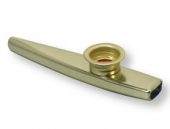
On the 28th of January every year, the world celebrates Kazoo Day, giving this small yet charming little instrument all the attention it deserves. Imported from America where the kazoo has achieved the esteemed status of a kind of unofficial national instrument, this very special day is now celebrated by all. But with a sound that’s often compared to a mosquito trapped in a matchbox, what exactly is a kazoo and how do you play it?
1 response | in: Musician -

The difference in price between one electric guitar and another can be insane. While one will set you back a couple of hundred quid, another one costs a few thousand. Sometimes this comes down to the brand, but even then there must be something that makes one guitar worth more than another, and for the complete beginner, this can be pretty unclear. In this blog, we explain why there can be such a big price difference between different electric guitars and basses, so that you can get a clearer picture of exactly what you’re paying for.
-

So you’ve been passionately listening to your favourite artists for years, have recently started making your own mixes and now you’re wondering how you can become a professional and successful EDM or pop music producer? Grand! As you know, the world of music production is home to some really big names and teams, so in this blog, guest-blogger Jens Oosterkamp (Jens East) shares some valuable tips and the story of how he started out in his bedroom and is now often approached by acclaimed record labels.
Comments Off on How to Make a Breakthrough as a Producer | in: Guest Blogs, Marketing & Business, Studio & Recording -
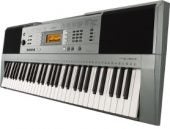
Have you always wanted to learn to play the keyboard and are you finally ready to find out what you’d need to make a solid start? Awesome, because in this blog we’re going to give you a small list of the things you’ll need!
-
If you’ve read our guitar and bass guitar buyer’s guides, you might be wondering how important the wood used for the fretboard is. Since it actually helps shape the sound, look and feel of almost every guitar and bass, maybe the question should be: which type best suits you? Dip into this blog and you’ll learn the most important differences, making picking out your new guitar that bit easier!
-
Some drummers swear by it, while others can’t stand it: the click-track. For any musician, a click-track is essentially a metronome that you can hear over a set of headphones or speakers. Play in time with the click or risk the recording or performance sounding loose and shambolic. This method certainly offers a lot of advantages but also comes with a few pitfalls. So, when should you toe the line and use a click track and when should you just let it go?
-

If you want to be able to pluck solos out of thin air or even compose a ripping solo, then one thing is certain: you absolutely have to be able to improvise. The honing of this skill demands hours upon hours or practice and an experimental spirit. Only then do you have to power and intuitive flow to weave a stunning solo, even if you’re composing it bit by bit. This is not only about playing along with a recorded track perfectly, but is more about spending days on end inventing little lines of melody on the fly.
-

To make recordings on your computer, you need software. The natural thing to do would be to turn to a DAW, or digital audio workstation, which is used to produce music with the help of samples and virtual instruments. In the DAW universe, there are a lot of teams claiming they have the best software, and if you’ve never used one before, you might think they look quite complicated. To ease you in, I’ve written this blog that can help you find the perfect beginner DAW.
-
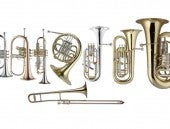
Brass wind instruments feature in many different styles of music and are a source of confusion when it comes to what they’re called and how they sound. In this blog, we’ll sort them by pitch and go over the differences.
2 responses | in: Musician -

To end up as a drummer for a big band, you can’t escape beginning with a couple of basic rhythms. While the ones you’ll want to play are likely to depend on your stylistic preference, there are a few simple beginner drum rhythms that can be used in any style. In this blog, I’ll discuss four quintessential rhythms that offer endless experimentation and variation.
-
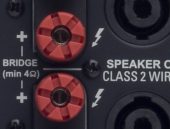
2 Ohms; minimum load 4Ω; 8-kOhm; 16Ω…when you enter the world of audio amplification, there’s no way around terms like these. They’re often found on the backs of speakers, guitar cabinets and amplifiers, so in this blog, I’ll try to clear up the role of impedance (resistance) and explain what the numbers that go with it actually mean.
26 responses | in: Live Sound -
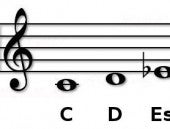
Introducing the C-minor scale, this blog follows up on the ‘Learning to Read Music: The C-Major Scale’ blog and aims to teach you how to play the scale in different keys (D, E, F, G and A). Again, it doesn’t matter if you play piano, recorder, guitar or violin – any instrument can be used here.
About Bax Music
Bax Music is your go-to online music store in the UK with more than 48,000 bits of gear and accessories in stock. More than 1,000 brands and a 26,000m2 warehouse packed with musical instruments, DJ and studio gear, headphones, speakers and lighting. Ordered before 10 PM? Receive delivery in 2 - 4 business days.
Subjects
Sign up for the Bax Music Blog Update!
Just fill in your email address and we'll drop a fresh instalment of blogs in your mailbox every month so you never have to miss out again.