
-

If your current set of studio monitors isn’t able to deliver the deepest bass frequencies or if you’ve been noticing that your productions sound a little too boomy in rooms other than your own studio, then it’s probably time that, rather than upgrade to a pair of bigger monitors, you expand your set-up with a dedicated studio subwoofer. Read on to find out whether a sub is a solid investment for you and how you can optimally set one up.
Comments Off on Studio Subwoofers – The What & Why | in: Studio & Recording -

This blog covers the widely used blues scale. Even if you wouldn’t call yourself a blues musician, this magic scale is something that every musician should know, since it not only helps build the fundamentals of blues, but pretty much everything that followed it – including pop, rock, and everything in between.
-

You’ll come across the ‘fretboard radius’ listed in the specifications and mentioned in the description of any guitar or bass included on the Bax Music website, but what is this mysterious measurement and why is it important? In this blog, we offer the humble novice a crash course in the concept of the fretboard radius and hopefully make picking out the right guitar or bass just a little bit easier.
-

It’s time to delete Angry Birds and those diet tracker apps you never use and install what you really need: five essential apps that can ease your life as a drummer and help you prepare for any situation that involves drums.
-

This might sound familiar: you’re at home trying to record audio using an audio interface, a microphone and some kind of recording software. The signal input meters of the software are barely moving so you turn up the gain, only to then sing one or two loud notes and be immediately confronted with the signal clipping as if possessed by the devil himself. If that does indeed sound familiar, you’ve no doubt asked yourself (and the internet apparently): how loud should I record audio?
-

In the music industry, it can be pretty difficult to get things done. With a long schedule of items to accomplish, productivity and a strong work ethic can often be extremely hard to obtain. In his work as a marketing manager for Moon Jelly Agency for multiple artists it’s Guest blogger Jeroen‘s duty to make sure all the requests of labels, events and the media are taken care of by the artists without them getting overwhelmed by the amount of tasks. A strong work ethic and an efficient workflow are key. So, in this article, we’re going to discuss how to improve your work ethic so that you can achieve your ambitions.
Comments Off on How to improve your work ethic to achieve your ambitions | in: Guest Blogs, Studio & Recording -

Guest blogger Guy Burton shares some points to consider before diving head first into the diverse universe of iPad music apps.
-

Music production is a long and tedious process. Writing a song can take anywhere between two weeks to two months. But while artists aren’t releasing music, keeping fans’ interest engaged can sometimes be difficult. However, as a music producer, your music isn’t the only content you can offer your fans. With the ability to create mashups, mixes and various other forms of media, it’s important that you use all your resources to give fans incentive to persistently keep up with all things, you.
Comments Off on Music Production and the Secret to Creating an Effective Content Calendar | in: DJ, Guest Blogs, Marketing & Business -

Guest blogger Guy Burton asks us to worry less about the technical details or equipment specifications, and focus on finding gear that fits your workflow, your space, and your personality.
-
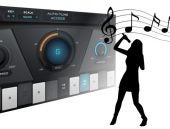
If you’ve spent the last couple of months practising to sing as perfectly as a real popstar, then I’ve got good news and bad news for you. The bad news is that you spent all that time honing ad-libs for nothing, but the good news is that you can actually buy pitch-perfect vocals! Granted, I’m overstating things a little here, but the question stands: is using pitch-correction software like Auto-Tune the invention of the century, or is it just cheating? Let’s dive into the matter and see what kind of exciting stuff you can do using pitch-correction software like Antares Auto-Tune, Celemony Melodyne and Zynaptiq Pitchmap.
Comments Off on Auto-Tune, Melodyne… Is Using Pitch-Correction Cheating? | in: Singer, Studio & Recording -

Great, so you know how to tune your ukulele and maybe you’ve even learnt a handful of basic chords already – now it’s time to learn your first strumming patterns! In this blog, we’ll be teaching you how to play various rhythms by starting out with something simple and increasing the complexity as we go. Good luck and have fun!
Comments Off on Ukulele Rhythms: Learn Them Here! | in: Musician -

The guitarlele is a great 6-string instrument for anyone who feels like a ukulele is too small and a guitar is too big. As you’d expect from the name, the size of a guitarlele sits somewhere between a guitar and a ukulele, and if you want to learn to play this smaller-than-average, but not-too-small instrument, then you you’re in the right place. Here, we’ll guide you through tuning up your guitarlele, how to strike the strings, and even how to play rhythms and chords. If you have any burning guitarlele-related questions at the end, feel free to leave a comment!
1 response | in: Musician
About Bax Music
Bax Music is your go-to online music store in the UK with more than 48,000 bits of gear and accessories in stock. More than 1,000 brands and a 26,000m2 warehouse packed with musical instruments, DJ and studio gear, headphones, speakers and lighting. Ordered before 10 PM? Receive delivery in 2 - 4 business days.
Subjects
Sign up for the Bax Music Blog Update!
Just fill in your email address and we'll drop a fresh instalment of blogs in your mailbox every month so you never have to miss out again.