
Singer
-

Scientists are discovering more and more about how the human brain works, and if you’re a musician that ever-increasing knowledge can be put to good use. Using vocalists for our little case study, in this blog, we’ll focus on ways musicians can use the power of repetition to reach the next level in their development.
-

Performing out in the open can be challenging when it’s windy. Not only can wind literally carry the sound of the band in the wrong direction and make it harder to hear, but a light gust can easily send your sheet music flying. Luckily, there are a few simple solutions to tackle the latter, no matter what kind of music stand you use.
-

The shorter the distance between the source and the microphone, the more low frequencies are registered at the cost of high frequencies. This is what’s known as the proximity effect, and it applies to a lot of microphones. In practice, this usually means that the closer you close-mike your voice or instrument, the fuller it’ll sound. Read on and learn how to take advantage of it.
Comments Off on Microphones and the Proximity Effect | in: Live Sound, Microphones, Musician, Singer, Studio & Recording -
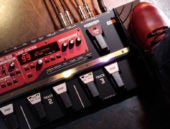
A ‘loop’ is what happens when you take a short (or long) snippet of music and repeat it again and again – on a loop. So, you can take a drum or guitar part and loop it. You can even sing a line and loop it. In fact, using a looper; as long as you can record it in, you can loop it. And, you can not only loop snippets of music, but record and stack endless ‘overdubs’ over the top. In this blog, we’ll take a look at the history of the loop pedal and find out exactly what you can (and can’t) do with these magic boxes.
-

How different can singing jazz be from singing pop? The answer is: very different. Get your average pop singer to take on a jazz standard and it just won’t be jazz any more. Jazz singing demands an entirely different sense of timing, rhythm, phrasing and an entirely different attitude, and there’s one final essential ingredient: improvisation. In this blog, we tackle the techniques that make jazz singing possible.
-

While there’s plenty to learn when it comes to singing alone there’s just as much to learn when you start adding more voices to create harmonies. With just one extra voice, you can already sing awesome harmonies, so just imagine what happens when you start adding even more!
-

Whether caused by a bad habit or a passionate performance, the injuries related to being a musician can range from a gradually niggling and continuous beep in one ear, to chronic and unbearable wrist pain. If you want to play comfortably for the rest of your life, then it’s more than worth learning to listen to your body, practise some good-old self care, and avoid long-term injury, hearing damage, and dreaded RSI!
-

A full choir can be seen as an enormous, singular audio source, that sometimes spreads out its sound over tens of metres, making for a pretty unique job when it comes to recording. How do you make sure that every choir member is captured while the choir sounds like a cohesive whole? In this blog, I’ll explain how just two or three cleverly positioned microphones can result in a balanced and clear stereo-recording.
-

Most people never even think about vocal microphone hygiene, which is okay as long as you’re the only one using the mike. If not, it’s important that you clean your vocal microphone after use to prevent one singer from passing their germs on to the next. In this humble blog, I’ll explain how you can easily clean a microphone yourself.
Comments Off on How to Clean a Microphone | in: Live Sound, Microphones, Musician, Singer, Studio & Recording -
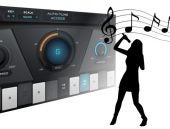
If you’ve spent the last couple of months practising to sing as perfectly as a real popstar, then I’ve got good news and bad news for you. The bad news is that you spent all that time honing ad-libs for nothing, but the good news is that you can actually buy pitch-perfect vocals! Granted, I’m overstating things a little here, but the question stands: is using pitch-correction software like Auto-Tune the invention of the century, or is it just cheating? Let’s dive into the matter and see what kind of exciting stuff you can do using pitch-correction software like Antares Auto-Tune, Celemony Melodyne and Zynaptiq Pitchmap.
Comments Off on Auto-Tune, Melodyne… Is Using Pitch-Correction Cheating? | in: Singer, Studio & Recording -
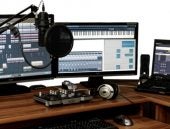
As the cornerstone of any studio production, vocals are often what listeners base their opinion on, whether consciously or subconsciously. No matter how fat your drums and synths sound, if the vocals are slightly off, the whole thing quickly drops in overall quality. No worries though, we’re here to teach you how to mix the most out of your vocal recordings using DAW software!
-

Covering a song that has moved or touched you in some way can be a challenging endeavor. For starters, recording a cover or remake entails much more than just copying or repeating what you’ve heard. As with any musical performance, a song cover should be uniquely yours. Whether you want to cover a popular Beatles song or something that’s more obscure, doing your own version entails creativity, originality, and a certain level of boldness.