
Musician
-

In this blog, you’ll get a full explainer on how to transpose musical score. Transposing basically means shifting the notes of a piece of music up or down by a semitone or more so it can be played in a different pitch. Of course, there’s plenty of software you can use to transpose sheet music, but you learn way more when you do it yourself. And, since you can pull it off in three steps, why wouldn’t you? Is it easy? Well, not at first, but if you take your time and follow these instructions, then you’ll definitely be able to do it. We’ll take a look at transposing with software; with nothing more than pen and paper; and even transposing on the spot while you’re playing. We’ll also look at how to pitch-shift audio files.
-

A well-tuned violin forms the base of good intonation! If just one of the strings is even slightly too sharp or flat, then every note you play will sound slightly out of tune and the balance of your sound will be off, meaning you won’t be able to hit the right notes or play a melody that you can immediately recognise. Ultimately, it’ll make playing your violin a miserable experience. Being able to tune up is an essential skill for any violinist, so here, Guestblogger and professional violinist, Nicolas Penel offers a clear guide to bring your violin up to perfect pitch.
-

While many people associate the flute with classical pieces, such as the Bach Partita in A Minor, or the Mozart flute duets, you’d be surprised how often this woodwind instrument has infiltrated the world of rock. In this article, guest blogger Aleah Fitzwater will lead you through how the flute made its way into jazz, and then rock and roll, as well as some of the instrument’s biggest moments in rock history.
-

K-pop lovers were invited to fully indulge themselves during KPOP.FLEX; Europe’s first-ever K-pop mega festival. The event took place on Saturday the 14th & Sunday the 15th of May at Deutsche Bank Park in Frankfurt, Germany and featured some of K-pop’s most stratospheric artists, including Monsta X, Kai, NCT Dream, ENHYPEN, (G)I-DLE, IVE, Dreamcatcher and Mamamoo.
Comments Off on KPOP.FLEX: Europe’s First-Ever K-Pop Mega-Festival! | in: Musician -

Trombones are part of a category of instruments called low brass and generally take care of the ‘body’ of the sound produced by symphony orchestras, big-bands, salsa acts and pop-band brass sections. When played using a plunger mute, the trombone can laugh, cry, whine, roar, talk and incite emotion, making it one of the most expressive instruments on the planet.
Comments Off on The Trombone: Types, Playing Techniques and More! | in: Musician -

Thanks to social media, it’s never been easier for bands to reach a huge audience by dropping studio-polished tracks on online platforms. That said, sounding good in the studio is one thing – sounding just as good or even better on stage is another. Stunning live performances are exactly what sets good bands apart from the rest, which raises the question: how do you make the perfect live recording of a gig? Well, read on and learn!
-
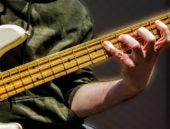
Learning to play arpeggios and understanding how they work is an essential skill if you want to write some solid bass lines. Basically, arpeggios are what happen when you play the single notes of a specific chord in succession. They’re well worth learning, since an arpeggio will always match perfectly with the chord that the guitarist or key-player is hitting. So, for a bassist, practising and nailing a small library of arpeggios is actually a better first step than memorising scales, because it immediately sets you up with a full kit bag to work with when it comes to writing your own bass lines. So grab your bass and start drilling.
-

A band is rarely complete without a bass, and while the bass provides the sonic foundation for the rest of the band and is an essential part of the rhythm section, it’s often overlooked – unless the bassist misses a beat or fluffs a line, of course. Here we find out exactly why the bass is so important; present its illustrious history; and cover some handy techniques and tips.
-
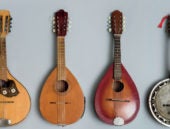
A traditional folk, bluegrass, country, and classical instrument, the bright, complex, and sparkling sound of the mandolin has even managed to hit the charts every now and then. This plucky little string instrument has an entirely unique sound and its own rich history.
Comments Off on The Mandolin: The Basics | in: Musician -

There are so many different guitars available these days, so if you’re a complete beginner looking for your first study-buddy, you might be asking yourself: how many strings does a ‘normal’ guitar actually have? What’s a ‘normal’ guitar anyway? And if I want to start lessons, how many strings should my guitar have?
-
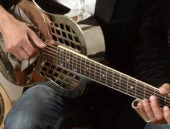
Everyone has their own associations upon hearing the sound of a certain instrument. Without doubt, most of us will link the sound of a resonator guitar (also known as a dobro) with the rocky landscapes of the American South – the place where the resonator guitar found its home in bluegrass, country, blues and other styles characterised by the authentic sound of this steel-stringed instrument.
-
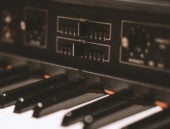
Our shared obsession for vintage instruments is as timeless as the gear itself. From the Rhodes, Hammond and Wurlitzer to the Yamaha CP series, the Clavinet and the Mellotron, the signature sound of these old-school units can be heard in countless chart-toppers, which goes to show just how big of a mainstay these revered keyboards are.