
Musician
-

It’s time to delete Angry Birds and those diet tracker apps you never use and install what you really need: five essential apps that can ease your life as a drummer and help you prepare for any situation that involves drums.
-

Great, so you know how to tune your ukulele and maybe you’ve even learnt a handful of basic chords already – now it’s time to learn your first strumming patterns! In this blog, we’ll be teaching you how to play various rhythms by starting out with something simple and increasing the complexity as we go. Good luck and have fun!
Comments Off on Ukulele Rhythms: Learn Them Here! | in: Musician -

The guitarlele is a great 6-string instrument for anyone who feels like a ukulele is too small and a guitar is too big. As you’d expect from the name, the size of a guitarlele sits somewhere between a guitar and a ukulele, and if you want to learn to play this smaller-than-average, but not-too-small instrument, then you you’re in the right place. Here, we’ll guide you through tuning up your guitarlele, how to strike the strings, and even how to play rhythms and chords. If you have any burning guitarlele-related questions at the end, feel free to leave a comment!
1 response | in: Musician -
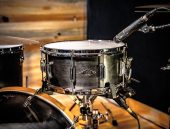
Out of all the instruments that exist, the drum kit is arguably the most difficult to record. Then again, a drum kit actually isn’t a single instrument; it’s a collection of loud percussion instruments that cover the entire audible frequency spectrum. As such, it’s not uncommon to record a drum kit using multiple microphones. In this blog, you can find out which microphones are the best for the job and how you should set them up.
-

So, you’ve just picked up your first guitar and are itching to play a little something. You may already be able to pick out a simple melody, but what you really want is to play that rich sound shaped by multiple notes at once – also referred to as chords. In this blog, I’d like to help beginners on their way to learning, reading and playing their first guitar chords.
-

We’ve already covered the most used scales – the major and minor scales, and found out that the major scales have been solidly ingrained in Western musical heads for centuries already. What you might not be so aware of, is the dominance of the pentatonic scales which have helped shaped pretty much any popular contemporary music ever made. Just like the natural major and minor scales, there are major pentatonic scales and minor pentatonic scales. These scales are also easy to learn and can be quickly used for improvising.
-
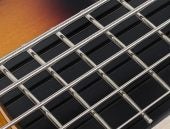
While most bassists play a 4-string solid body bass like a ‘P’ or ‘J’-style bass, you can get basses that push it further with 6,7, or even more strings. This might seem like overkill, but in any case, there will come a time in the life of a 4-string bassist when they ask themselves: “Do I need more? Is my 4-string the bass of my dreams or am I secretly yearning for a 5-string?”
-

Guestblogger Marc shares his step-by-step instructions for replacing the machine heads (also known as tuners) of your guitar. He’ll not only explain how to do a clean job and freshen up your guitar, but explain why you might need to swap out the tuners at all as well as providing a helpful list of all the tools you’ll need. According to Marc, the process is much more simple and much less scary that you might think.
-

Violins are known for their beautiful and versatile sound, but they’re also complex instruments that require quite a bit of practice to master. Just like lessons, violins are often expensive, which is why a lot of people opt for a cheaper study model so they can find out if they like it enough to make a bigger financial investment once they have the basics down. For beginners and other dare-devils looking to step into the magical world of bow-string instruments, we hereby offer five useful violin tips.
-

Most guitarists only ever learn to play open chords and two types of barre chords. The latter can be used all along the fretboard by sliding your fret hand up and down, which gives you two, maybe three different options to play the same chord. But what many players don’t know is that with only three extra chords, you can actually play each chord in five different ways. This is called the CAGED system.
-

It’s highly likely that you have no memory of ever having to learn to … sit down. But if you’re a pianist, the way that you sit at your piano is more important than you might think. When combined with your knowledge of technique and theory, a correct playing posture can make a world of difference to your playing, and is really easy to learn. And, if you maintain the correct posture, then you’ll also avoid any future back problems. In this blog, I explain how you can improve your piano playing, by simply learning to sit down!
-

Are you tired of being dependent on music books? Then you might want to browse through this blog and look at some of the strategies and tips that can help you memorise sheet music and play pieces off the top of your head. Next time you walk by a piano at a railway station, you’ll be able to sit down and steal the show!