
Musician
-

In this article, we dive deep into hard rock and the closely related style that is heavy metal. What even is hard rock? How do you play great hard rock? And what do classical music and jazz have to do with it?
Comments Off on The History and Features of Hard Rock and Heavy Metal | in: Musician -

Just started learning the guitar, bass, drums or any other musical instrument? Then you’ve made a wise decision! Making music is a ton of fun, and it only gets better when you play in a band. If you can’t find a band that plays your style, then you can always start your own using the tips we’re about to share.
-

Maybe your first booking was at your friend’s or your cousin’s wedding and it was such a success that you want to go professional. More and more couples are getting wed to a live-performed soundtrack, which only increases your chances of getting some gigs booked during the wedding season. Here, Guestblogger and professional wedding musician Kevin Okkema shares his tips to help you get more requests.
-

Ego-trippers can be found in every corner of the world and, as musicians, maybe we’re the biggest offenders around (at least secretly… admit it). Launching into a nutty drum break or a show-boating guitar solo can sometimes feel irresistible – but while it might feel good, it might not actually work in your favour. Here, Guestblogger, drummer and founder of Let it Rock music school Jemy Gijsman explains why being a good musician doesn’t automatically mean that you’re a good band mate.
-

Acoustic drum kits definitely have plenty of charm on their own, but the same applies to electronic kits. The basic idea of a hybrid drum kit is to combine all the best bits of an acoustic drum kit with the best bits of an electronic drum kit or percussion pads, giving you the very best of both worlds. There are a few ways to build a hybrid kit, whether it’s using triggers, adding a set of sample or percussion pads, or by adding a drum module. In this blog, we’ll take a look at what’s possible and what you can get when building your own hybrid kit.
-
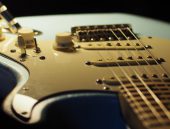
Guest-blogger Marc de Jonge is here to talk about relic’ing: the artificial aging of guitars and basses to give them a weathered, played-in look and feel. There are various ways to go about relic’ing an instrument, and Marc has several tips for everyone who’s thinking about giving it a try. It’s definitely something that takes guts, an eye for detail, and a little artistry.
Comments Off on Relic’ing a Guitar or Bass: How and Why | in: Bassist, Guest Blogs, Guitarist, Musician -

In the world of wind instruments, an ensemble can take many different forms, but if you’re not an insider, you’re unlikely to know the difference between a harmonic ensemble, a fanfare ensemble and a brass band. All of them are different types of ensembles, but what exactly is the difference?
No responses | in: Musician -

Ever played a gig where the band that performed before you overextended their set, leaving you just a few minutes to set up your drum kit? It’s a nightmare for most drummers, if not an impossible challenge. Thankfully, there are various ways to optimise your kit and prepare it for a speedy set-up when you’re in a hurry.
-

Whether you’ve just started playing or you’ve been at it for years, every musician faces the same challenge at some point: you want to learn the rhythm or the groove of a track but it’s not working out. Maybe you’re confronted by a new technique that you’ve never tried out before and it seems impossible to learn. Are there any tricks that drummers can have up their sleeves to avoid the frustration? To be fair, there’s only one trick: broaden your horizons by taking on every genre going, and never fear any strange and new playing techniques.
-

In this article, guest-blogger Wietse Hendriks shows you how to write and compose your own drum parts. Covering topics like where to find inspiration and how to deal with band leaders, conductors and composers, Wietse taps into his twelve-and-a-half years of experience as a drummer.
-

Having spent holiday evenings with family and friends, sitting around the campfire with a guitar in his lap, Guestblogger Michel Penterman has some experience in this matter. Being a campfire guitarist is no joke – you have a job to do. You need to bring the vibe and, not only bring the vibe, but keep it there. So it’s not the moment to pull out those face-melting solos, it’s the moment to get crowd-pleasing – and that’s some free advice right there! Read on to get some tips about the right kind of campfire guitar, the right campfire repertoire, the chords you’ll need to know and even the accessories and apps that might come in handy for any campfire guitarist in-training.
-

As a musician, the spotlight is usually yours. After all, capturing the full attention of the audience is part of the job, but for some gigs, you need to take a step back and provide the background music. This demands a really different way of working and of performing and can sometimes be hard to pull off. Here, Guestblogger Kevin Okkema offers some tips for getting the best out of those quieter shows.
Comments Off on How to Perform Background Music | in: Guest Blogs, Guitarist, Keyboardist, Musician, Singer