
Theory & Playing Technique
-

In his previous article, guest blogger and songwriting teacher Lex Hakker explained how to get your first ideas for lyrics down on paper. Now it’s time to give the text more structure. We’ll be working on the build-up of your ‘story’. We’ll cover perspective, verse, chorus, prep/pre-chorus and contrast/bridge.
-

Is it possible to make music by just playing it by ear and coasting on talent? Do you really not need any knowledge of music theory to become a good musician? There are actually plenty of real-life examples, including Bert van den Brink — one of the Netherlands’ most well-known jazz pianists, who prove that you don’t. While he’s a natural when it comes to making music, Bert did decide to deepen his knowledge and argues that a musician needs both a feel for music and some understanding of the underlying theory.
Comments Off on Making Music: A Matter of Feel, Logic or Both? | in: Musician -

For any singer, there’s often a tension that lies between flawless technique and singing with real feeling. Is there a way to strike a perfect balance between the two? Guest blogger and professional gospel singer Heleen Spreeuwers takes a deep dive into the age-old singer’s dilemma, looking at how the performance pressure and perfectionism that’s involved in being a vocalist can clash with what probably moves most vocalists to sing in the first place: the ability to tell a story and to emote.
-

Ever wonder why your beats sound different from tracks dropped by other producers? If you’ve been feeling like your tracks lack a bit of oomph and energy, then it can be worth learning how to analyse other people’s work. After all, why struggle when you can simply borrow ideas, right? Remixes, tracks that feature samples, and songs with classic chord progressions are based on the same idea, so there’s nothing to feel bad about. Read on and allow Dutch guest-blogger and producer Daddynervs to explain how you can analyse a track and recognise the BPM, key, chords and structure.
Comments Off on Learn to Analyse Tracks and Recognise the BPM, Key, Chords and Structure | in: Guest Blogs, Songwriting & Composing, Studio & Recording -

Guest blogger Iris Siemons writes songs for both herself and for other artists and, for a long time, she just didn’t see the point in learning anything about music theory. Why learn to read notes when you can just record them and then listen back? Now that she’s a little older and a little wiser, her eyes have been opened to the beauty of music theory; how it can not only help you to become a better musician and how it can actually serve as a really helpful tool for your writing practice. Basically, music theory is about far more than just reading music.
Comments Off on Music Theory: Is it Really Worth it? | in: Guest Blogs, Miscellaneous, Music Theory, Musician -

When you’re performing live, the intros and outros of your songs are critical moments. Finishing strong is incredibly important, so you want the outro to have the necessary weight to it, but how do you come up with an impacting outro? Use the tips we’re about to give you and those weak rounds of applause will be a thing of the past, whether you play your own songs or play covers with a fade-out.
Comments Off on How to Start and Finish Strong on Stage | in: Musician -

John Williams needs no introduction. Known for soundtracking classics like Superman, E.T., Jurassic Park, Indiana Jones and Star Wars, the distinguished film composer has his own chapter in the Hollywood history book. Want to mimic the master? Allow me to divulge some classic John Williams hallmarks.
-
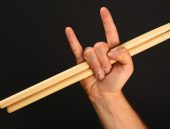
Trash metal, metalcore, djent, death metal, doom metal, grindcore, nu-metal, speed metal… Metal has at least 666 subgenres to it, and every last one of them has its own distinct characteristics. But when you want to be a metal drummer, there are some solid basics you can learn to help you cover all of them. In this blog, you’ll find out what you need to know and what kind of exercises you need to be drilling so that, after all your hard work, you can truly call yourself a metal drummer and join the immortal ranks of the anti-gods.
-

Live coding: type programming code in and spit music out. It might sound a bit much, but if you’re an Ableton Live user looking for a new way to get creative, you’ve just found it. If you want to impress your hoards of fans on stage or at home, it’s time to set that inner nerd free and invite Sonic Pi into your Ableton software. Here, Guestblogger Hens Zimmerman shows you the way.
Comments Off on Live Coding in Ableton Live: Surprisingly Creative | in: Guest Blogs, Studio & Recording -

In 2021, the moment finally came when Anni-Frid (1945), Björn (1945), Benny (1946) and Agnetha (1950) treated the world to a completely new album. Who’d have thought it? The band had long since broken up and even the promise of a billion dollar paycheck for a tour wasn’t tempting enough to bring them back together. However, this blog isn’t going to dig through the ABBA legend (you’ll be able to find plenty of ABBA history lessons documented in countless books and YouTube clips). Instead, we’re going to look at the musicality of this special band and the technical details that made it all possible. What are the necessary elements of the ABBA sound? Where do you start if you want to write a song like ABBA and how do you capture that distinct ABBA style?
-

Whether you’ve just started playing or you’ve been at it for years, every musician faces the same challenge at some point: you want to learn the rhythm or the groove of a track but it’s not working out. Maybe you’re confronted by a new technique that you’ve never tried out before and it seems impossible to learn. Are there any tricks that drummers can have up their sleeves to avoid the frustration? To be fair, there’s only one trick: broaden your horizons by taking on every genre going, and never fear any strange and new playing techniques.
-

In this article, guest-blogger Wietse Hendriks shows you how to write and compose your own drum parts. Covering topics like where to find inspiration and how to deal with band leaders, conductors and composers, Wietse taps into his twelve-and-a-half years of experience as a drummer.