
Theory & Playing Technique
-

The recorder has 8 holes and can sound like a proper instrument within a few minutes — but there’s more to the jump from “making a sound” to “actually playing music” than you might expect. With the right approach, you’ll make visible progress from day one, without getting stuck in bad habits you’ll have to unlearn later.
No responses | in: Musician -
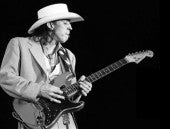
This blog is dedicated to Stevie Ray Vaughan (3 October, 1954 – 27 August 1990), one of the most beloved blues guitarists of the late 20th century. With his band Double Trouble, he laid the foundations for the blues revival of the ’80s. More than 20 years after his tragic death, his influence is still clearly felt.
-
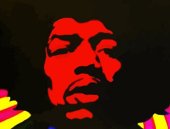
In this blog, we’ll be taking a look at the playing style and the gear of Jimi Hendrix. Over the years, his brilliant playing has inspired countless guitarists, and it still does to this day. His influence can be heard across the widest range of musical styles. Because of his early death, his own discography remained limited to just three studio albums: Axis: Bold as Love, Are You Experienced and Electric Ladyland. After his death, a stream of official and unofficial albums was released, of highly variable quality. What is it about a guitarist who died too young, with only three albums to his name, that still inspires guitarists and music lovers?
-

In our articles about musical instruments, the saxophone simply can’t be left out. It’s remarkable to see how this relatively young instrument – invented in 1840 – continues to hold its own in pop music and jazz. The saxophone is a popular instrument and features on countless classic tracks. We’ll cover the history of this ingenious wind instrument, along with the different types of sax, playing styles and techniques.
No responses | in: Musician -
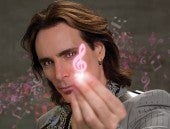
Steve Vai is regarded as a guitar virtuoso who has left his mark on rock music with his unique sound. Are you a beginner guitarist who wants to know more about how to get closer to his tone? Then read on!
-
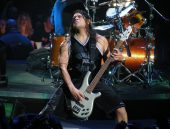
In heavier styles of music, it’s often the case that you notice the bassist isn’t playing before you notice you can’t hear them anymore. Only a handful of bassists rise above that. Roberto Agustín Miguel Santiago Samuel Trujillo Veracruz is definitely a bassist of whom you can say that. Most fans of heavy metal will know him simply as Robert Trujillo from Metallica. In this blog, you’ll read what it is about his bass playing style that gives him such a distinctive sound.
-

Hardwired… to Self-Destruct, Metallica’s latest album, is about to be released. With singles like “Hardwired”, “Moth Into Flame” and “Atlas, Rise!”, we’ve already had a pretty good warm-up – it’s shaping up to be a proper old-school album. When you think of Metallica, you probably think of frontman James Hetfield right away, who delivers both the brutal vocals and the tight rhythm parts. No one doubts he can play. So how can you get your guitar sounding like “Papa Het”? We’ll give you a few tips below!
-

As a musician, you’re of course familiar with staff notation or chord symbols. Two forms of music notation that make it possible to play songs straight from the page. But you may also have heard of a third form of notation: the Nashville Number System. Guest blogger and singer-songwriter Kevin Okkema explains exactly how it works.
-

Diction, pronunciation and articulation are often overlooked topics in the singing world. But that doesn’t make them any less important. In fact, they’re the foundation of good singing and a strong performance. Here’s how that works!
-

Experiencing and conveying the lyrics is essential for a strong vocal performance. The basic principles are fairly quick to explain, but in practice it can be very labour-intensive. You can also look at lyric delivery in a broader context—think performance and the way you, as a singer, position yourself in ‘artistic life’. Singer Ellen Evers has a very clear vision on that.
-

Silent Night is one of the oldest Christmas hits that still blasts out of the speakers in many homes during the festive season. Fun fact: the song was written by a young Austrian priest, Joseph Mohr, who first performed it on guitar in December 1818 at St Nicholas Church in Oberndorf. With just three chords, Silent Night is a doddle to learn on guitar. Guest blogger Teo from Chordify explains how!
-

Finding a good, interesting, fun or distinctive subject for song lyrics always takes time and energy. Not only because the subject needs to be ‘describable’ and singable, but also because you’ll eventually need a complete set of lyrics on paper — not just a promising first line.