
Bass guitar through a guitar amp (and vice versa): can it do any harm?
Published on Wednesday 28 October 2026
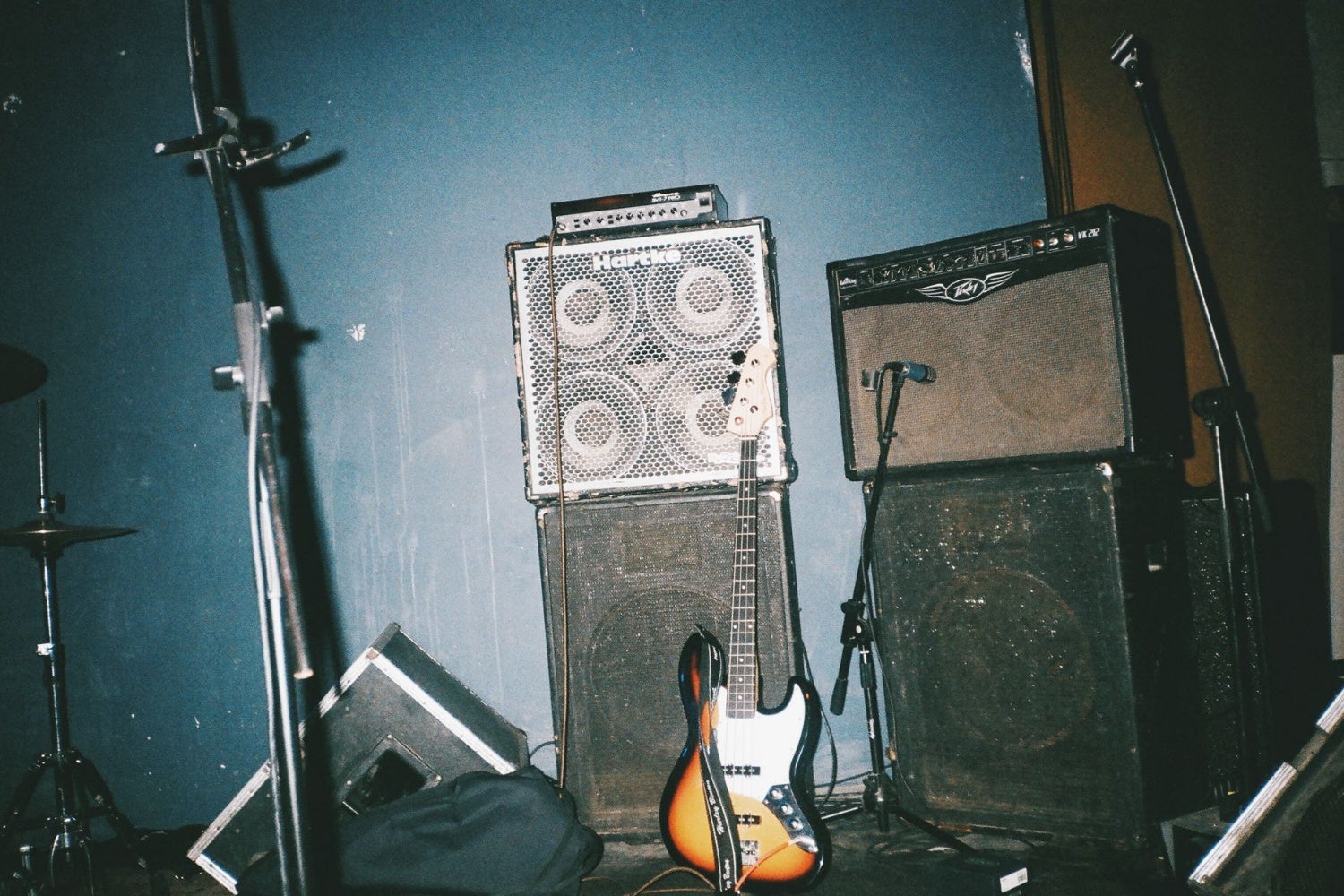
Can you play a bass guitar through a guitar amp? I get asked that just about every time someone has bought their first bass and has an old guitar combo sitting in the corner. The short answer: at low volume it’s perfectly fine, but crank it up and you’re gambling with your speaker’s lifespan. The other way round, guitar through a bass amp, is pretty much always fine.
Why a bass amp isn’t just a beefed-up guitar amp
The biggest difference comes down to what low frequencies demand from an amplifier. A guitarist can get a long way with just a handful of watts; a bassist can’t. Amplifying low end takes far more power, which is why bass amps are generally a good deal more powerful than their guitar counterparts. Not because bassists like to show off (well, maybe a little), but because it’s physically necessary to push those low notes out into the room so they can actually be heard.
All that power has to go somewhere, so the speakers are different too. Bass amps and bass cabinets use bigger speakers, or more speakers in a larger cabinet: a single 15-inch, four 10-inch speakers, or the infamous fridge with eight 10s. There’s often a tweeter on board as well to handle the top end. These bass speakers are built much sturdier, because they have to cope with low frequencies at high volume without giving up the ghost.
The preamp and EQ are voiced differently as well, roughly an octave lower, so the controls work where a bass actually has its sound. That realisation is almost as old as the electric bass itself, by the way: the first solid-body electric bass, from 1936, came with its own dedicated 18-watt amp with a 12-inch speaker. Even back then, people understood that a bass needed something different.
» View all bass combo amps
» View all guitar combo amps
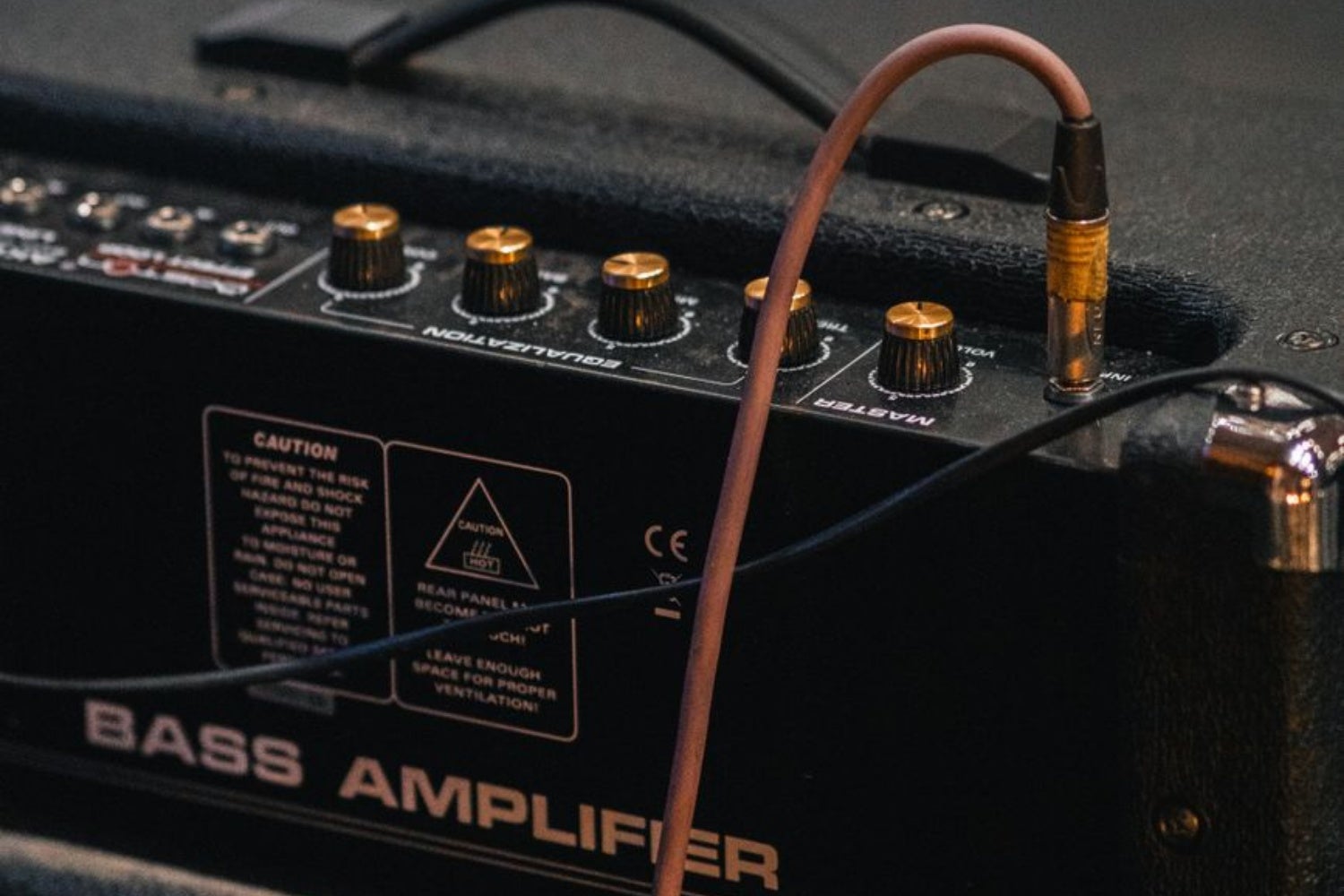
Bass through a guitar amp: this is where it goes wrong
If something does break, it’s usually not the electronics. The speaker is the weak link. A guitar speaker is more lightly built and has less excursion: the cone is designed to make small, fast movements. A bass’s low E wants to push that cone much further forwards and backwards than it was ever meant to go. Think of it like wearing running shoes on a mountain hike. On a flat path they’re fine, but out on the rocks you’ll end up with wrecked soles.
The warning sign is distortion. With guitar, distortion is often exactly what you’re after, so your ears aren’t trained to be alarmed by it. But with a bass through a guitar speaker, rattling, tearing or a fuzzy, flabby distortion is your speaker begging for mercy. With solid-state amps, there’s also the risk that the signal starts clipping, and some amps will then kick into protection mode and simply go silent. If you hear rattling, turn it down. No arguments.
I wouldn’t recommend it for rehearsals with a drummer or for gigs, and I’m not the only one. The volume you need to cut through the rest of the band is exactly the volume at which a guitar speaker gives up. A new speaker can easily cost more than you’d like, and going silent on stage is a particularly unfortunate moment for it to happen.
Practising at home at low volume: that’s fine, but…
If you’re in your bedroom or practice room, there’s not much to worry about. At moderate volume or with headphones, a bass through a guitar amp is safe enough. Plenty of bassists have practised that way for years without ever breaking anything. Keep the bass control on the EQ modest, don’t turn the volume up any further than your room requires, and listen. If it stays tight and clean, you’re absolutely fine.
Just don’t expect a proper bass amp sound. A guitar speaker simply can’t reproduce that deep low end, so it’ll sound thinner than you’re used to from a real bass combo. For practising runs and learning songs, that hardly matters. If you want to do it with zero risk, the headphone output is your best friend: no speaker involved at all.
» Can you plug headphones into an electric guitar or bass?
» Try the Interactive Bass Combo Selection Guide
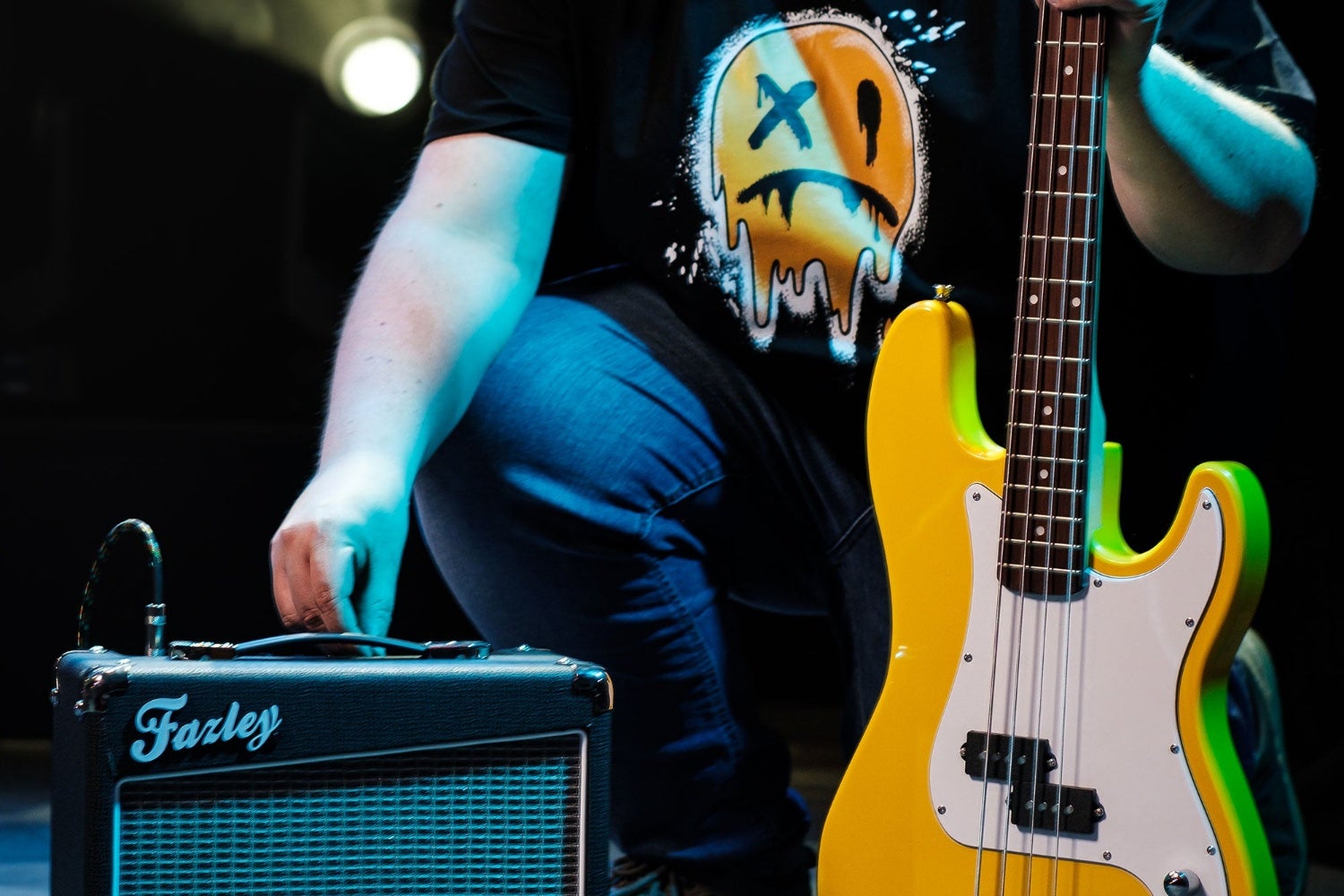
And the other way round: guitar through a bass amp? No problem, but…
This is the easy side of the story. A guitar through a bass amp works without any issues, and plenty of people do it in practice. The bass amp won’t even notice. Everything about it is built for a heavier diet than a guitar signal: more power, sturdier speakers, a bigger cabinet. For an amp like that, a guitar is a lazy Sunday afternoon. A guitar head into a bass cabinet is fine too, as long as you keep an eye on the impedance, as always.
It does sound different, though. A bass amp is designed to stay clean and tight, so you get a clean foundation without the characteristic voice of a guitar amp breaking up nicely into overdrive. For pedals, that’s actually a great starting point. I know guitarists who deliberately run their heavily driven sound through a bass cab because it sounds so wonderfully full. And if you eventually want a proper guitar amp after all, that option is of course always open to you.




No comments yet...