
Gig bag or guitar case: which protection should you choose?
Published on Friday 2 October 2026
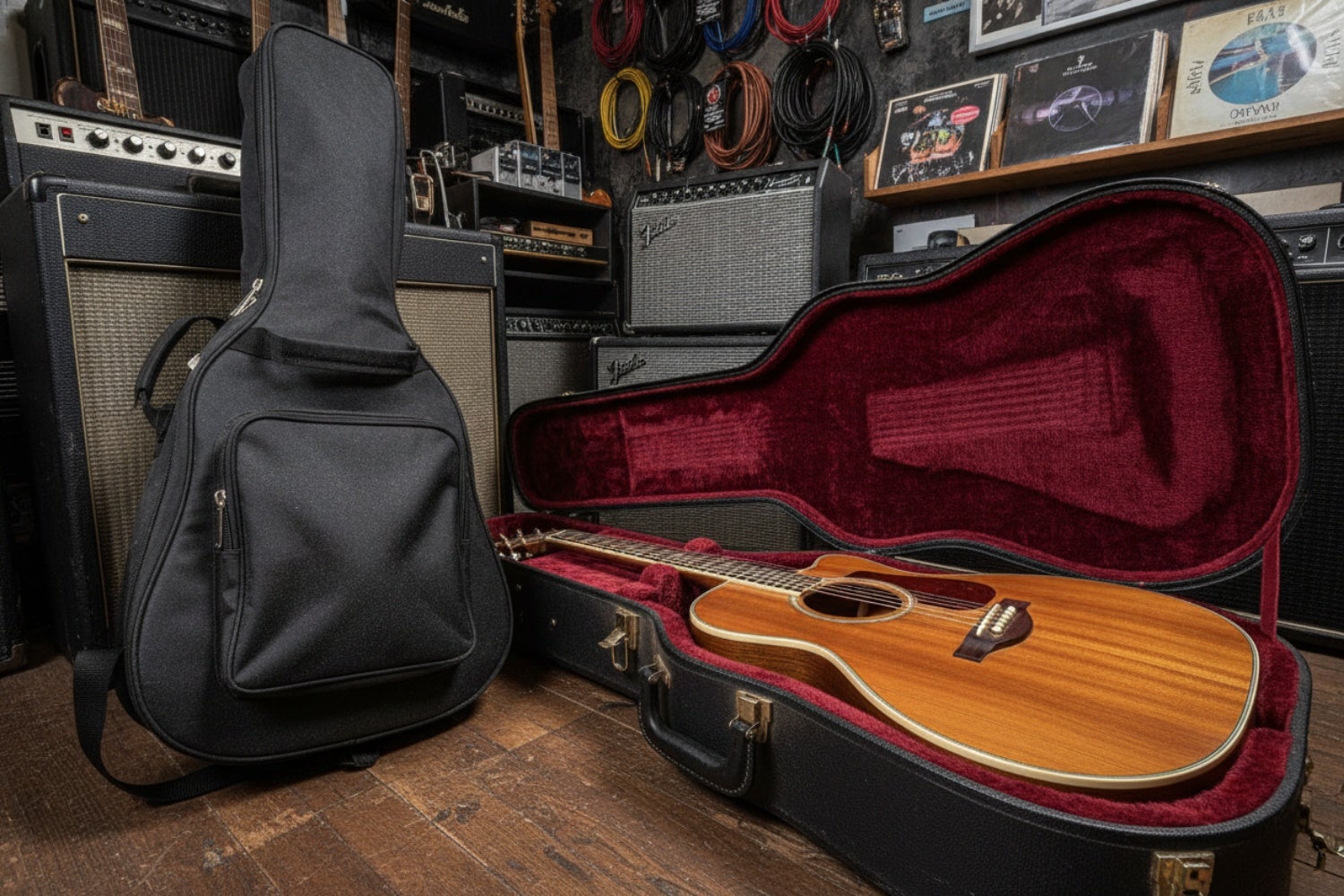
Gig bag or guitar case? Every guitarist faces that question at some point, usually the first time you head out the door with your instrument. A case offers better protection, while a bag is lighter and more practical. Which one you need mainly depends on where your guitar is going and what it goes through along the way.
Where a hard case excels
If it’s purely about protection, the hard case wins. Full stop. A sturdy shell absorbs knocks, keeps its shape when something slides against it and won’t simply let the sharp corner of an amp through to your finish. It’s no coincidence that guitarists who transport their instrument in a band van or trailer often deliberately opt for one.
The classic hardshell case is usually made of wood. The case itself is built in the shape of the guitar (shaped case) or has strategically placed support blocks and lining to keep the guitar in place. This holds the instrument securely, so it can’t slide back and forth when you lift or tilt the case.
Above that sits another segment: cases made from composite materials such as fibreglass or carbon. Composite cases offer extreme rigidity without the heavy weight of traditional wooden cases or flight cases. Travelling musicians specifically choose carbon and fibreglass to save weight (especially on planes or public transport), while still getting the sturdiness of a hard case.
» View all guitar and bass guitar cases and bags

Why so many guitarists still choose a gig bag
The difference is a bit like that between a thick winter coat and a thin softshell jacket. The winter coat keeps out more, but you put on the jacket every day without giving it a second thought. A gig bag weighs a lot less than a case, and you’ll notice that after a fifteen-minute walk to the rehearsal room.
What’s more, most bags have two shoulder straps. You simply sling your guitar on your back, leaving your hands free for your pedalboard or the tram door. The front pockets hold your sheet music, cables, a capo, spare strings and a tuner. Everything in one place.
And at home? A hard case is bulky and stays that way, even when it’s empty. If you live in a small space, it’ll soon get in the way. A thin, unpadded gig bag folds flat and slides under the bed.
» View all electric guitar cases and bags
» View all bass guitar cases and bags
With a gig bag, it’s all about the padding
Next time you’re in a shop, give the side of a gig bag a squeeze. If you can feel the shape of the guitar straight through the fabric, the bag protects against dust and scratches, and that’s about where it ends. If your hand barely sinks in, you’re dealing with thick, sturdy padding. There’s a world of difference between the two, even though they’re both called gig bags.
Good bags aren’t just thicker, they’re also more cleverly constructed. Reunion Blues’ RBX bags, for example, feature multi-layered foam all round, with extra-rigid panels in places where a knock is likely. They also have a firm foam support for the neck and a resting point for the bottom of the guitar.
But even the best gig bag has a weak spot: weight from above. A case spreads the pressure across its shell, whereas a bag gives way. If there’s an amp on top of it in the van, or someone on the train puts their case on yours, that pressure ends up on your guitar. Like eggs at the bottom of your shopping bag: fine, as long as nobody puts a crate of beer on top.
Your journey determines the choice
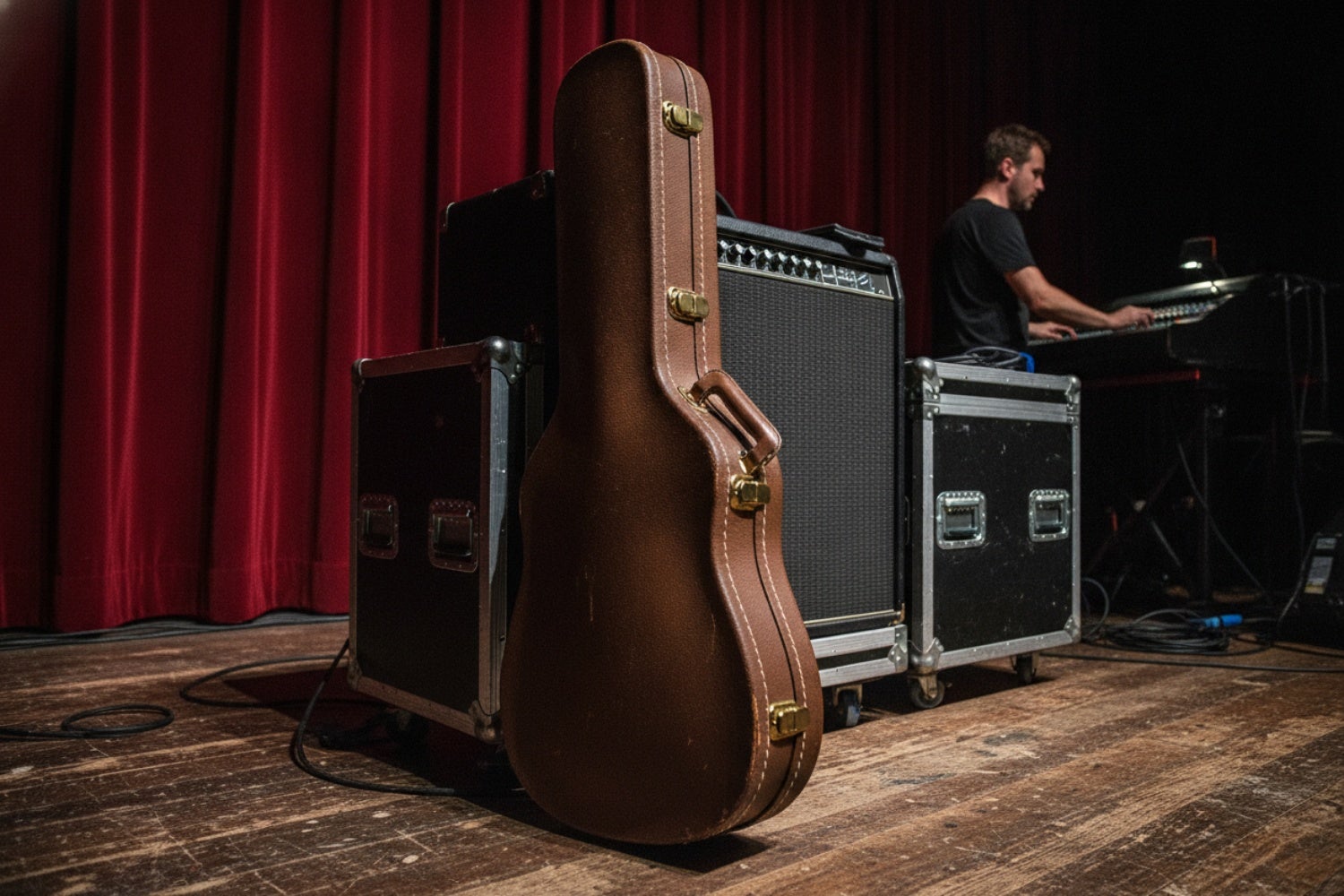
So the question isn’t which protection is best, but what your guitar goes through on the way. Do you cycle to your lessons, take the train to rehearsals or put it on the back seat of your car? Then a well-padded gig bag is usually enough. If it’s going on tour, or travelling in a trailer between the PA and the drum cases, go for a hard case.
If your guitar needs to fly, first find out what your airline allows. In the United States, a separate Department of Transportation rule on carrying musical instruments has even applied since 6 March 2015. Also pay attention to size: a classical guitar is smaller than a steel-string acoustic, so choose a bag or case made for your type of guitar.
» View all steel-string guitar cases and bags
» View all classical guitar cases and bags
» Which acoustic guitar: steel-string or classical?






No comments yet...