
Bassist
-

If you want to be a successful band, you can’t overlook the groove. It’s what every musician should always be after and, although the groove can be elusive and mythical, there are various tips, tricks and tools that can help you catch it. So in the famous words of Sam Cooke: get in the groove and let the good times roll.
Comments Off on The Groove: What It Is And How It’s Formed | in: Bassist, Drummer, Guitarist, Keyboardist, Musician -

Scientists are discovering more and more about how the human brain works, and if you’re a musician that ever-increasing knowledge can be put to good use. Using vocalists for our little case study, in this blog, we’ll focus on ways musicians can use the power of repetition to reach the next level in their development.
-

You might not know it, but the concept of a headless electric guitar or headless bass is actually pretty old. In 1979, Steinberger released a headless model with a distinctively minimal design, and soon after, Hohner released their own ‘licensed by Steinberger’ models. During the last few years, a headless trend has been brewing and these less-than-standard models have experienced a comeback, so in this blog we dive into the benefits and the pitfalls of owning your own headless guitar or bass.
-
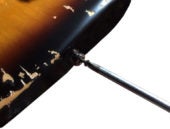
In this guitar-focussed article, guest-blogger Marc serves up a step-by-step guide on how to swap out the standard strap buttons of your acoustic guitar, electric guitar or bass with strap locks. Rest assured, it’s easier than you think and all it takes is a screwdriver and a little bit of your time. Let’s get started.
Comments Off on How To Replace Guitar Strap Buttons With Strap Locks | in: Bassist, Guest Blogs, Guitarist, Musician -

You can definitely plug a set of headphones into your electric guitar or bass, but not much will happen. Luckily, there are plenty of other compact and less-compact solutions if you want to hone your playing technique while wrapped in the privacy of a set of headphones. Read on to find out how it’s done!
Comments Off on Can You Plug Headphones into an Electric Guitar or Bass? | in: Bassist, Guitarist, Headphones, Musician -

Performing out in the open can be challenging when it’s windy. Not only can wind literally carry the sound of the band in the wrong direction and make it harder to hear, but a light gust can easily send your sheet music flying. Luckily, there are a few simple solutions to tackle the latter, no matter what kind of music stand you use.
-
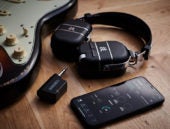
What if there was a tool that allowed you to get lost in your own guitar-world? You know, that wonderful world where carefully perfected tone can be turned up to eleven without bothering anyone? Enter the BOSS Waza-Air wireless headphones.
-

The fact is, there’s no right or wrong way to wear a guitar strap. But, if the length of your strap doesn’t match up with the way you play, it can have a pretty negative effect. In this wee blog, we take a look at the advantages and disadvantages of a super-long, super-short, or somewhere-in-the-middle guitar or bass strap.
-
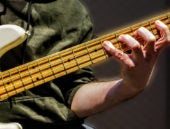
Learning to play arpeggios and understanding how they work is an essential skill if you want to write some solid bass lines. Basically, arpeggios are what happen when you play the single notes of a specific chord in succession. They’re well worth learning, since an arpeggio will always match perfectly with the chord that the guitarist or key-player is hitting. So, for a bassist, practising and nailing a small library of arpeggios is actually a better first step than memorising scales, because it immediately sets you up with a full kit bag to work with when it comes to writing your own bass lines. So grab your bass and start drilling.
-

A band is rarely complete without a bass, and while the bass provides the sonic foundation for the rest of the band and is an essential part of the rhythm section, it’s often overlooked – unless the bassist misses a beat or fluffs a line, of course. Here we find out exactly why the bass is so important; present its illustrious history; and cover some handy techniques and tips.
-

While the bass looks a lot like the guitar, it demands an entirely different playing technique. In this blog, we’ll take you through some bass-playing basics, starting with the absolute fundamentals: the correct playing posture, both sitting and standing; the right-hand technique, where you’ll learn how to pluck the strings with your index and middle fingers and with a plectrum, and you’ll also learn to mute the unplayed strings and remove all that nasty low-frequency rumbling from your sound (a technique that actually involves both hands, but more on that later). Then, we’ll close with the left-hand technique to make sure that your thumb learns to rest against the back of the neck and that your other fingers are always ready and waiting in just the right spot, setting you up with a solid bass-playing foundation.
-
Writing your own bass lines based on chord progressions. How do bassists do it? While there’s no magic mould, thankfully, there’s a fair number of guidelines you can use to come up with solid bass lines of your own. Experiment using the tips in this humble guide and chances are you’ll make great strides