
2 or 4 decks and channels: how many does a DJ really need?
Published on Friday 9 October 2026
Two or four channels: that’s the question I spent the longest mulling over when I bought my first proper DJ setup. I went for four, because more seemed better. After a year of playing, I’d barely touched channels 3 and 4. For most DJs, two channels are plenty, and upgrading only pays off if you’re regularly running more than two sources at once.
Decks or channels: what’s the difference?
As a beginner, don’t worry about this distinction, because on most entry-level controllers decks and channels are one and the same. Ask ten DJs about their “two-channel controller” and half of them actually mean the number of decks. In everyday speech, the terms get used interchangeably, but strictly speaking they describe two different things.
Decks are your playback sources: the players you load a track onto. On a controller, these are usually virtual players in the DJ software. The number of decks determines how many tracks you can have playing and control at the same time.
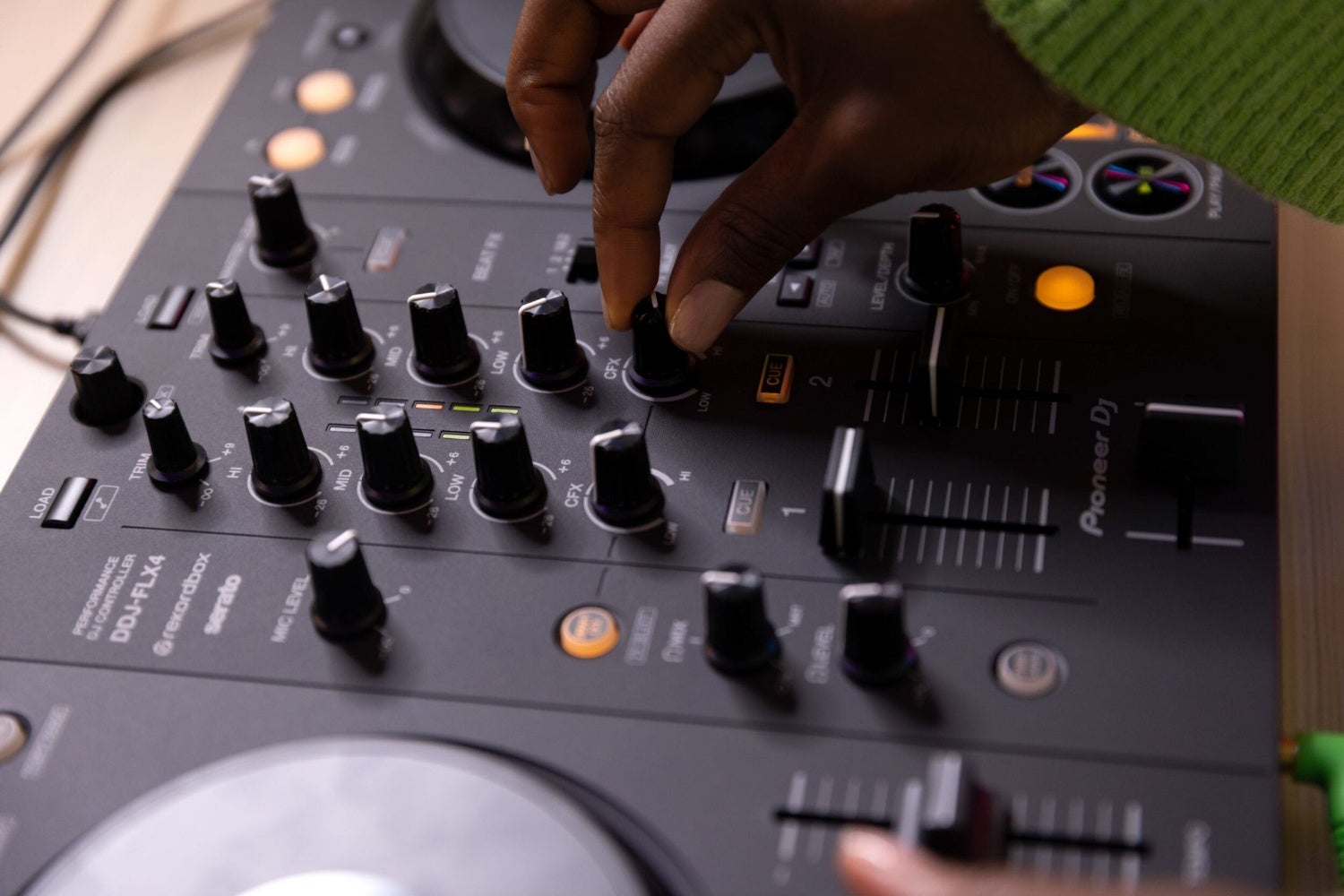
Channels belong to the mixer. Each channel has its own volume fader, an EQ for highs, mids and lows, and often a filter. So the number of channels determines how many sound sources you can mix separately at the same time.
The two don’t always match up, though. Some two-channel controllers use a toggle button to control four decks in the software. Each side then controls two decks in turn, which share the same jog wheel, faders and buttons. So you’ve got four tracks playing, but you can only control two of them at once.
» View all DJ controllers
» View all DJ controllers with 2 decks + 2 channels
» View all DJ controllers with 2 decks + 4 channels
» View all DJ controllers with 4 decks + 2 channels (switchable)
» View all DJ controllers with 4 decks + 4 channels (switchable)
Two channels: the foundation of almost every set
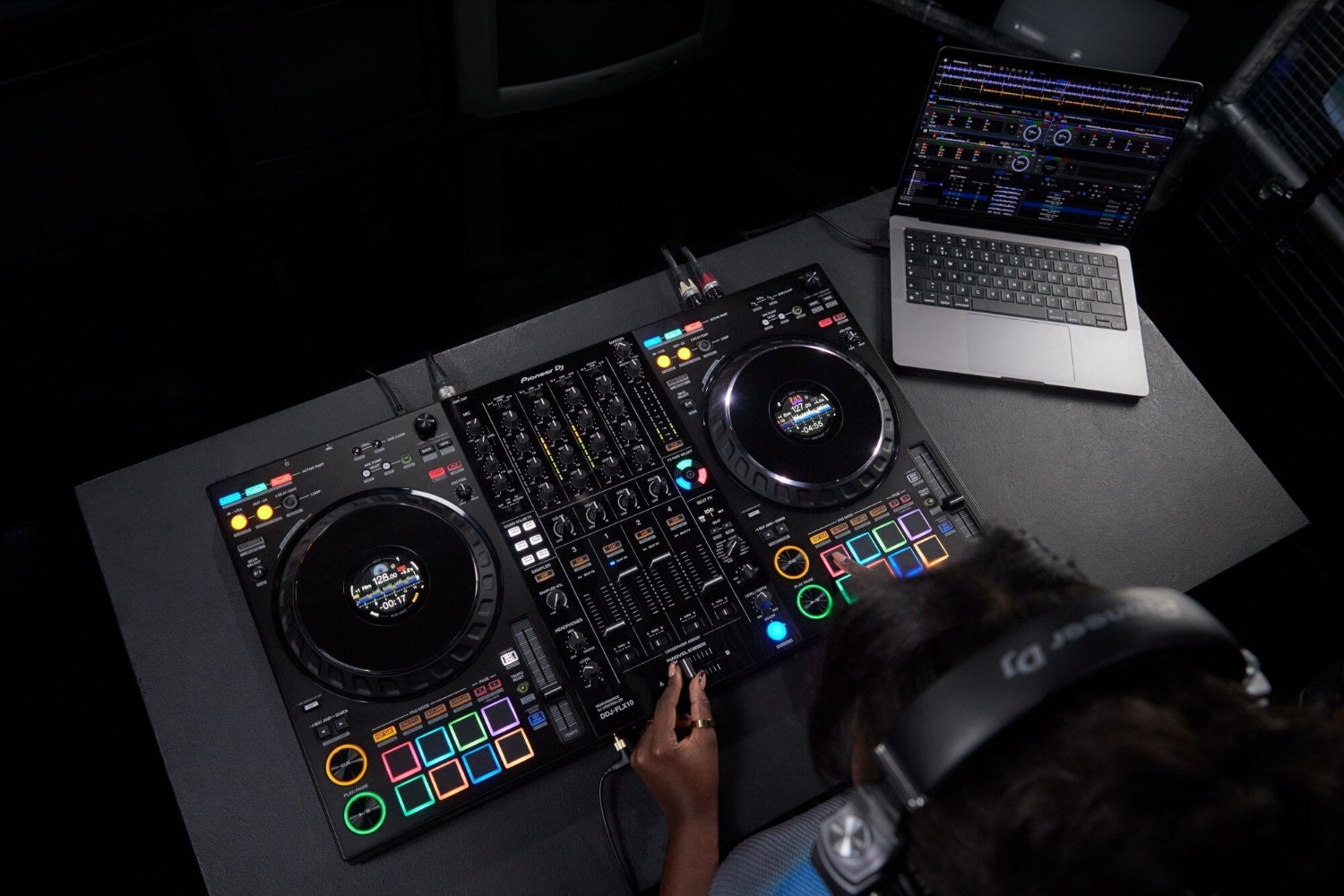
Walk into any club or bar and take a look in the booth: a mixer with two decks beside it, and that’s usually about it. That’s no coincidence. Mixing from A to B is what almost every set revolves around: track one is playing, track two is cued up, you blend them together and start again. Two channels are exactly enough for that, and they force you to nail every transition, because there’s no third deck to hide behind.
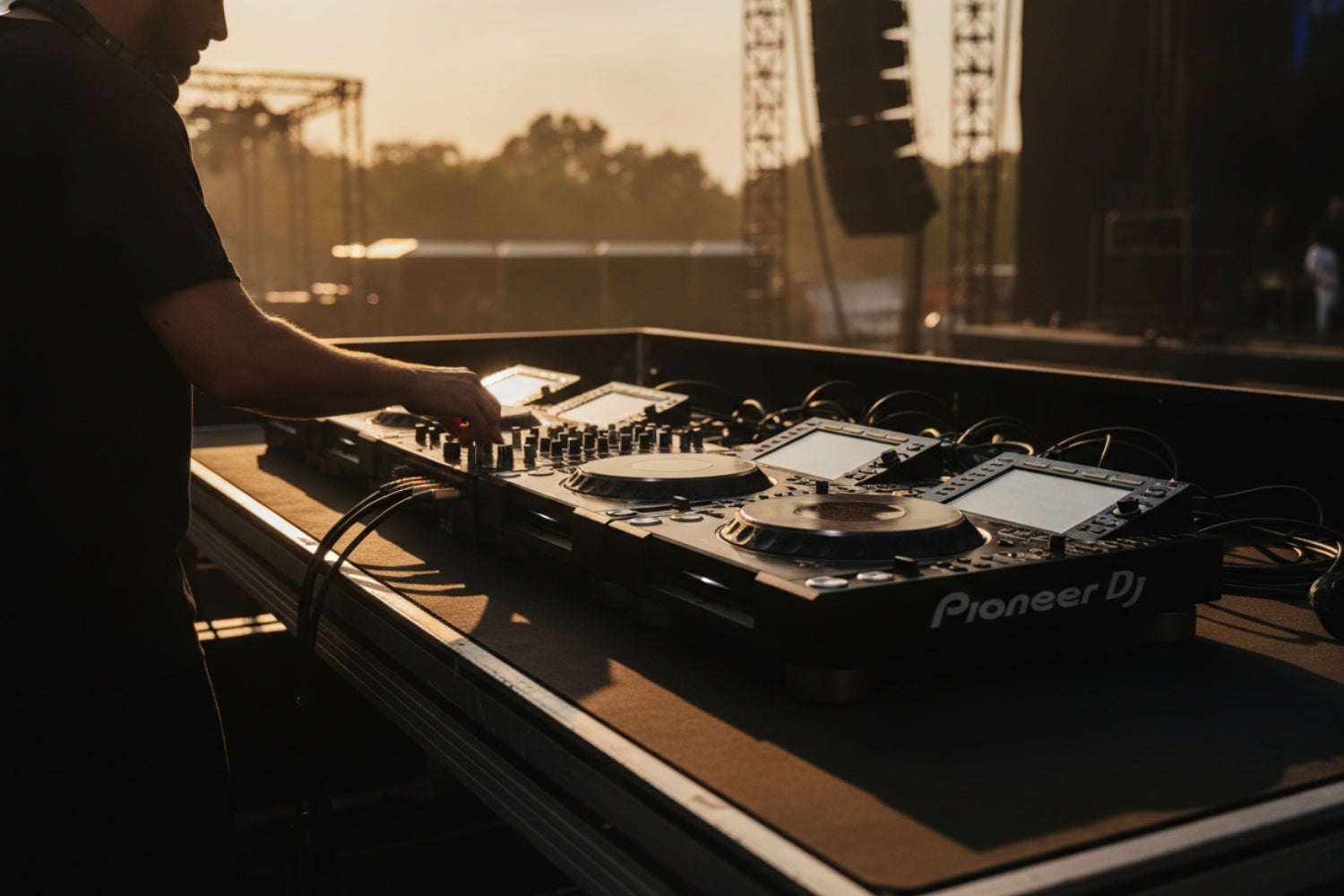
On festival stages you’ll often see three or four media players hooked up to a single mixer, and it looks impressive. Yet most of those sets could easily have been played on two players. In fact, with an instant doubles function in your software, you can even keep mixing with just one working deck in an emergency: the same track is loaded onto a second software deck, so you can simply carry on. Four physical decks are a luxury, not a requirement.
» Try the interactive DJ controller buying guide
» View all DJ media players
» View all DJ mixers
What do you do with channels 3 and 4?
There are no rules, but there are some well-known uses. Channel 3, for example, is often used for acapellas and vocal drops: a vocal over the instrumental that’s already playing, or a famous line from a hit over a track nobody knows. Channel 4 could then be your channel for samples, FX sounds, loops and atmospheric layers, such as a long pad under a breakdown or a siren you build up yourself.
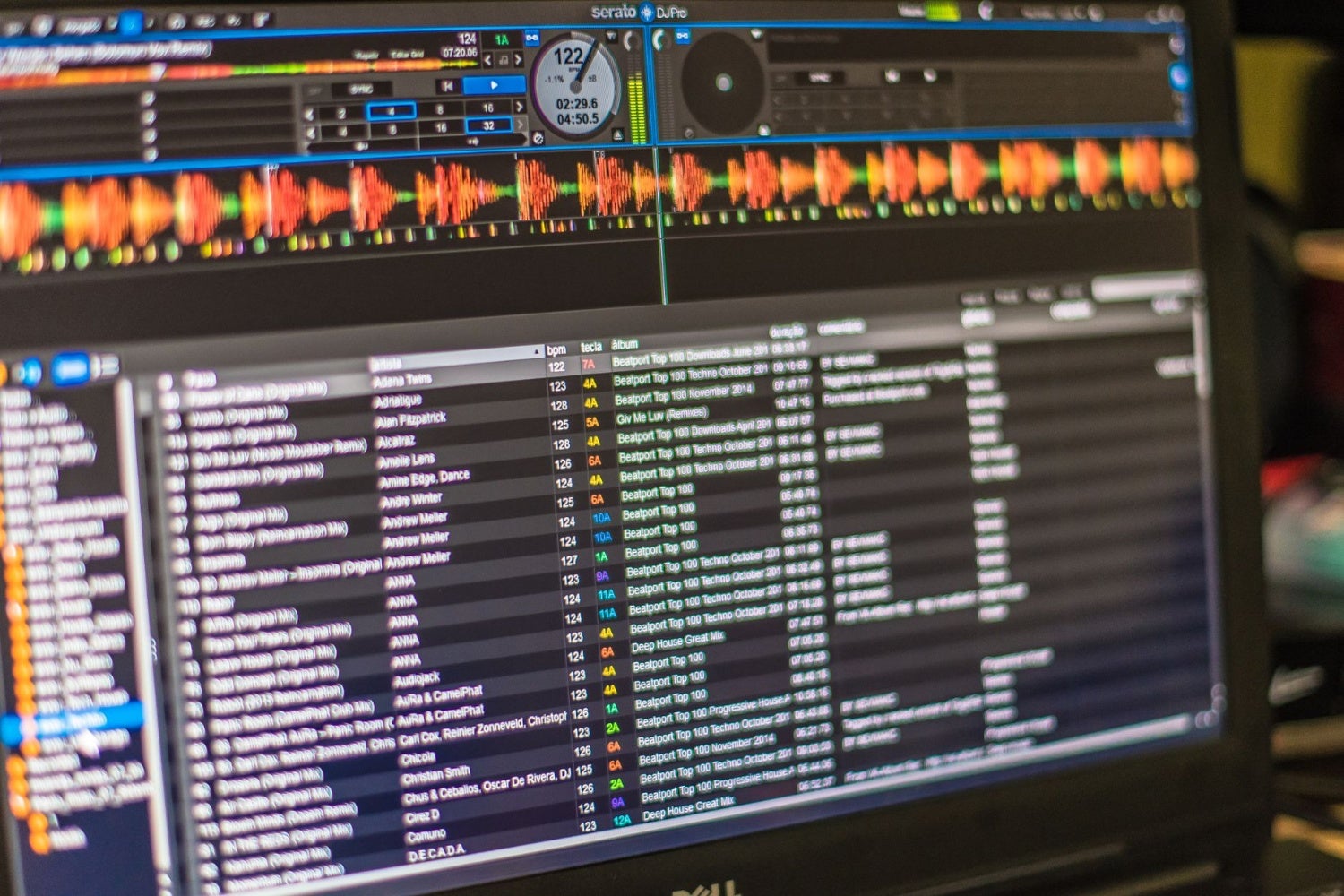
Four channels also make it easy to work ahead. While two tracks are playing, the next one is already lined up and can even be running along in the background, so a transition can last minutes rather than seconds. You can also stack individual elements: the kick and bass from one track, the hi-hats from another and a vocal on a third deck. DJ software is built for this as standard and offers four decks, A to D.
The third use has nothing to do with your laptop: an extra input for an external source. Think of a turntable next to your controller, a standalone media player, a sampler or drum machine, or a tablet running a DJ app. The catch is that the channel needs a line or phono input; otherwise it remains a software-only channel.
Why four tracks at once usually turns to mush
Four full tracks layered on top of each other sounds exciting on paper and like a mud bath in practice. If you want to do it anyway, you need to choose which elements to take from each track and tightly EQ out the rest. The most important rule: let only one source carry the bass. Low frequencies are the first to clash, so on every layered track you need to turn the bass EQ all the way down or engage the bass kill. Two vocal-heavy tracks on top of each other is also asking for trouble, and popular songs with lots of instrumentation simply leave very little room either.
That’s why layering works best with spacious, repetitive styles such as techno, minimal, progressive, deep house or downtempo, where long blends are part and parcel of the music. Even then, it takes more management: gain staging per channel, EQ balance, knowing which channel is linked to which deck and constantly thinking ahead. It’s no wonder many experienced DJs play on two or three channels and only bring in the fourth every now and then.
Buying advice: choose based on how you mix now, not later
The common mistake – and I made it too – is buying for the DJ you think you’ll be in two years’ time. Look at how you play now. If you mainly mix from one track to the next, a 2-channel controller or mixer is all you need, and you’re better off putting the money you save towards a good pair of headphones or speakers.
Upgrading only pays off if you regularly use three or more sources at the same time. Do you often play vinyl alongside your controller, have a sampler on the table or build long blends with acapellas into every set? Then two channels will genuinely hold you back. There are even six-channel mixers out there, but that’s a niche for those who really do put half a studio on stage.
Still unsure? Then my advice is simple: start with two, master them inside out and only go for more channels when you really miss them. That moment will come naturally, or it’ll never come at all – and either way, you’ll have made the right choice.






No comments yet...