
The 5 DJ transitions every beginner should know
Published on Tuesday 20 October 2026
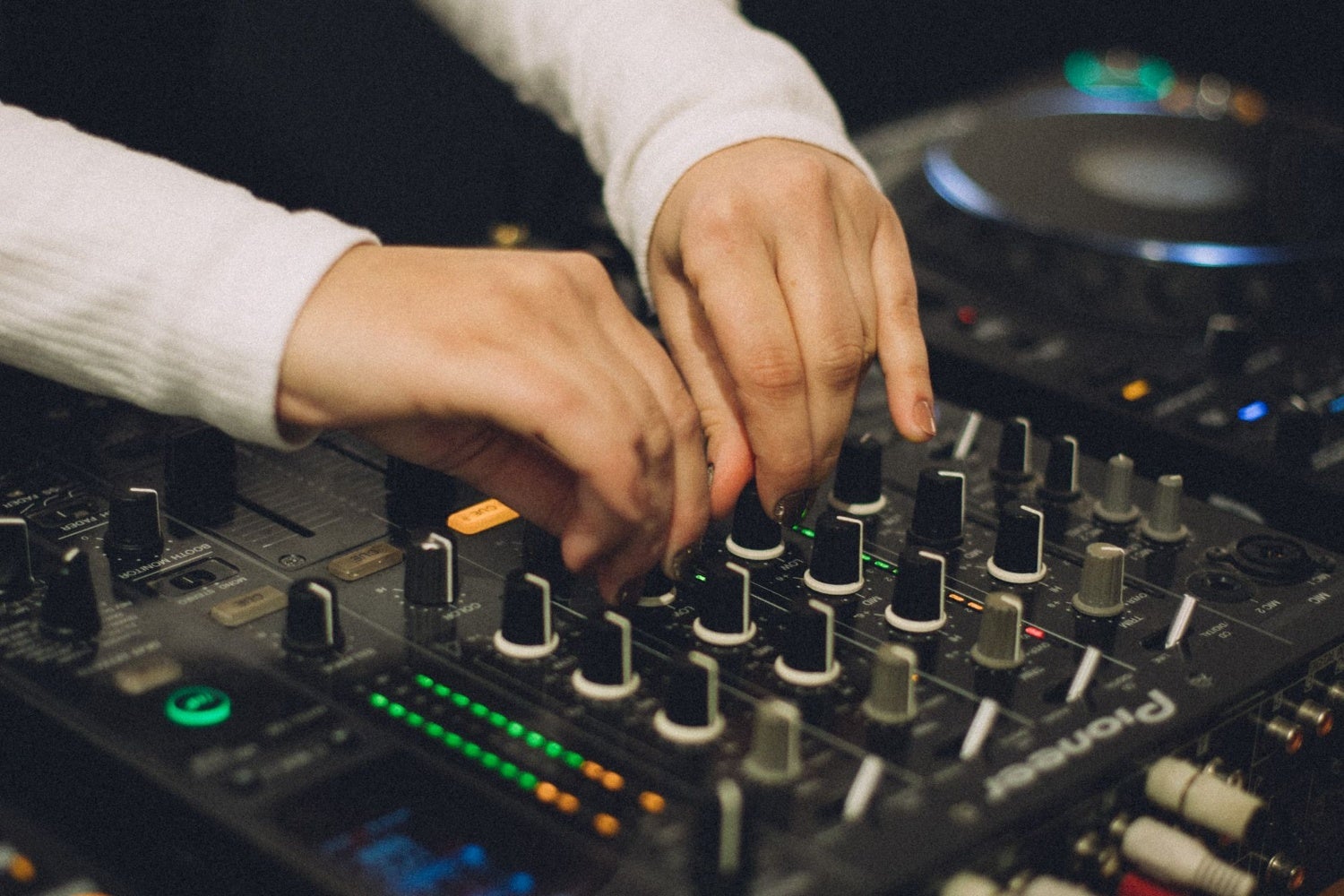
The transition between two tracks is the heart of DJing, yet it’s exactly where beginners go wrong most often. Not because the technique is complicated, but because they try to do everything at once. With these five basic transitions and one EQ rule, you’ll go a long way, from the club to the wedding reception.
#1. EQ transition and #2. Filter transition: swapping the bass
Count first, then mix. In house and techno, a bar consists of four beats and a phrase of eight bars, so 32 beats. Something almost always happens at the end of a phrase: a hi-hat comes in, a vocal, the drop. Start your new track on the first beat of a phrase and the two will line up naturally (provided you’ve beatmatched them, of course). Counting out loud helps! After a few weeks, you’ll feel the phrases coming.
The EQ transition is the first one I teach everyone. Start by turning the low EQ on the new track all the way down. Then bring the track in with the fader over the outro of the old one. Always swap the bass on the first beat of a new phrase: old lows out, new lows in, in one movement. Two kicks and two basslines at once sound muddy, and even more so on a club system than at home.
Two checks. On many mixers, the low knob kills the bass completely, but on others a little lingers, so listen to what yours does. And are the tracks in different keys? Then they’re going to clash, however smooth your bass swap was. Unfortunately, EQ won’t fix harmonic problems.
The filter transition does something similar, but with a single knob. Slowly turn up the filter on the outgoing track: the bass disappears first, followed by the mids. As soon as you start turning the knob, the new track should come in so that the new bass immediately takes over from the old one. It’s less precise than using three separate EQ knobs, but it’s more forgiving while your hands aren’t that quick yet.
» View all DJ controllers
» Beatmatching: how to master the basics
#3. Echo-out and #4. Cut: short and punchy
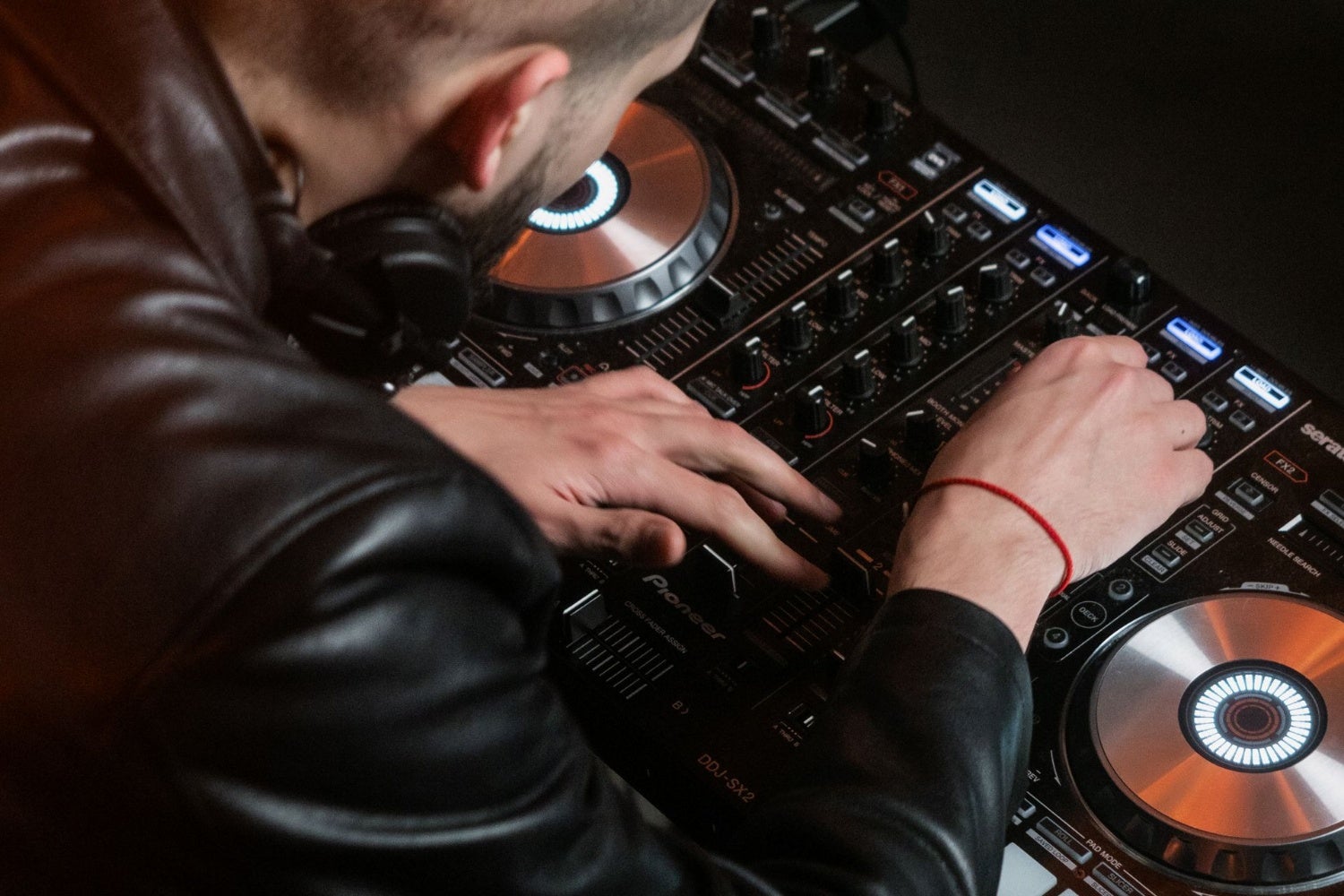
I use the echo-out when a track doesn’t have a usable outro, or when the energy needs to make a jump. How does it work? Switch on the echo effect on the outgoing track, pull the fader down at the end of a phrase and let the tail fade away while the new track comes in on the first beat. It sounds really well thought out and only takes three seconds.
That’s also the pitfall. An echo-out is a trick, and tricks wear thin. Do it ten times in one night and, after a while, the dance floor no longer hears it as an impressive effect but as an irritating habit. Save the echo-out for moments when the night needs to head in a different direction.
The cut is even simpler: on beat one, the old track goes out and the new one comes in, without a smooth overlap using your fader or crossfader. Hip-hop, pop and a lot of vocal music don’t lend themselves well to long beatmixes because of short intros, short sections and tempos that are too far apart. That’s why I use more cuts than blends at weddings, because a tight cut always beats a sloppy blend.
» Wedding DJs, take note: use this blueprint for your playlists
#5. Loop transition: buying time
With a loop you can give any track a long outro. At the end of the outgoing track, set a four- or eight-bar loop on a sparse section, preferably drums only, and… the track now plays for as long as you like. Meanwhile, you line up the phrases and calmly start your EQ or filter transition.
Start the loop on a phrase and keep it four or eight bars long, otherwise the track will stutter. Choose a section without vocals: a line repeating the same thing four times will stand out. On most controllers and in the software, the loop function is right under your nose; practise it at home until you no longer need to look at it.
» DJ controller or standalone: which suits you best as a beginner?
Cut, don’t boost
The rule that makes everything better: use your EQ not to add, but only to take away. So if you want the next track to stand out, don’t turn its treble up but… turn down the treble of the old track instead. The effect is the same; the difference lies in what the amplifier does with it.
Boosting frequencies eats up headroom. Your channel goes into the red, and so does the master, and as soon as the second track comes in (two sources together are always louder than one) you get distortion that you might not hear in your headphones, but that is definitely audible in the room. Cutting never does that. Think of it like a packed pub: if everyone starts talking louder, it only gets harder to understand each other. But if everyone talks a little more quietly, suddenly you can hear each other just fine.
My rule of thumb: all EQ knobs at twelve o’clock, and from there only ever to the left. I save a boost for a real problem, such as a badly mixed track, and even then I keep one eye on the meters.






No comments yet...