
Should left-handers learn to play on a left-handed guitar?
Published on Tuesday 29 September 2026

Left-handed and learning to play the guitar? Then sooner or later you’ll run into the question: do I buy a left-handed guitar, or do I just learn to play right-handed? Around one in ten people are left-handed, so you’re certainly not the only one wondering about this. My answer: there’s no wrong side, as long as you choose what feels natural to you and don’t switch afterwards.
What’s the difference between a left-handed and a right-handed guitar?
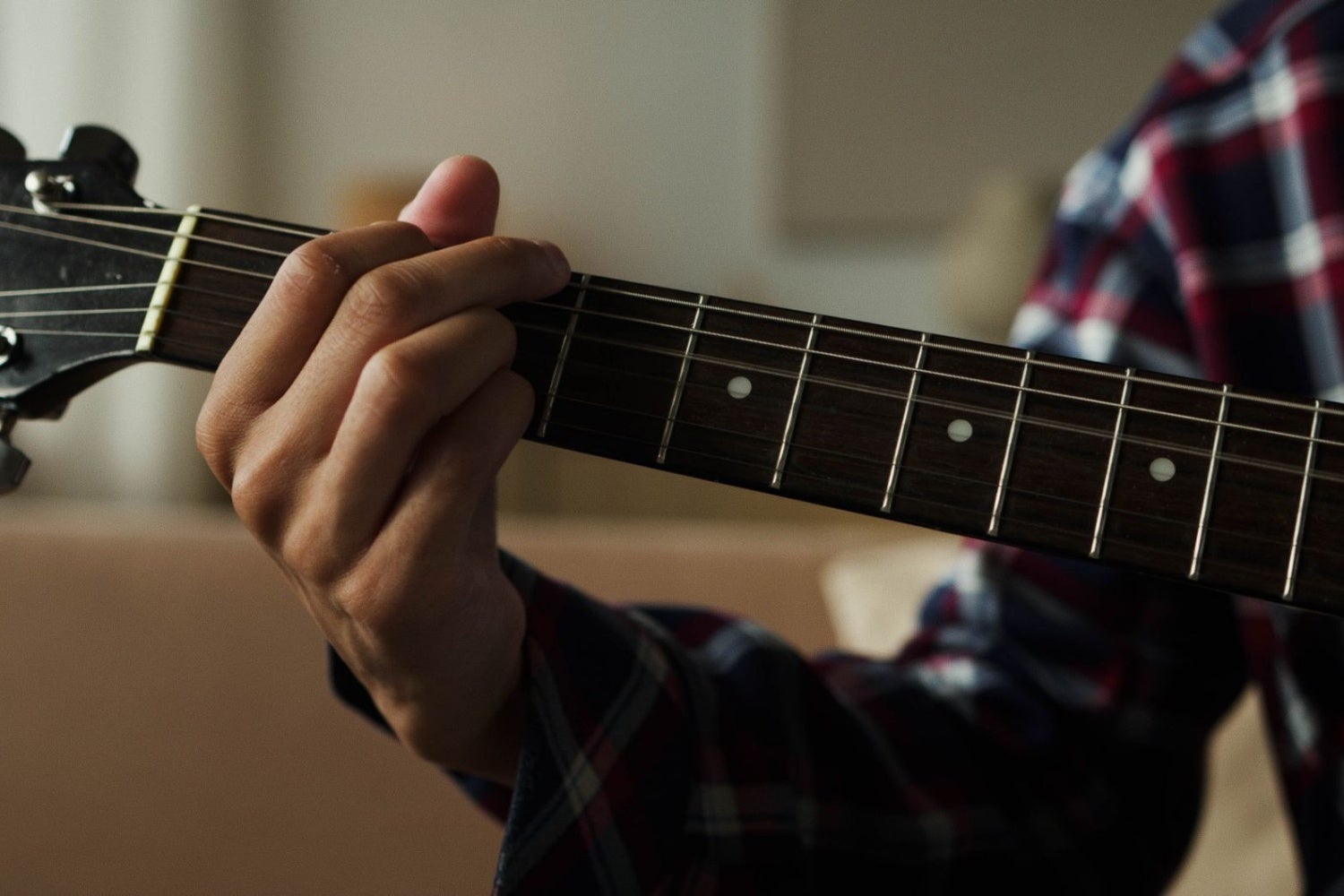
Put simply, a left-handed guitar is the mirror image of a right-handed one. You strum or pick the strings with your left hand and fret the chords with your right. The thick E string is still at the top, but everything else is built the other way round: the nut, the bridge, the controls and, on many models, the shape of the body too.
That does have a few consequences. Left-handed guitars are often a little pricier and the choice is smaller, simply because shops stock more right-handed models. Quickly grabbing a mate’s guitar isn’t really an option either. On the plus side, nobody will ever borrow your guitar (and so nobody will hand it back with a broken string).
» View all guitars
» View all left-handed guitars
» What’s the best left-handed guitar for me?
Flipping a right-handed guitar: can you do it?
Jimi Hendrix was left-handed and played a right-handed guitar that he flipped over and restrung the other way round. Sounds like a clever trick, especially if there’s already a right-handed guitar gathering dust at home. Unfortunately, simply swapping the strings round isn’t enough.
First of all, there’s the nut. Its slots are cut to suit each string gauge. If you reverse the strings, the thick strings won’t fit into the narrow slots and the thin strings will sit loosely in the wide ones. So you’ll need a new, left-handed nut. After that, the bridge and saddles also need to be readjusted, otherwise the intonation will be off and your guitar will sound out of tune further up the neck.
With an electric guitar, there’s even more to consider. The volume and tone knobs and the pickup selector suddenly end up under your strumming arm, so it’s easy to knock them by accident. On top of that, the pots work the other way round. You can get used to that, or you can replace them with special left-handed (reverse-audio) pots to keep a usable, gradual taper. And the rounded contour on the back of a Strat, the belly carve, is suddenly in the wrong place.
It all works, just as a right-handed pair of scissors will still cut in your left hand. But it’s hardly comfortable. For most people, a proper left-handed guitar is therefore a better choice than a converted right-handed one: everything is exactly where it should be.

Learning to play right-handed as a left-hander: is that a problem?
A left-hander learning to play right-handed isn’t the same as someone being made to write with their right hand. When writing, one hand does all the fine work while the other holds the paper at most. With guitar, both hands have a tricky job to do, just like on the piano. As a result, your hand preference matters less here than it does with many other things.
Your fretting hand forms chords, moves up and down the neck and presses the strings down cleanly. That’s the hand that has the hardest time at first. Meanwhile, your strumming hand takes care of rhythm and timing. Both have to learn things they’ve never done before. Even a right-handed beginner spends the first few weeks with a left hand that refuses to do what it’s told.
As a right-hander, it’s easy for me to say, of course, but plenty of left-handers have learnt to play right-handed and never regretted it. At the same time, there are left-handers who just can’t get the hang of it and switch to playing lefty after all. So learning right-handed isn’t necessarily a bad thing, but it’s not a must either.

Choosing left or right: try it out first
Pick up a guitar and hold it both ways round. Or just play a bit of air guitar: which hand naturally starts strumming? Many left-handers can tell straight away which side feels right. If you don’t notice a clear difference, right-handed is the practical choice. You’ll have more guitars to choose from, and almost all learning material assumes you’re playing a right-handed guitar.
Still unsure? Have a chat with a guitar teacher before buying a guitar and book a few trial lessons. That way you can try both sides before spending any money. What’s more, a left-handed student sitting opposite a right-handed teacher sees an exact mirror image, and many left-handed guitarists actually find that makes it easier to follow along.
Once you’ve made your choice, stick with it. Switching after years of playing is like a tennis player suddenly deciding to serve with their other hand after ten years. And in the end, practice has far more influence on how good you become than which way round your guitar hangs.
» View all online music lessons
» How do I become a guitarist? Everything for beginners





No comments yet...