
Which headphones suit your digital piano? Open-back, closed-back, impedance and more
Published on Wednesday 28 October 2026
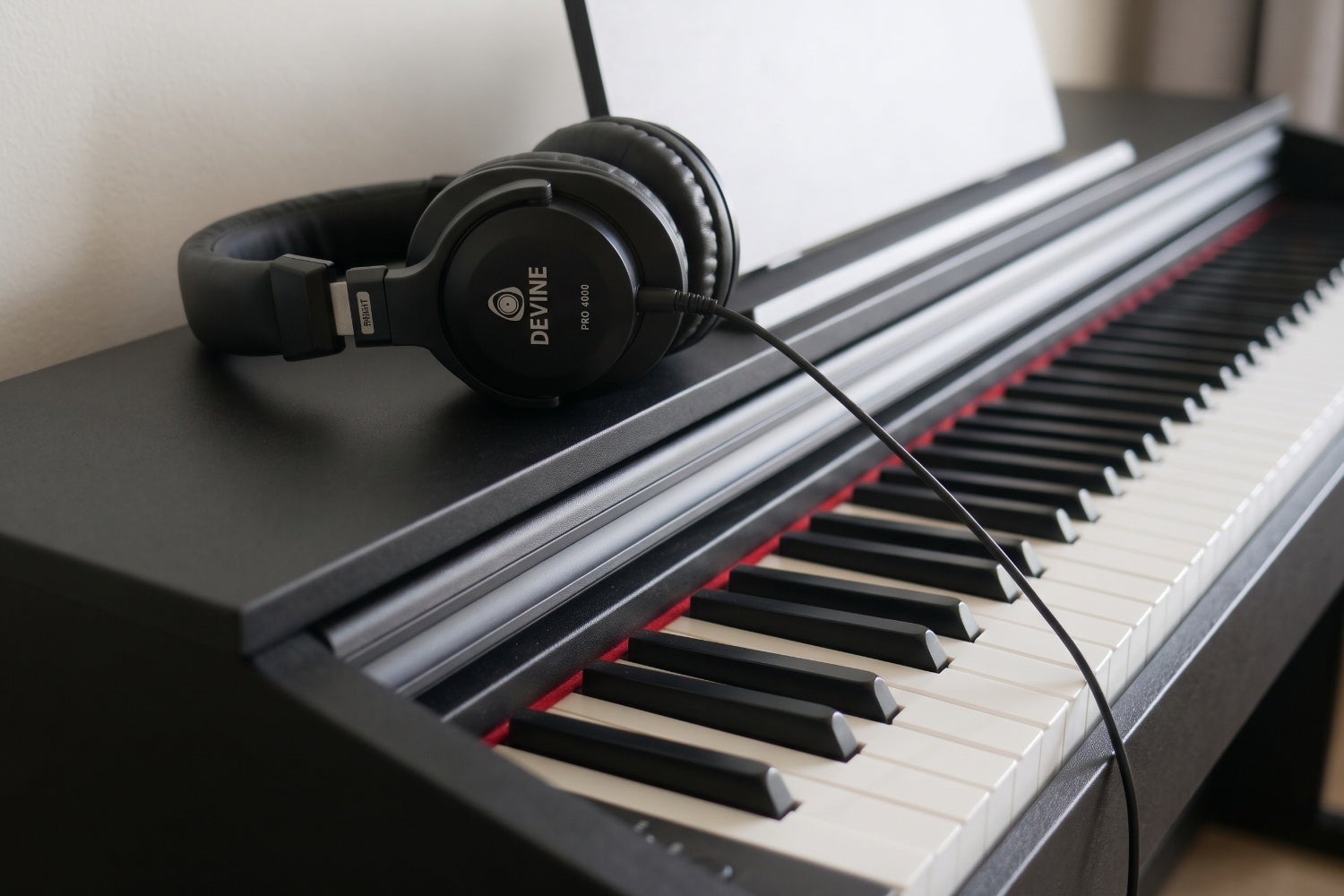
Most people regularly use their digital piano with headphones, so those headphones are no afterthought. To choose a suitable pair, ask yourself a few questions. Who else can hear you, are they loud enough, does the plug fit (or do you want to go wireless), and how long are your practice sessions?
In short
If you can’t spend an afternoon plugging all sorts of headphones into your piano, go for studio headphones. (Wired rather than wireless, for a stable connection without lag, and somewhere below 100 ohms, for enough volume.) A studio model is designed to let you hear music as it really is, without pumped-up bass or glossy highs. And that – I reckon – is exactly what you want when you’re getting to know the sound of your instrument. I played on ‘ordinary’ headphones for years before I realised that.
Ideally, choose studio headphones with an open-back design, because then the piano sounds as if it’s right there in the room with you. If you live with someone who’d rather have peace and quiet at half past ten at night, closed-back it is. Open-back models also tend to be a bit more expensive, so your budget plays a part too. Whatever you choose, the cushions should sit around your ears, not on them. After an hour of playing, you’ll notice the difference!
If you do get the chance to compare, one rule applies: the best headphones are the ones you forget you’re wearing. Play a long practice session and pay attention to what happens. Does the headband press on the crown of your head, do the ear cups pinch, do your ears get warm? Then they’re not the ones. The same goes for the sound: if it tires you out after an hour, it’s no good, however lovely it seemed in the first minute.
» View open-back studio headphones (over-ear, up to 100 ohms)
» View closed-back studio headphones (over-ear, up to 100 ohms)
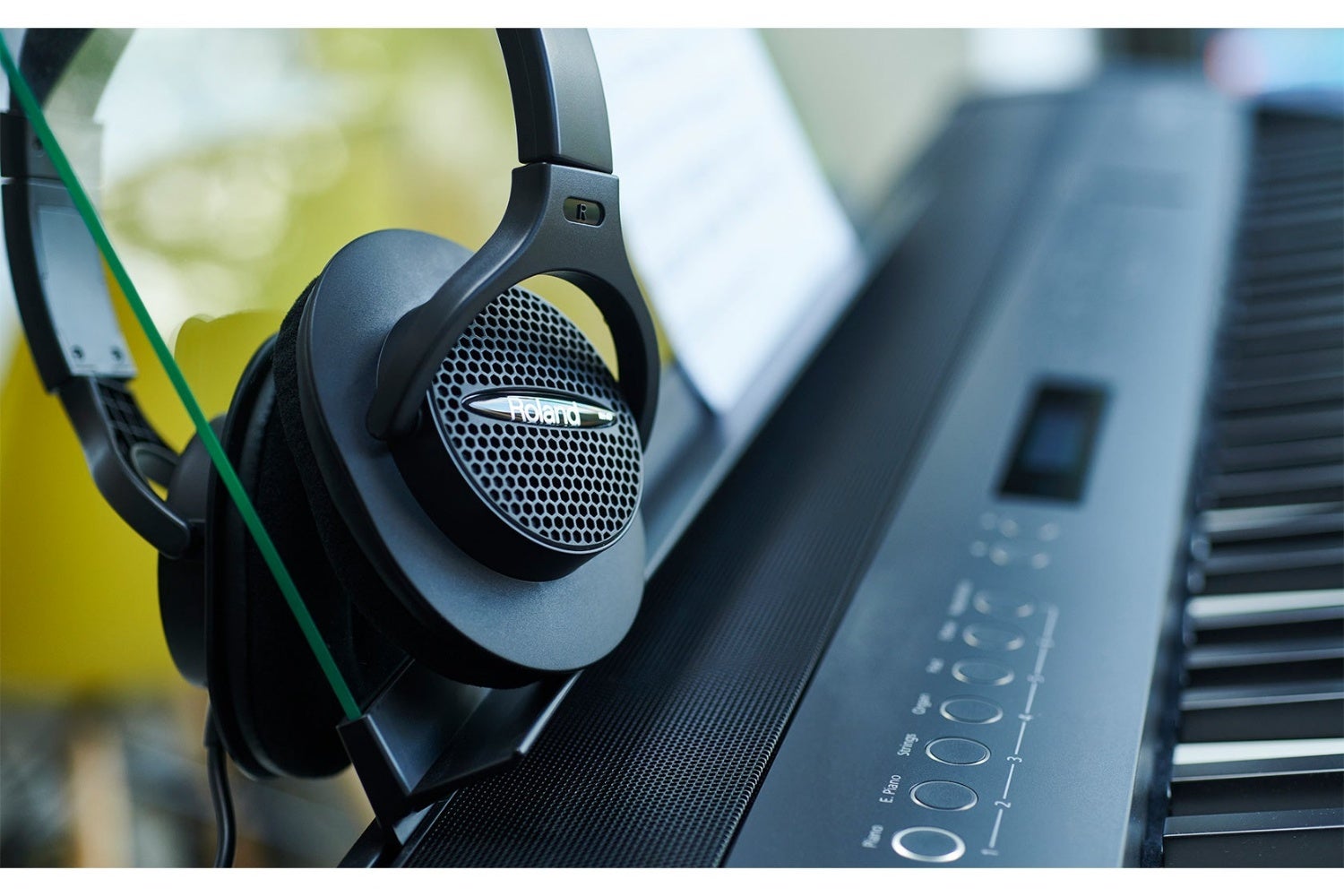
Open-back headphones: the most natural sound, but those around you can listen in too, and they’re usually in a higher price range
Open-back or closed-back: who else is listening?
First, look at the ear cups. On open-back headphones they have a grille; on a closed-back model they’re sealed. As a result, an open-back model sounds more spacious and natural, and your ears stay a little cooler. A closed-back model keeps the sound in noticeably better, which is nice for the people around you.
If you practise late in the evening while someone’s sitting on the sofa two metres away, closed-back headphones are the considerate option. If you’re home alone during the day and play long sessions, open-back is more enjoyable. I play with closed-back headphones myself. My housemates mainly hear the tapping of the keys, which they don’t mind.
Because even with headphones on, a digital piano is never 100% silent. The keyboard makes a sound with every keystroke, and how much varies from piano to piano. So if you really want to spare a housemate, look at how loud the piano’s action is too, not just at the headphones.
» View all open-back headphones
» View all closed-back headphones
Over-ear or on-ear: around your ear or on it
The difference lies in the ear cushions. With circumaural headphones (over-ear), the cushion rests against your head all the way around your ear. With on-ear headphones, the cushion sits on top of your ear. On the box, that looks like a minor detail. At the piano, after forty-five minutes, you’ll know exactly which of the two you’re wearing.
For long practice sessions, over-ear is the safest choice. The pressure of the headband lands on your skull, not on the cartilage of your ear. On-ear headphones press that cartilage flat against your head, and you’ll soon start to feel it. On-ears also shift with every movement, and you move more while playing than you think. But note: a high-quality pair of on-ears will probably still be more comfortable than a low-quality pair of over-ears…
Still, on-ears have their place: they’re smaller and lighter, so they’re handy if the same headphones also need to come with you on the train. Do bear in mind that they don’t seal as well. Some of your playing leaks into the room, and conversely you’ll hear your housemate’s television a bit more.
So if you only practise at home, you’re better off with an over-ear model. Do try them on first, though: for larger ears, a snug pair of over-ears is, in practice, secretly just a pair of on-ears…
» View all over-ear headphones
» View all on-ear headphones
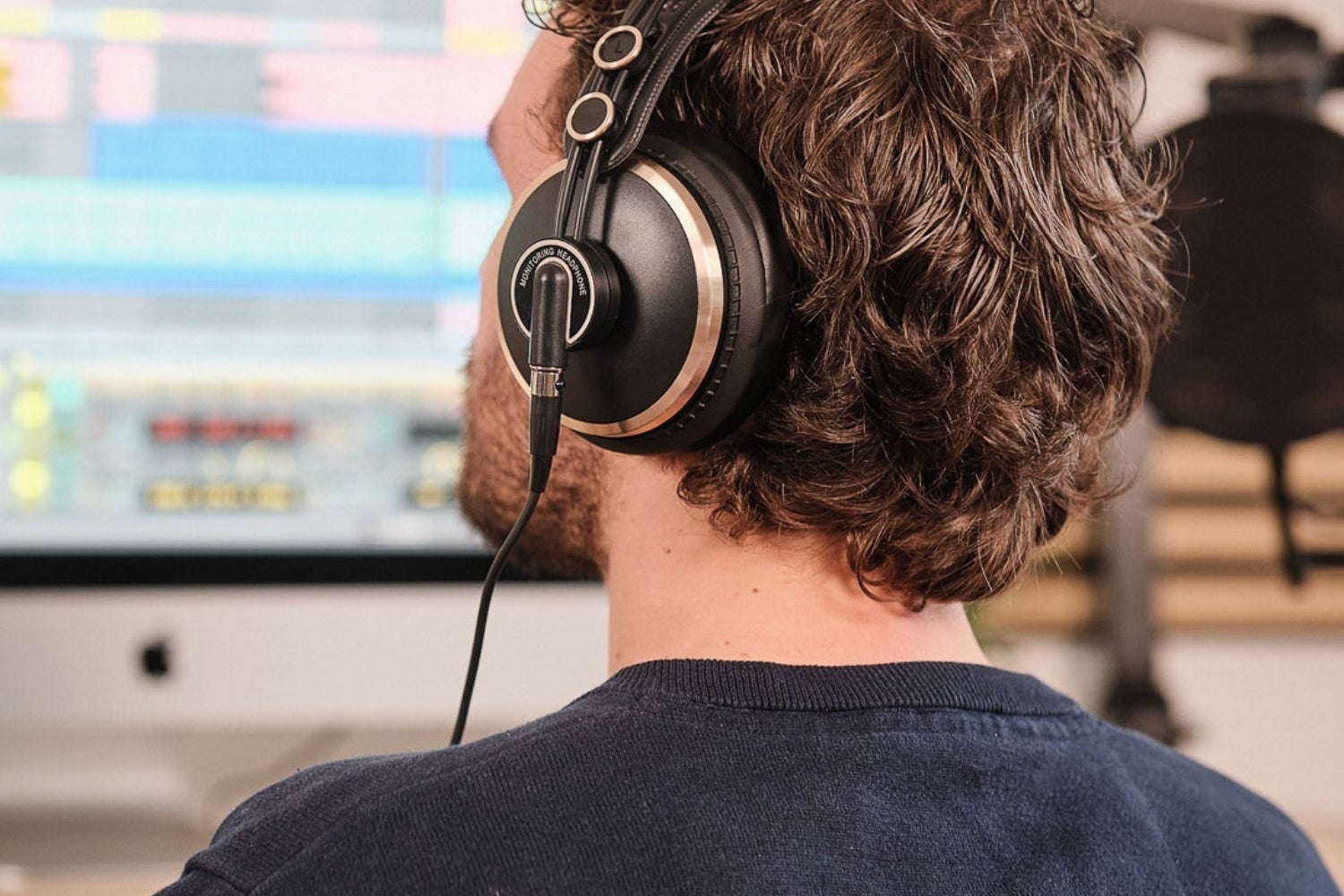
Closed-back models sound less natural, but less sound leaks out to your surroundings
Studio, DJ or ‘ordinary’: three types of headphones, one piano
Studio headphones are built to sound neutral. So no ‘warm’ sound or mega bass. When you’re assessing recordings as a studio engineer or producer, you can only make good mixing decisions if the sound is honest, meaning you hear recordings as they really are. In short, if you want to hear your digital piano exactly as it is, studio headphones are a great choice. That way you’ll hear what your piano’s sound engine is really doing, from the strike of the hammer to the slow decay of a chord with the sustain pedal held down. Bear in mind that, generally speaking, the more expensive a studio model is, the more successful the manufacturer has been in making it sound truly neutral.
DJ headphones are made for a different job. They need to cut through the noise of a dance floor, so they play loud and heavily boost the bass and low mids, so the beat can still be followed amid the din. The ear cups swivel away so you can listen with one ear, and the cable can take a knock. At your piano at home you won’t use any of that, but you do get a heavy bass in return that makes your playing sound different from how it really is.
‘Ordinary’ consumer headphones don’t have to be honest. Plenty of popular models these days are designed with an extra helping of bass and a bit of added shine in the highs, which is ideal for pop music and, more specifically, electronic music. On a piano, you’ll notice that a sustained chord in the low register turns ‘woolly’ and that the attack comes through less clearly. Even if you don’t go for one of those typical ‘extra bass’ models, headphones like these are usually still designed to emphasise certain frequencies, for a warmer sound or more sparkle, for example. And then it’s simply a matter of taste.
» View all studio headphones
» View all DJ headphones
» View all regular headphones

DJ headphones: loud, with a big, fat bass
The plug
Most digital pianos have a large 6.3 mm jack socket, while some have a small 3.5 mm one. Many headphones come with a 3.5 mm plug and an adapter to 6.3 mm included. You can also buy these (universal) adapters separately. Studio models often have a detachable cable, by the way, which is handy if it ever gives up the ghost. Pay attention to the length too: three metres sounds like a lot, until you want to grab a music book from the shelf.
Impedance: can your piano drive them?
You usually don’t need to worry about impedance (expressed in ohms), because the vast majority of headphones are perfectly suitable for your piano. Still, it’s worth a quick mention, because some people, in their enthusiasm, end up buying a gorgeous, expensive pair of headphones with an enormous impedance.
The problem is that your digital piano may not be able to drive headphones with such a high impedance properly. Yes, you’ll still get a decent sound, but there are two problems. Firstly, the volume will be disappointing: even with your piano’s volume knob turned all the way up, you’ll still only get an average sound level. Secondly, you won’t get the most out of the sound quality of the headphones you paid so much for.
So, what’s a sensible choice? As a very broad rule of thumb: try to stay below 100 ohms and you’ll always be fine. That said, there’s a good chance a 150-ohm model will still perform perfectly well on your piano. Would you rather know exactly what your piano’s built-in headphone amplifier can drive? Then check whether the specifications in the manual state the impedance of the headphone output, and make sure your headphones aren’t too far above that.
» View all headphones up to 100 ohms

Do the headphones rest on your ears (‘on-ear’) or fit over them (‘over-ear’)? For long sessions, over-ears are usually the best choice
Wireless: without latency, or not at all
A Bluetooth transmitter compresses the sound and sends it in packets to your headphones, which then unpack it again. That takes time. When you’re listening to music, you won’t notice, but at the keyboard you will: you press a key and the note arrives a fraction later. How big that gap is depends on the connection and the Bluetooth version, but an experienced pianist will notice even a fraction of a second as a sluggish feel.
If you still want to go wireless, look for systems designed for instruments that promise extremely low latency, and play a few fast pieces to check. If it feels super tight, you’re good to go and that’s all you need to know. Personally, I’m sticking with a cable. Just to be on the safe side.
» View all wireless headphones
 Want to turn LPs into MP3s? Here’s How to Digitise Your Vinyl
 How to Breathe: For Vocalists & Musicians
 Setting Up the Band with a PA System? Here’s What You Need to Know
 Want to Play Tight? Then Nail These Exercises
 Playing Keys in a Band: What You Need to Know
 Everything You Need to Know About Making a Podcast
No comments yet...