
Microphones
-

Most people never even think about vocal microphone hygiene, which is okay as long as you’re the only one using the mike. If not, it’s important that you clean your vocal microphone after use to prevent one singer from passing their germs on to the next. In this humble blog, I’ll explain how you can easily clean a microphone yourself.
Comments Off on How to Clean a Microphone | in: Live Sound, Microphones, Musician, Singer, Studio & Recording -

This might sound familiar: you’re at home trying to record audio using an audio interface, a microphone and some kind of recording software. The signal input meters of the software are barely moving so you turn up the gain, only to then sing one or two loud notes and be immediately confronted with the signal clipping as if possessed by the devil himself. If that does indeed sound familiar, you’ve no doubt asked yourself (and the internet apparently): how loud should I record audio?
-
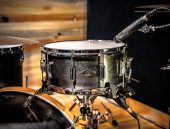
Out of all the instruments that exist, the drum kit is arguably the most difficult to record. Then again, a drum kit actually isn’t a single instrument; it’s a collection of loud percussion instruments that cover the entire audible frequency spectrum. As such, it’s not uncommon to record a drum kit using multiple microphones. In this blog, you can find out which microphones are the best for the job and how you should set them up.
-
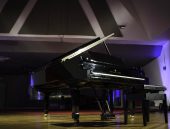
Whether you’re a singer-songwriter, keyboard player in a band, composer, or sound technician, sooner or later you might want to record the sound of a genuine acoustic piano. And I’m not talking about any pre-recorded Steinway or Yamaha C7 samples either, because no matter how good these sound, it wouldn’t be your own unique sound. So how do you record a piano, which microphones do you need and where do you even put them? Read on to find the answers to these questions and more!
-
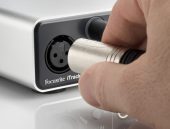
So, you’ve bought a new microphone only to find out that it won’t work unless you supply it with phantom power. Condenser microphones in particular often require this. Fortunately, most mixers, audio interfaces and recorders have a built-in phantom power supply, the control for which is indicated by ‘Phantom’, ‘P48’ or ‘48V’. In this blog, I’ll tell you what to look out for when you want to use phantom power.
-
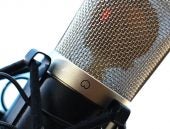
Whether you’re browsing the internet for a vocal microphone for the stage or a condenser for your studio, it won’t be long before you’ll run into the term ‘pickup pattern’, also referred to as ‘polar pattern’. You’re also likely to bump into terms like ‘cardioid’ or ‘omnidirectional’. In this blog, I’ll present you with the pickup pattern basics, include a few field examples, and tell you what you need to know when you’re looking to, ahem, pick up a new microphone.
-
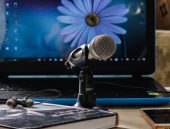
People often ask our humble helpdesk how they can connect a microphone to their computer or laptop. It’s not a weird question since, you simply don’t know what you don’t know and, if you’re a little afraid of damaging your pristine MacBook, or you don’t want to just randomly order some gear, it’s more than understandable. Luckily, there are a number of ways to do it and it doesn’t even have to cost that much.
Comments Off on So, Can You Connect a Microphone to Your Computer? | in: Microphones, Studio & Recording -
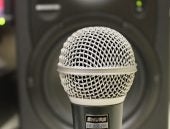
So, you want to amplify your voice, but all you’ve got is a microphone, a cable and a speaker. Can it be done, you ask? While it certainly can, you’re going to need a suitable microphone and speaker, although some cases leave a little room for a creative solution. As always, read on to learn more!
-
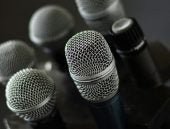
A microphone is one of those devices that you speak into and then it magically enlarges and reproduces your voice, right? Well, let’s just say that that’s a rather blunt way of putting it. One thing that all microphones have in common is that they take sound and turn it into electricity. Dynamic microphones and condenser microphones each do this in a completely and noticeably different way, so it’s about time we share the nitty-gritty with you.
-
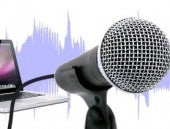
These days, many people are interested in recording their vocals; not necessarily for professional purposes, but for accompanying a YouTube video or for performing at home, for instance. Perhaps you’re learning how to sing and want to record your progress, or you want to entertain some guests in the sitting room by amplifying your voice through a speaker. To do this, you’ll need a microphone, but it doesn’t need to be a top-of-the-line piece of studio equipment. You can opt for a USB microphone or a straightforward vocal microphone, depending on your situation. In this blog, we’ll go through the necessary microphone accessories so you can capture or amplify your vocals successfully!