
Microphones
-

The shorter the distance between the source and the microphone, the more low frequencies are registered at the cost of high frequencies. This is what’s known as the proximity effect, and it applies to a lot of microphones. In practice, this usually means that the closer you close-mike your voice or instrument, the fuller it’ll sound. Read on and learn how to take advantage of it.
Comments Off on Microphones and the Proximity Effect | in: Live Sound, Microphones, Musician, Singer, Studio & Recording -

While removing cables from the setup gives you freedom to move around the stage, life isn’t made easy for wireless microphone users. With mobile internet and other wireless traffic only getting busier and busier, there’s little room left in the ether for wireless microphones. To solve this issue, Shure has developed an impressive, all-new system: the Shure GLX-D+ Dual Band Series.
Comments Off on Shure GLX-D+ Dual Band: Always a Free Microphone Frequency | in: Live Sound, Microphones -
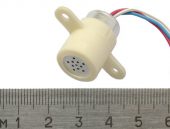
If you’ve been flipping through our range of microphones, you’ve probably come across the terms ‘electret’ and ‘true condenser’. But what’s the difference? And are ‘real’ condenser microphones always better than electret microphones, like the name suggests? In this blog, we’ll explain it all.
-
Thanks to social media, it’s never been easier for bands to reach a huge audience by dropping studio-polished tracks on online platforms. That said, sounding good in the studio is one thing – sounding just as good or even better on stage is another. Stunning live performances are exactly what sets good bands apart from the rest, which raises the question: how do you make the perfect live recording of a gig? Well, read on and learn!
-

So, you play keyboard and you’d like to sing along. But is it even possible to plug a microphone directly into your keyboard? That depends entirely on your keyboard, but even if it does have a microphone input there are still a few things to bear in mind or look out for.
-
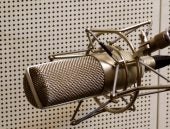
Back in the day, ribbon microphones were not only expensive but incredibly delicate, and generally, were only built and maintained by the studios that used them. In America, RCA records built their own ribbon microphones, while the BBC built their own Coles microphones. Of course, these days, you can find a massive range of affordable models available, and most of them are a lot more hard-wearing and less delicate than their ancestors. Here, I’ll go over the pros and cons of using the infamous ribbon microphone so you can make up your own mind.
-
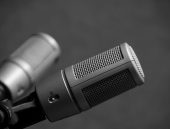
Stereo recordings often have the kind of three-dimensionality you just can’t replicate using reverb or delay effects or the pan controls of your DAW software. Most stereo recordings are made using a pair of condenser microphones loaded with cardioid pickup patterns, though omni-directional and bidirectional microphones aren’t uncommon either. Usually, more high-end microphones can even toggle between all three patterns so you can pick one depending on the situation. If you want to know which microphone set-ups are best for recording in stereo, just read on!
-
Say you’ve finished recording all of the instruments and vocals and you want to mix everything down. The individual tracks sound great, but once you start playing with the faders, it sounds like all parts of the recording are working against each other. The mix is all but up to snuff, and a phase issue is most likely to blame. In this blog, I’m going to explain what phase is, what it causes and how you can get rid of it, so you can prevent or fix any phase issues as they pop up while you’re working on your studio projects.
Comments Off on How to Prevent or Fix Phase Issues in the Studio | in: Microphones, Studio & Recording -

A full choir can be seen as an enormous, singular audio source, that sometimes spreads out its sound over tens of metres, making for a pretty unique job when it comes to recording. How do you make sure that every choir member is captured while the choir sounds like a cohesive whole? In this blog, I’ll explain how just two or three cleverly positioned microphones can result in a balanced and clear stereo-recording.
-

While recording an acoustic guitar might sound like a straightforward job, getting a clear and natural-sounding recording can depend on a number of factors. The kind of microphone you use, the way the microphone is positioned, as well as the way the recording space reacts to the vibration of the strings, all play an important role in the final recording.
Comments Off on Recording the Acoustic Guitar: The Basic Rules | in: Guitarist, Microphones, Studio & Recording -
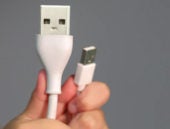
In theory, it’s definitely possible, but in practice it can be a little bit cumbersome. The advantage of using a USB microphone is that you have a great all-in-one setup without needing to use an audio interface. But if you want to use more than one USB mic, things get pretty complicated for your computer. Also, hooking two USB microphones up to a computer kind’ve defeats the purpose of using a USB microphone. But, can it actually be done?
Comments Off on Plug Two USB Microphones to One Computer? Is That Possible? | in: Microphones, Studio & Recording -

Despite the fact that setting up and teaching classes online is easier than ever in today’s digital age, there are lots of tutors, coaches and private teachers who struggle with the audio quality of their live-streams – even when their internet connection is working just fine. Since comprehensible speech is essential for getting any kind of message across, the sound needs to be spot-on. In this blog, I’m going to explain how you can take the audio quality of your online classes to the next level and, no, you don’t necessarily need to invest in a new microphone!
Comments Off on Teaching Online – How to Improve Live-Stream Audio Quality | in: Microphones, Studio & Recording