
Wireless or wired microphone: which should you choose as a singer?
Published on Tuesday 20 October 2026
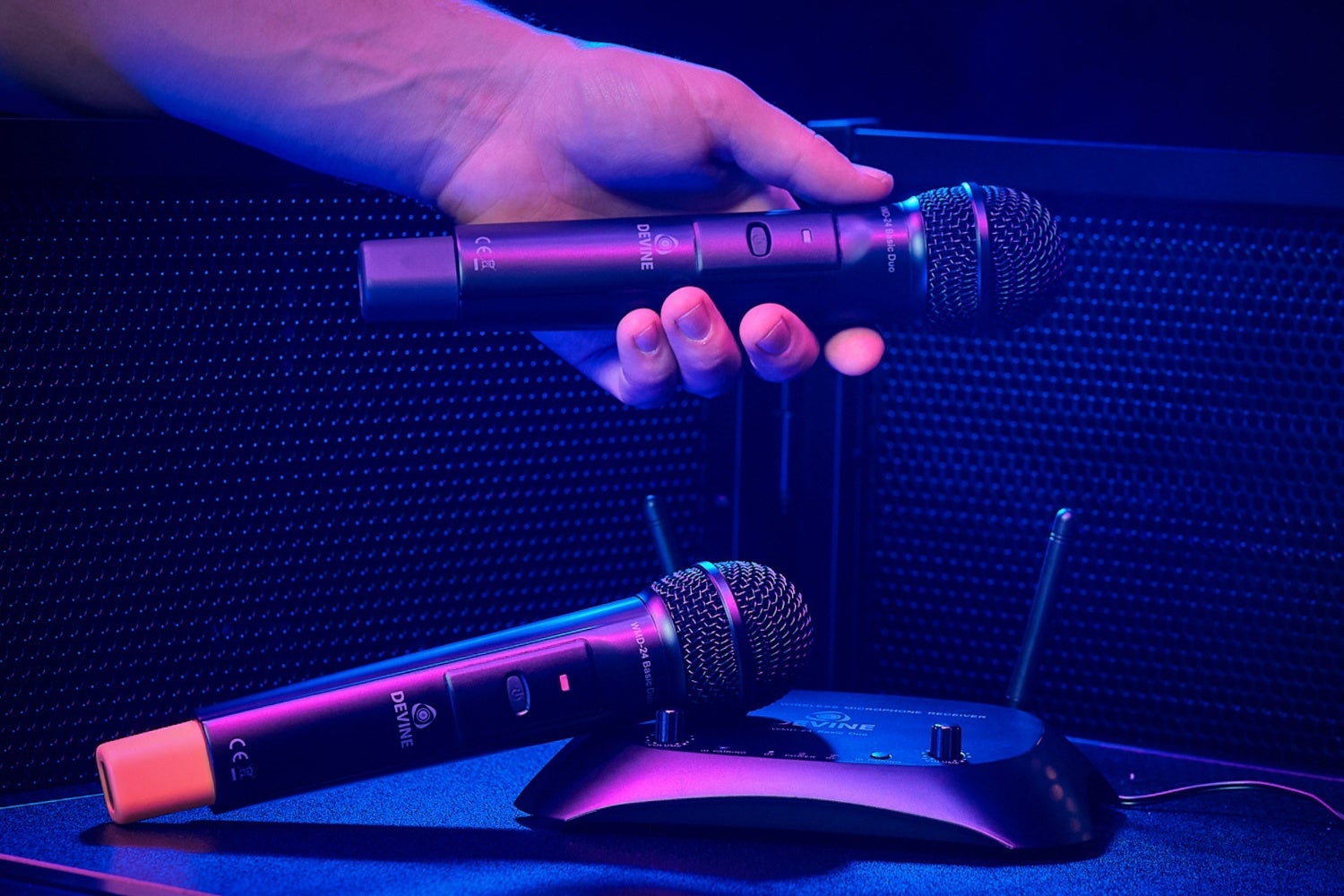
For years I sang with a cable attached to my microphone and never gave a wireless mic a second thought. Until the guitarist in my band suddenly turned up to rehearsal without a cable. I thought: if he can do it, so can I. Still, there’s plenty to be said for a wired connection. Let’s look at the pros and cons.
The cable: boring, and that’s exactly why it’s great
A wired vocal microphone is the least exciting piece of kit on the entire stage, and that’s precisely its strength. XLR cable into the mic, the other end into the mixing desk or speaker, and off you go. There’s nothing to charge and no hunting for a signal. If the cable breaks, you grab another one from your bag or the sound engineer comes over to plug in a new one.
The downside is the physical limitation. I’ve come to see the cable as a dog on a lead: it usually trots along obediently, but there are limits. On a small stage, where you can’t take more than two steps anyway, you’ll hardly notice. But if you want to get close to the audience or weave between your bandmates, you’ll feel every metre of lead.
» View all live microphones
» View all dynamic vocal microphones (wired)

Wireless: suddenly the stage gets bigger
The first time I held a wireless handheld, I simply wandered out into the venue during the soundcheck. Because I could. Technically, it’s simpler than it seems: the transmitter in the handheld mic, or the bodypack for your headset, turns your voice into a radio signal. The receiver on stage turns it back into audio, and from there it’s just a microphone again: XLR into the mixing desk, done.
What you get in return is that you never have to think about where your cable is again. You walk to the edge of the stage, turn round to the drummer, get down on your knees in front of the audience, and you don’t have to worry about anyone (yourself included) treading on your cable. With a headset you also have your hands free, which is handy if you play guitar as well or need to get a whole room joining in. And if you’re filming a gig, there are no more cables in shot.
» View all wireless handheld microphones
» View all wireless headset microphones

What wireless asks of you in return
Batteries, for a start. A wireless set means an extra routine before every show: fully charged batteries in the transmitter (charge them the day before) and spares in your bag. Fortunately, you pick up that routine quickly: I once walked on stage with a flat transmitter, and that won’t happen to me a second time.
Then there are the airwaves. Every wireless system on stage – including in-ear monitoring, which uses the same radio technology and is subject to the same rules – needs its own free frequency. Two transmitters on the same frequency will interfere with each other, and suddenly you’ll hear the guitarist (with his wireless guitar system) coming through your microphone. So how do you deal with that?
Broadly speaking, you have two options. 1) A set with a single, fixed frequency. It’s affordable and usually not a problem if you’re on stage on your own. 2) In other situations, I’d recommend a set that lets you switch frequencies. That way, every musician on stage sets their own frequency so you don’t get in each other’s way. Bear in mind: the number of frequencies you can choose from is not endless, so in theory you could still get in each other’s way. Coordinate with your bandmates before you buy.
And pay attention to the type of receiver too: receivers with ‘diversity’ (two antennas) automatically select the strongest signal. With ‘true diversity’, each antenna even has its own receiver section, which is the most reliable protection against dropouts.
Finally, there are legal and technical limits. Most wireless microphones operate in the UHF band. But that space is shrinking, as mobile networks and digital broadcasting claim more and more frequencies. Which frequencies are available varies from country to country, and often from region to region too. If you use a band that isn’t officially free to use, you risk interference and a fine. You can read more about this in our dedicated article.
» The questions about wireless microphone systems we get every day
» View all wireless microphones with switchable frequencies
» View all wireless microphones without switchable frequencies
So: cable or transmitter?
I can keep this short: you have to experience it for yourself. A singer friend of mine was sceptical about wireless microphones until she picked up a second-hand wireless set from someone for next to nothing. She tried it at one gig and was instantly hooked. So there’s your answer. Even if you run into the odd technical hiccup, I don’t think you’ll regret it. But I also know singers who gave it a go and just couldn’t get used to it: they love the simplicity and reliability of an XLR cable.
Want a bit more certainty before you give it a try? Start by honestly asking yourself how much you actually move around. I know singers who bought an expensive wireless set and then stayed behind their mic stand at every show. So if you mostly sing from one spot, a good wired microphone and two decent cables will buy you plenty of peace of mind. If you love roaming the whole stage, or you play in a band that already uses in-ears, then wireless simply comes with the territory, along with the batteries and frequency checks that go with it.
These days I have both. At a wedding in a small venue, the cable comes along; on a festival stage, it’s the transmitter.
» Which wireless microphone is best for me?
» Microphone technique on stage: how to get the best sound as a singer
 Want to turn LPs into MP3s? Here’s How to Digitise Your Vinyl
 Setting Up the Band with a PA System? Here’s What You Need to Know
 Everything You Need to Know About Making a Podcast
 Recording the Acoustic Guitar: The Basic Rules
 How to Breathe: For Vocalists & Musicians
 Questions About Wireless Microphone Systems We Get All The Time
No comments yet...