
Cleaning and polishing your flute without damage: how to do it properly
Published on Monday 26 October 2026

Cleaning a flute isn’t difficult, but you can do a surprising amount of damage along the way. A good share of the harm done to flutes doesn’t come from playing, but from well-intentioned polishing. What your instrument needs is simple: dry it on the inside after every session, use nothing but a soft cloth on the outside, and once a year, let someone who really knows what they’re doing look it over.
After playing: dry it first, then put it in the case
Take your flute apart straight after playing and dry the headjoint, body and footjoint separately. Everything you blow into it is warm, moist breath, and it settles on the inside as condensation. That’s exactly where the pads are, and they’re made of material that soaks up moisture. A wet pad settles, deforms under the pressure of your fingers and, over time, stops sealing properly.
Thread the cloth through the eye of the cleaning rod and wrap it right around the tip so that no metal is exposed. A bare tip will scratch the inside of the tube. Only go a short way into the headjoint: the head cork sits at the far end, and if you shift it, your flute will suddenly tune differently. Nobody told me that as a teenager, and my intonation was none the better for it. Gently twist the rod through the body and footjoint.
Can you see moisture between a pad and the tone hole? Slide a piece of cleaning paper in between and gently press the key down a few times, at two or three spots around the pad. Make sure the paper doesn’t slip as you do. Leave the cloths to dry afterwards.
Polishing: a soft cloth, and that’s it
Wipe away fingerprints and skin oils with a dry, soft microfibre cloth. No pressure, and don’t touch the underside of the keys, because the thin skin of a pad wears through in no time. That’s really all the outside needs. Anything more than that isn’t maintenance, it’s wear and tear you’re causing yourself.
Silver polish, whether liquid or paste, has no place on the body, and certainly not on the mechanism. The chemicals attack the pads, keep giving off fumes inside a closed case and gum up the rods. You’ll hear it in sticky little clicks every time you press a key. Rubbing too hard or too often comes at a cost too: the silver or gold plating is thin and wears away over the years. A shiny flute isn’t necessarily a healthy flute.
Never submerge your flute or rinse it under the tap either: the head cork becomes saturated or shrinks, and it does the pads no favours. And that dark tarnish between the keys that no cloth can reach? Leave it be. It can only be removed safely once all the keywork is off the tube, at the technician’s.
» View all flute care products

Go easy on the keys and pads, even when you’re not polishing
A lot of damage to the keywork doesn’t happen during cleaning, but when you put the flute together. Only hold it by the smooth parts and twist the headjoint and footjoint on without forcing them. Fingers clamped around the mechanism bend a rod by a fraction, and a fraction is all it takes for a key to leak. Hold it the way you hold it to play, and nowhere else.
Put your flute back in its case whenever you stop playing for a while. Yes, even during the tea break at rehearsal. A flute left on a chair or on the edge of the piano is just waiting to be knocked or picked up by a curious child. None of that can happen in the case.
And don’t start tinkering yourself. Don’t tighten a screw because a key rattles, and don’t pick out a pad because it sticks. A flute’s regulation is a chain of adjustments that all depend on one another; loosen one and the rest won’t be right either. I don’t know anyone who took their flute apart themselves and ended up with a better instrument.
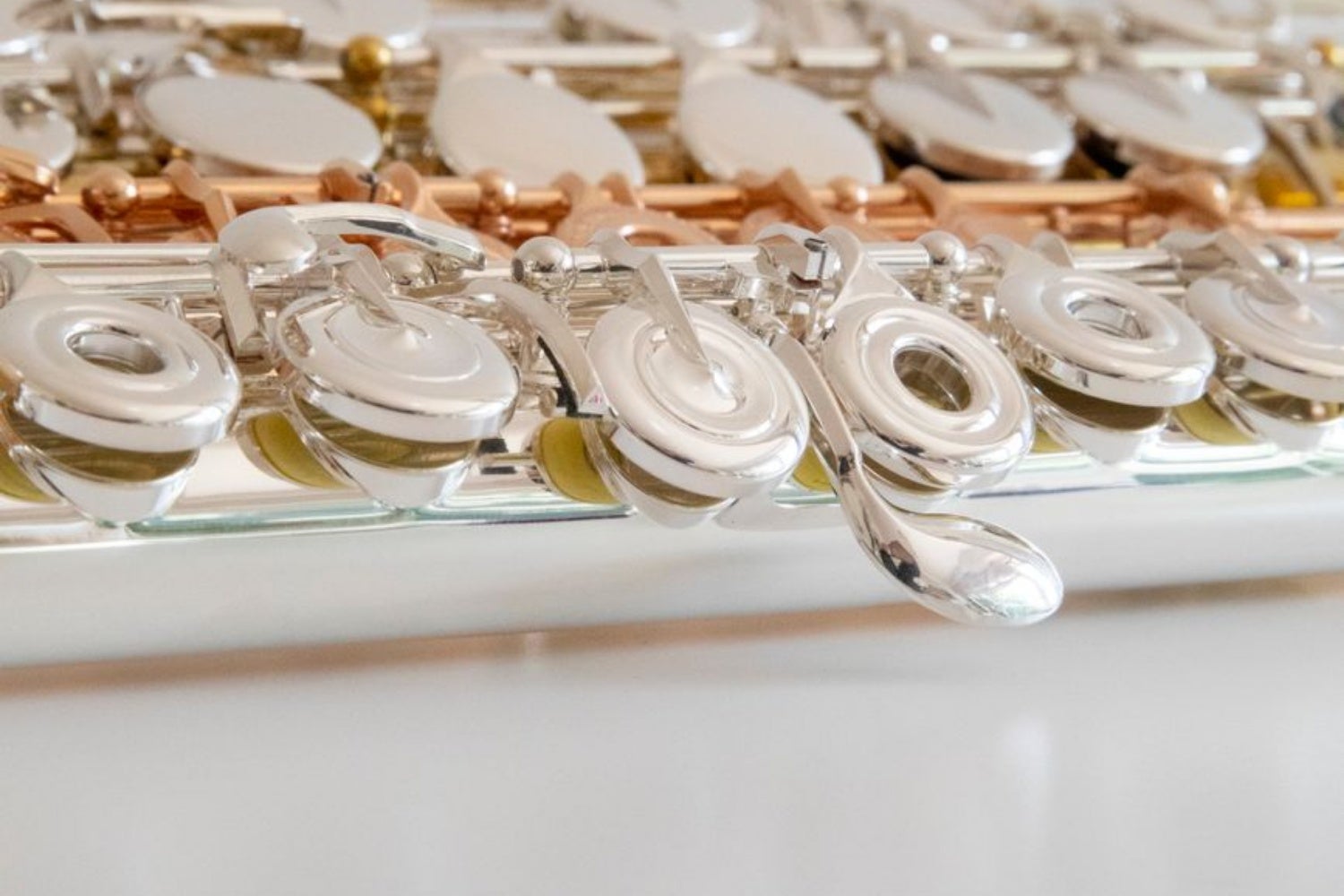
When your flute needs a service
Roughly once a year, your flute should go to a flute specialist, even if you haven’t noticed anything wrong. The mechanism needs oil, just like a bicycle chain: without lubrication, metal grinds against metal and the rods wear down without you noticing. Oiling isn’t a job for the kitchen table; it’s part of a full service, where the keywork comes off the tube.
The tricky thing is that you’ll barely notice a leaking pad yourself. Your body compensates: you press a bit harder, the low notes become stubborn and you assume it’s down to you. Only when the flute comes back and suddenly speaks effortlessly again does it sink in that it wasn’t you, it was the flute. That’s a relief and a little embarrassing at the same time.
A service like that is thorough work. All the keys come off, the head cork comes out, and the tube goes into an ultrasonic bath and under the polishing cloth. The tiny pins are tapped out and kept safe. The technician then checks every pad for leaks and places thin paper shims, either discs or wedges, behind it until it seals; some pads are set in shellac and are reseated using heat. Then it’s oiled, reassembled and play-tested. A small adjustment in between is perfectly possible without going straight for a full service.






No comments yet...