
Harmonica in C, G or A: which key should you choose?
Published on Monday 19 October 2026
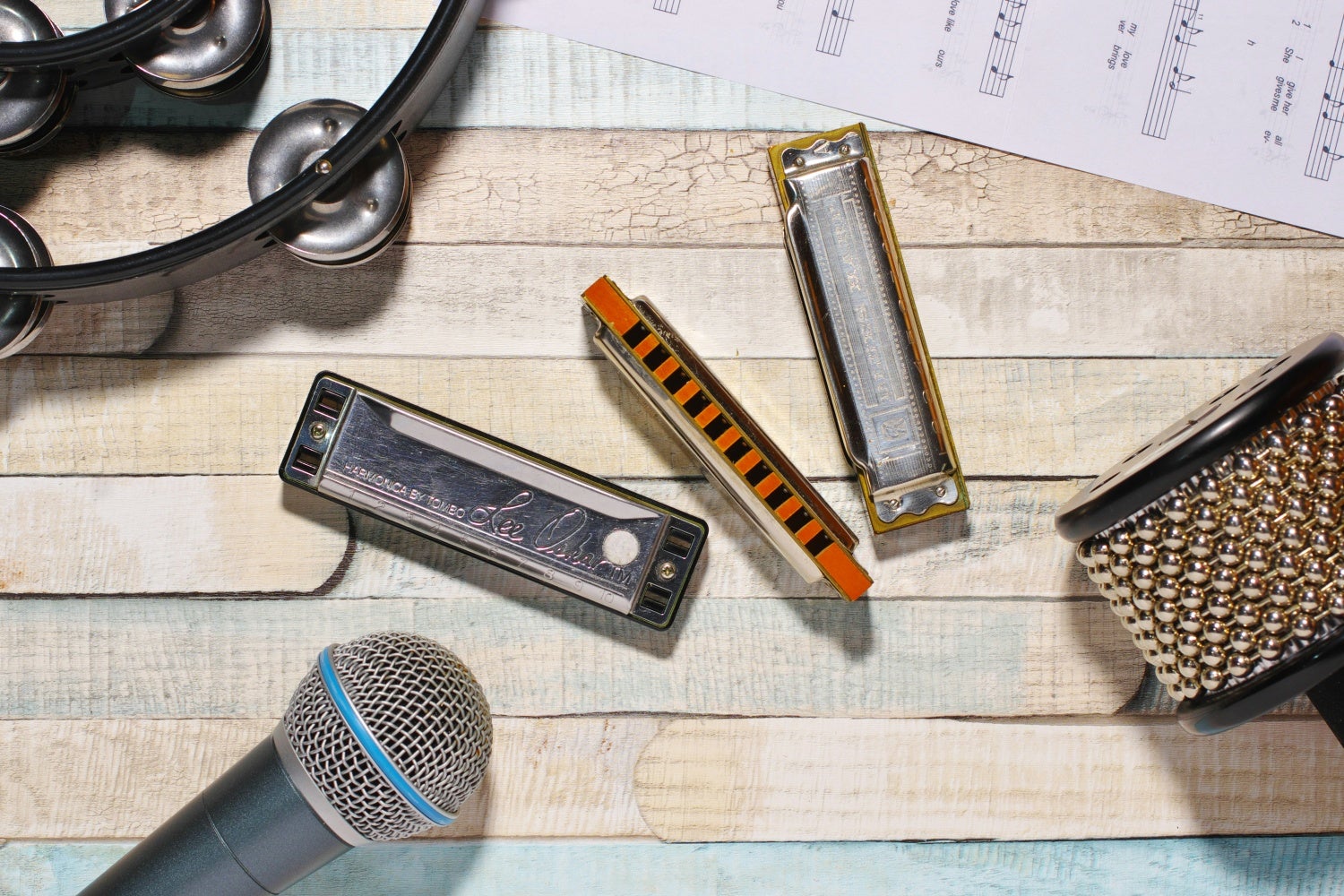
My first harmonica was a C. Not because I’d given it much thought, but because I was told in the shop that everyone starts with one. The shop assistant was right. Your first ‘harp’ is a C. You only buy each subsequent key once a song or a band calls for it.
This article is about the diatonic harmonica, the blues harp
When people say ‘harmonica’, they almost always mean that little thing with ten holes: the diatonic harmonica. My first was one of those, as was nearly everyone’s I know. It’s the model you hear in blues, folk, country and rock, and the one where the question of key really matters. A diatonic ‘harp’ is fixed to a single key, which is why it’s available in all twelve, from low G to high F and F#. Everything below is about this type.
Why only this type? Because the choice is simpler with the other models. A chromatic harmonica has a slide button that gives you access to all twelve notes. As a result, you usually buy one in C and play every key on it, just as a pianist doesn’t need to fetch a different piano for every song. You don’t switch instruments; you simply choose different notes.
Tremolo and octave harmonicas also come in different keys, although the choice is more limited. You mainly come across them in folk music and for melodies you simply play straight through. Bending notes and playing in second position don’t come into it, so the whole debate goes out of the window: you buy the key of the song and that’s that. Fortunately, most folk song music is written in just a handful of commonly used keys.
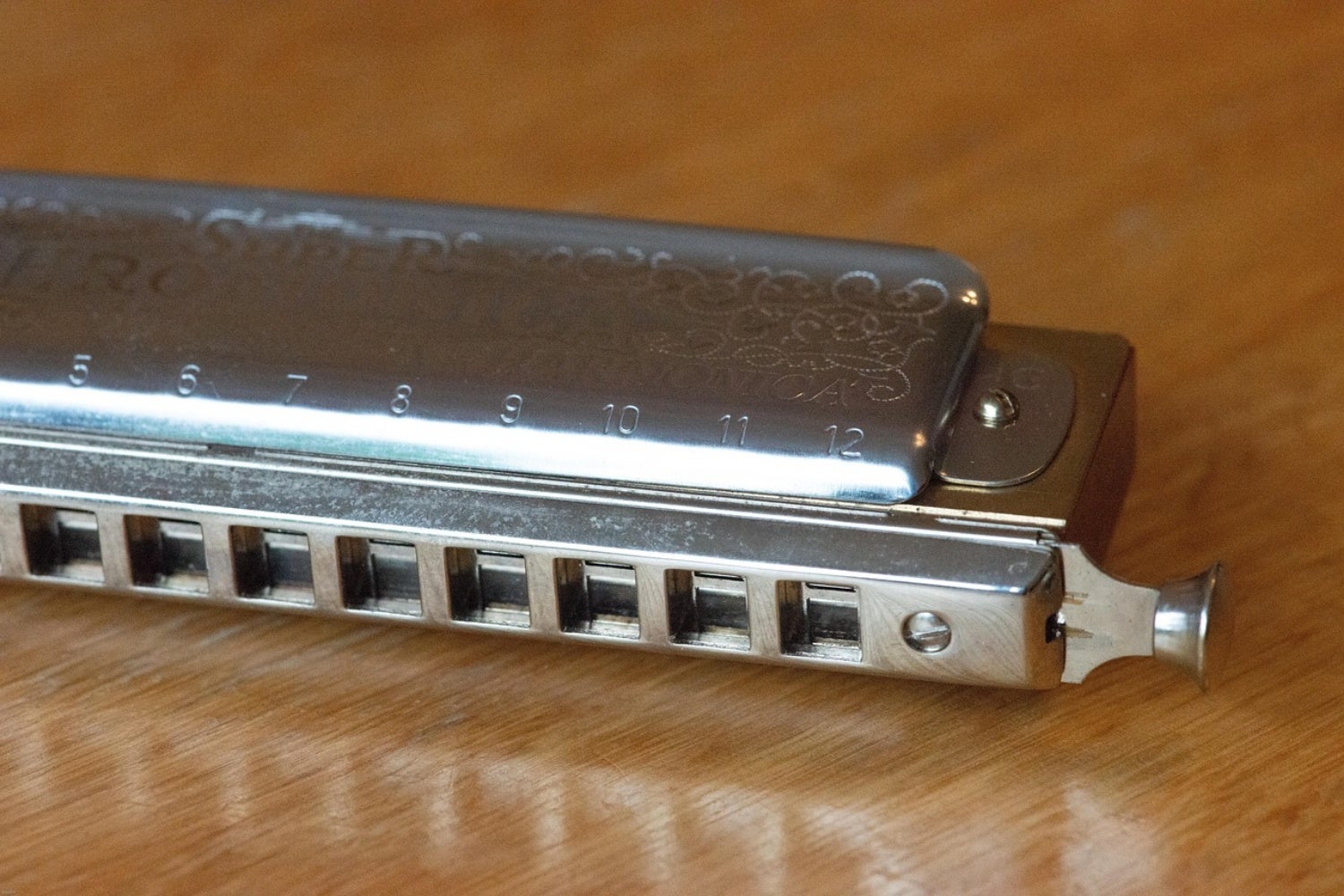
This is the chromatic harmonica, recognisable by its slide. And that’s precisely what this article isn’t about.
Why almost everyone starts with a C
The C harmonica sits right in the middle of the range. The G is the lowest standard model and, in a beginner’s hands, sounds almost like a foghorn, while an F is so high that your neighbours will have something to say about it. The C sits right in between. What you learn on a C – breathing, bending, picking out a single note without catching the neighbouring ones – you can then take with you to other keys.
What’s more, virtually all tuition assumes a C. Free videos, paid courses, booklets of sheet music: all written for a C harp. Buy a different key and nothing you hear in the lesson will match what comes out of your blues harp. It makes the theory simpler too. C major has no sharps or flats, just the white keys of the piano.
I still have my first C. The box is worn and hole 4 blows out of tune, but it’s the harp on which I first grasped that you can draw as well as blow. Those are the kinds of discoveries you’d rather make on an instrument that isn’t fighting you.
Every key plays exactly the same
All diatonic harps share the same hole layout, from low G to the highest. On a C you blow C E G C E G C E G C and ‘draw’ (breathing in, that is) D G B D F A B D F A. Pick up an A harp and the same intervals are in the same place, only everything sounds lower. So there’s nothing to relearn. Hole 4 blow is the root on every harmonica, and hole 2 draw is the fifth on all of them.
What does differ is the sound and the feel. A low harmonica, a G or an A, sounds warm and full, as if the player has taken an extra bar to think. A C, and certainly the higher keys, can turn shrill in the upper register, and you hear every imperfection straight away. Low models require more breath and more breath control. That’s exactly why you don’t start with one, and exactly why you’ll want one later on.

Playing along with a band: the singer decides
The key of the harmonica you need is determined by the key of the song, and in practice that’s usually chosen by the singer. So before you buy anything, ask what key the song is in. Not the first chord, not ‘something bluesy’, but the key. A singer who doesn’t know usually has a guitarist next to them who does.
There’s a catch, though: the key of the song isn’t automatically the key of your blues harp. Sometimes ‘second position’ is used instead – more on that below.
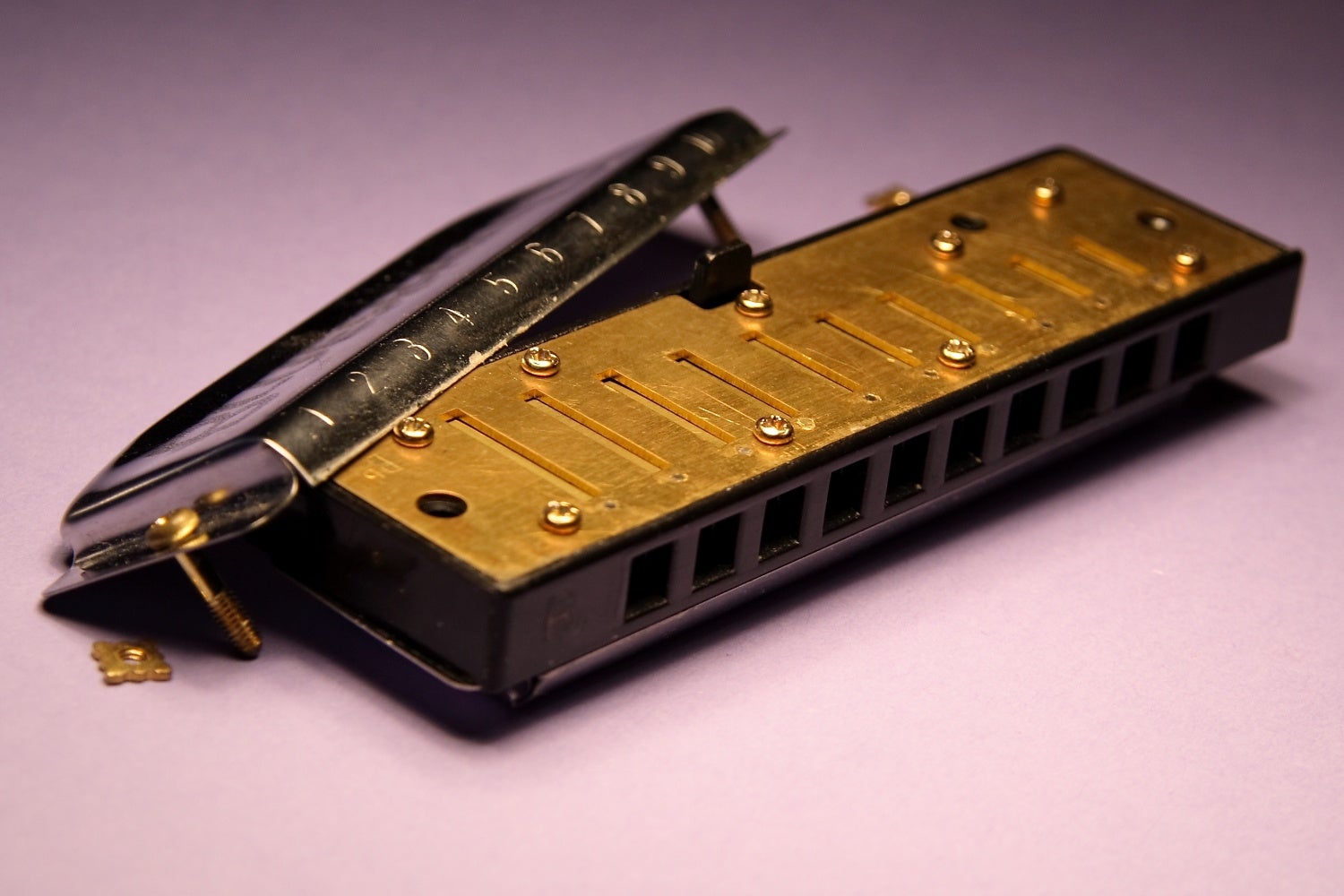
Second position, or cross harp
In first position, you play in the key printed on the harmonica. You blow, the melody comes out and it sounds tidy. That works perfectly well for folk and simple melodies, and almost every beginner naturally plays this way. But try a blues and you’ll hear that something’s missing. It sounds prim and proper, like a classical choir singing a blues number for the first time.
In second position, or cross harp, you play a fifth above the key of your instrument. On a C you play in G, on an A in E, on a G in D, and so on. Your root is no longer on 4 blow but on 2 draw, the same note as 3 blow. Working it out the other way round is handier when you’re buying a diatonic harmonica: go up a perfect fourth from the key of the song, i.e. five semitones, and there’s the key you need. So if the song is in E, you end up with a blues harmonica in A. Do take a moment to learn how to count up a fourth from a given note; you can’t always just move up four letters (see our article on reading music).
Now for the big question: why does this work so well for blues? Because the draw holes now take centre stage, and you can bend them: by changing the shape of your mouth and the position of your tongue, you make the note drop. Those bends are the heart of the blues, and in second position the blue notes you need are right under your lips, either directly or via a bend. That’s why practically everyone plays blues, and a lot of country and rock, in second position.
» Want to play the blues? Use these chord charts, notes and tips!
» Learning to read music: the C major scale
» View all harmonica books
Your second harp will be an A
Guitarists love E. Open strings, a big fat low note – what more could you want? Loads of blues and rock is in E. As mentioned, count four from E and you land on A: the harmonica that lets you play in E in second position. That’s why a harmonica in A is almost always the logical second purchase, before you’ve even thought about any other key.
After that come D, G and F, in that order or with the last two swapped – opinions differ on that. With C, A, D, G and F you have a set that will see you through most jam sessions. My own set grew in exactly that way, and not by design. Each harmonica arrived after an evening when I couldn’t play along with a particular song.
Exotic keys: only when a song calls for them
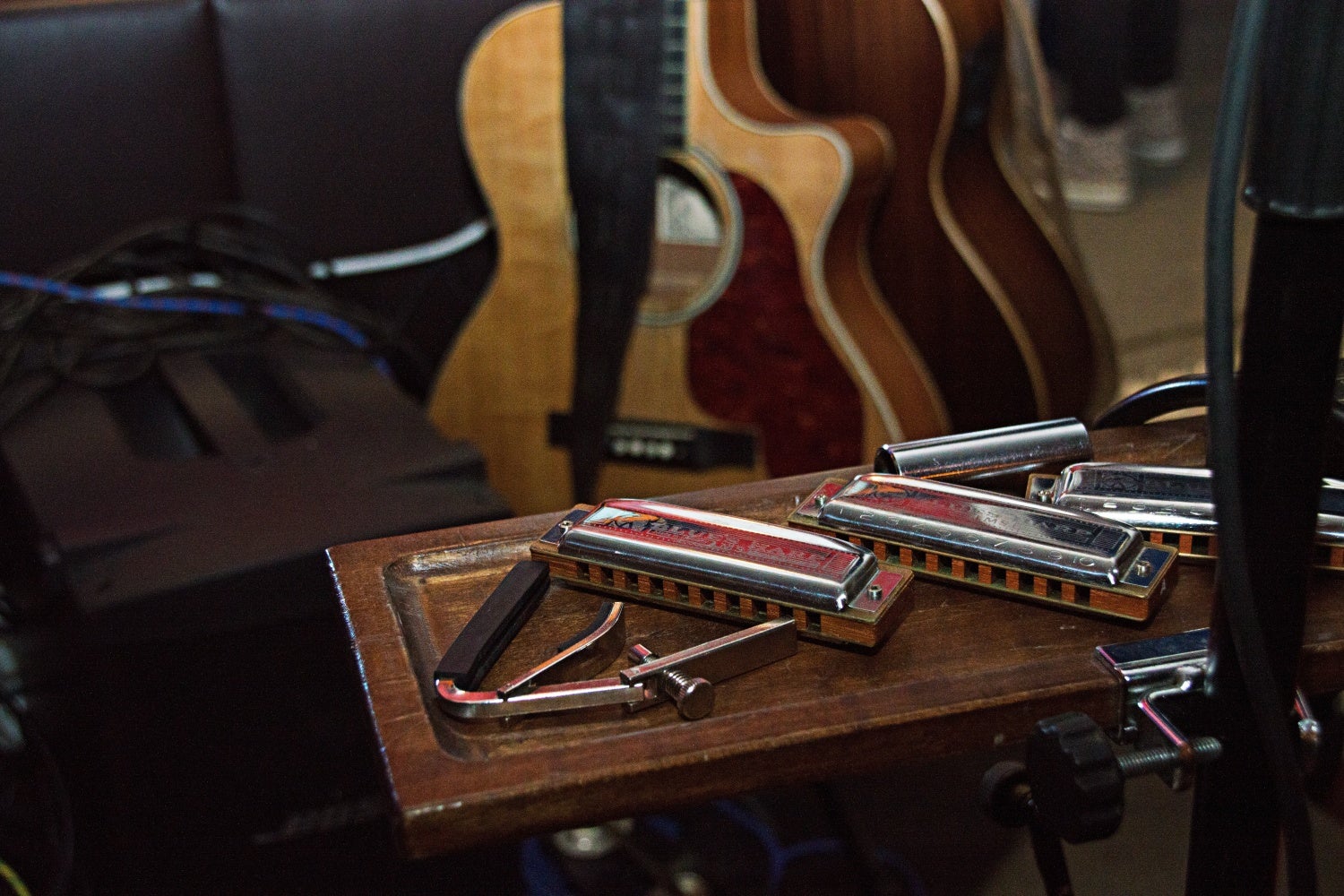
Diatonic harps come in all twelve keys, including Db, Ab, B and F#. They’re no harder to play; they’re just rarely needed. You buy them only when a song calls for one: the singer who can only sing a song comfortably in Bb, for which you’ll need an Eb harp in second position. Nobody starts with a Db, and nobody needs one sitting in the cupboard just in case.
Two things worth knowing for when that time comes. Some keys are also available in ‘low’ versions, such as a low D or low F, for anyone after an even warmer, darker sound. And some manufacturers mark both first and second position on the harmonica. Handy when you need to grab the right one from your case in the half-light on stage.
My advice, after all these years and a case full of harmonicas: buy a C, play it until it creaks, and let the music decide which key comes next. If you’re not sure which model suits you, the selection guide will get you well on your way.




No comments yet...