
The difference between an upright and a grand piano
Published on Friday 2 October 2026
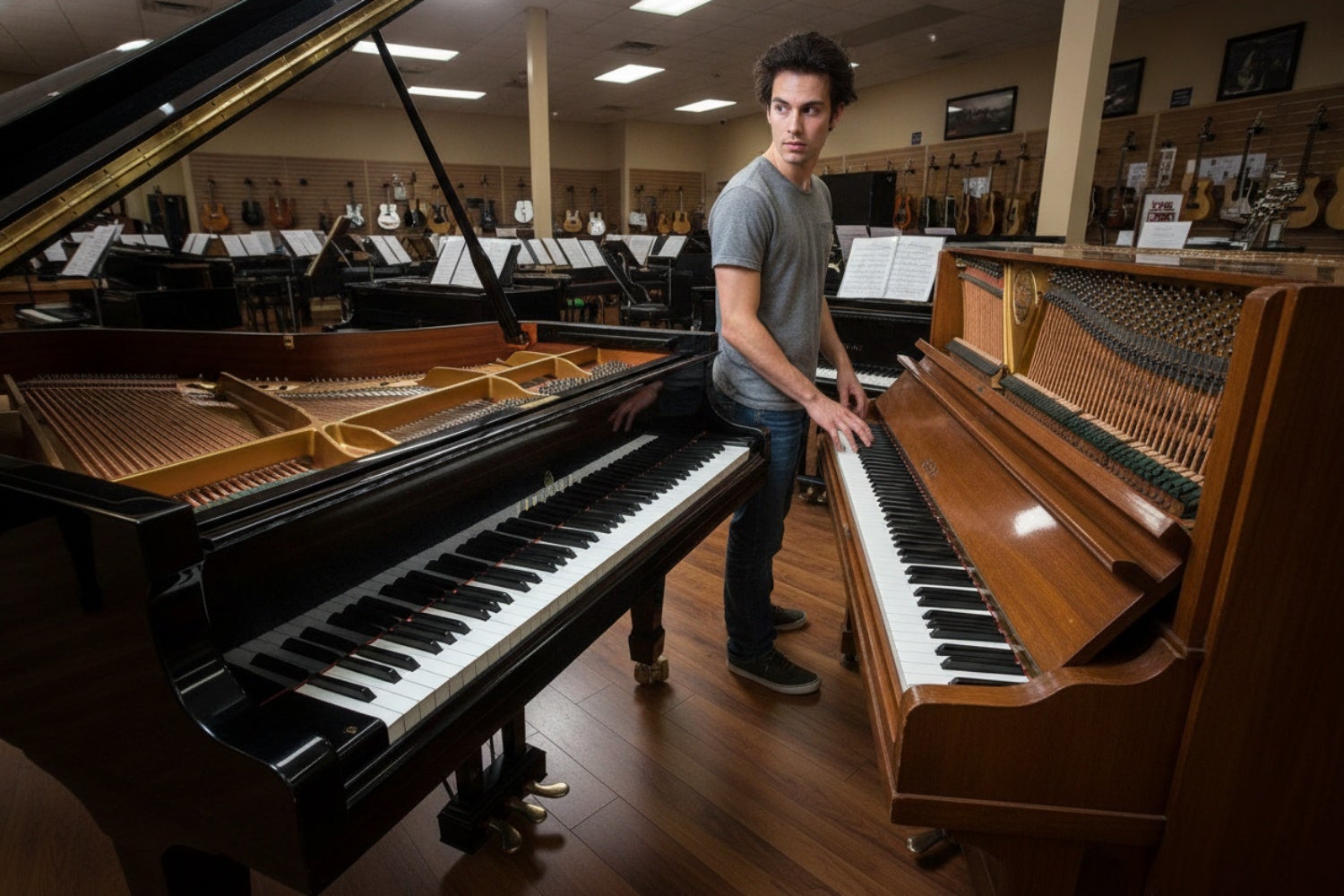
An ordinary piano is really a grand that’s got out of bed. The grand piano came first, with its horizontal strings and action, and only much later did the upright piano, also known as a vertical piano, come along. So what are the differences? And is one better than the other? Read on to find out.
Lying down or standing up: that’s where it all begins
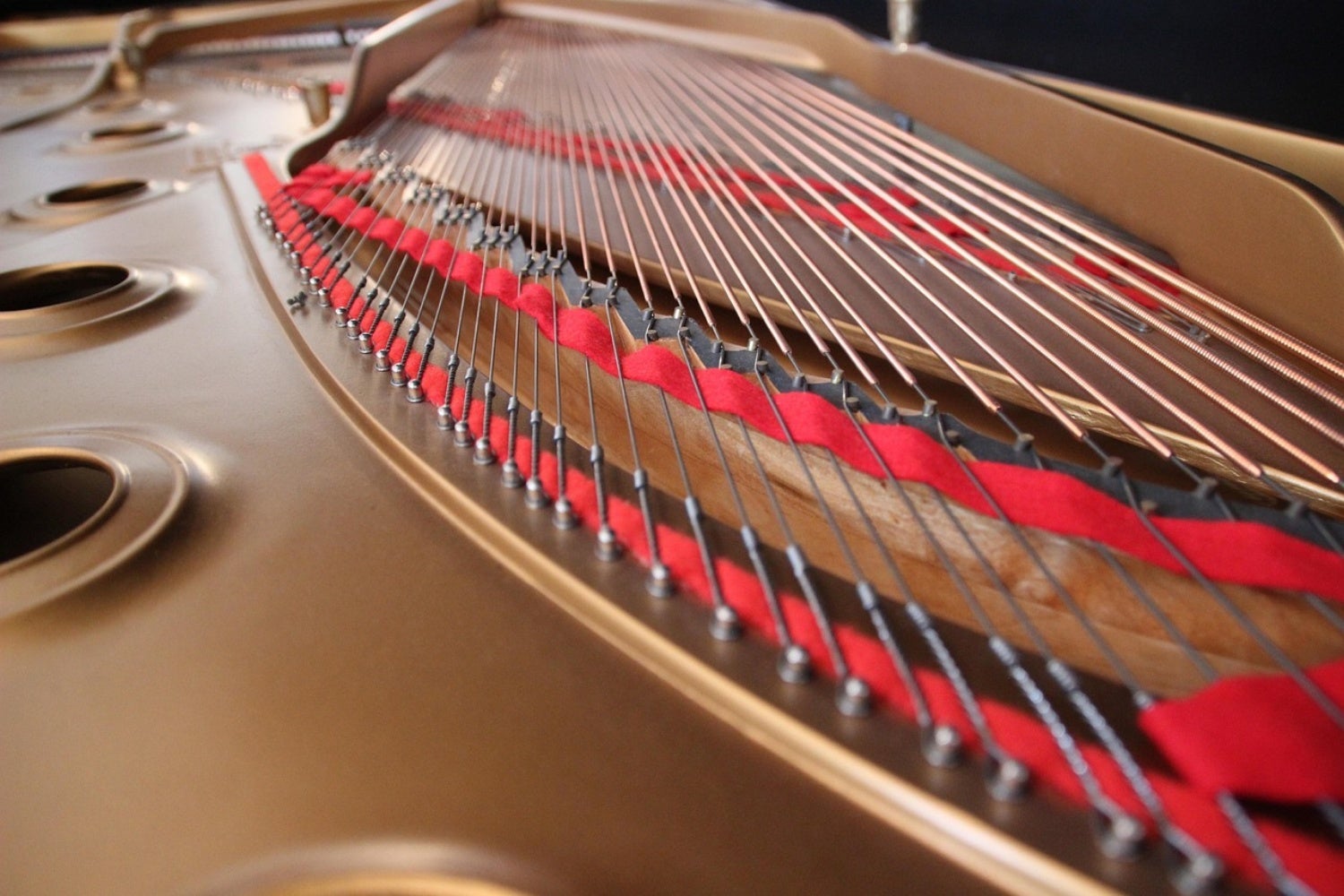
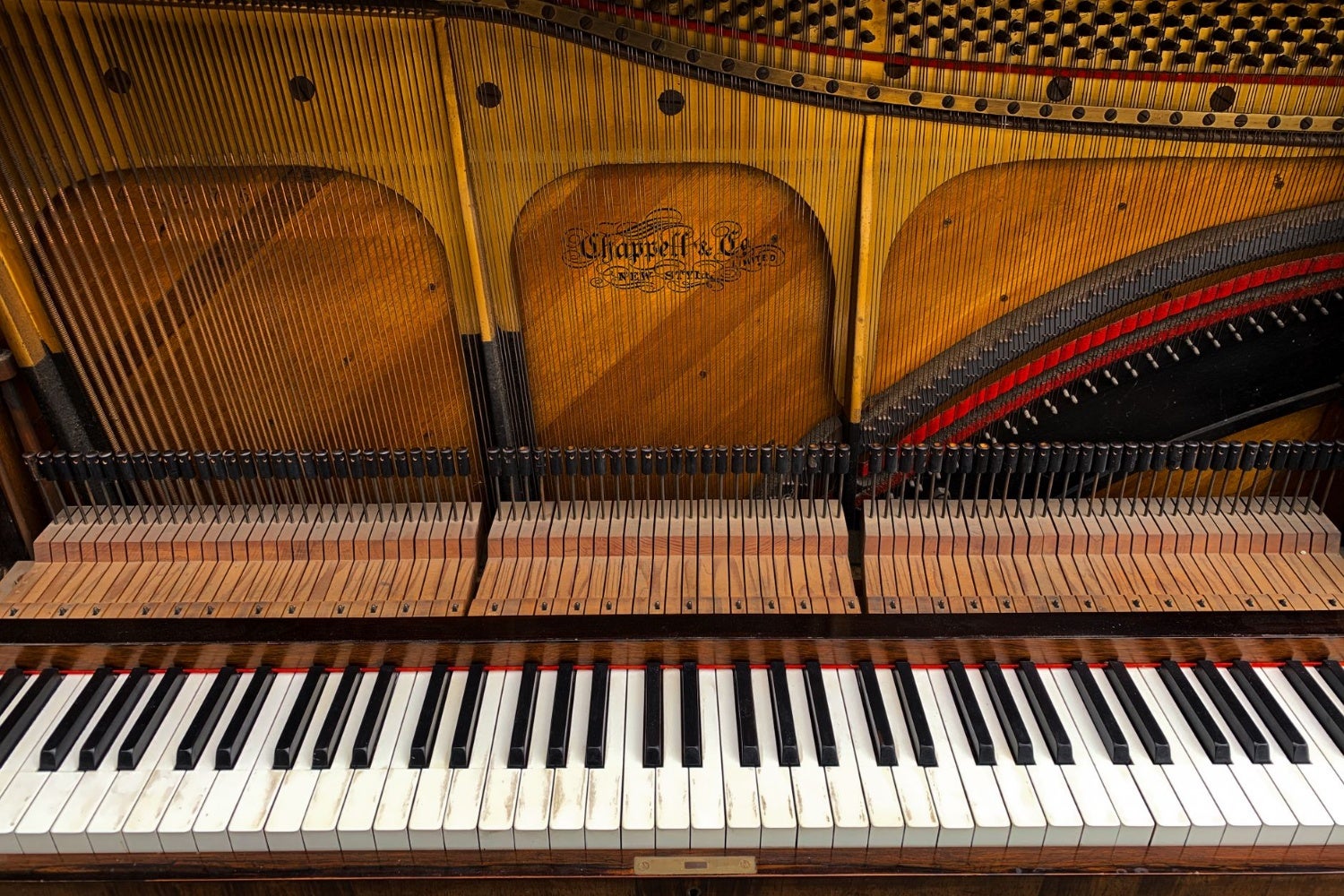
Open the lid of a grand piano (or simply a grand for short) and you’ll look down on a horizontal field of strings. The hammers sit underneath and strike upwards. On an ordinary piano (the upright piano), everything is turned a quarter turn. The strings stand upright like a wall and the hammers strike forwards. Same idea: key goes down, hammer hits string. Just in a different direction. And that’s the crux of it.
Because what does that hammer do after it strikes? On a grand, it simply falls back under gravity. Just like a ripe apple dropping from a tree, nobody needs to lend a hand. An upright piano’s hammer doesn’t have that luxury. It has to be pushed back to its resting position by springs. That works perfectly well, but it’s still a detour.
You notice that detour as soon as you repeat the same note quickly. A modern grand can manage up to around 15 strikes per second, an upright about seven. So roughly double. The same action also gives you greater dynamic range and finer control over your touch on a grand.
» How does a piano make sound?
The grand came first, the upright much later
The grand was around roughly a hundred years before the upright piano. Around 1700, Bartolomeo Cristofori built a harpsichord in Florence whose strings weren’t plucked, but struck by small hammers. For the first time, you could play softly and loudly depending on how you struck the key. Cristofori called his invention a ‘gravicembalo col piano e forte’, a harpsichord with soft and loud. That’s where the word piano comes from.
Cristofori borrowed the shape from the harpsichord. Low notes need long strings and high notes short ones. Lay those strings side by side, from long to short, and you naturally end up with that curved case reminiscent of a bird’s wing. That’s why in Dutch the instrument is called a vleugel (wing), just as it is in German (Flügel). So the shape isn’t a stylistic choice. It follows from the length of the strings.
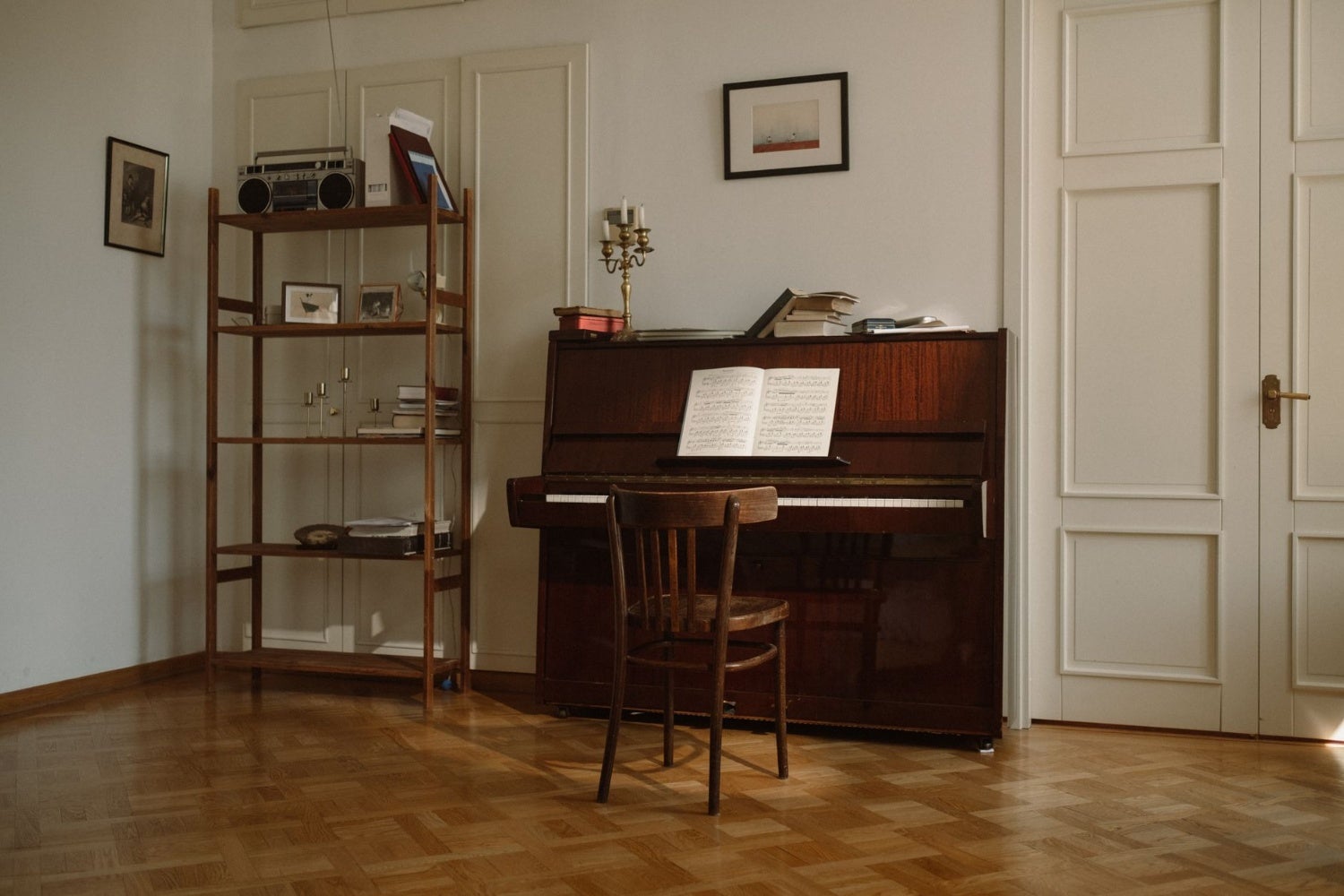
An instrument two metres or more in length fits nicely in a palace, but not in an ordinary home. So as early as the 18th century, builders tried standing the strings upright. Those first vertical models were essentially grands tipped on their side: towering and unwieldy. Around 1800, John Isaac Hawkins in Philadelphia and Matthias Müller in Vienna, among others, had the strings run all the way down to the floor. That made the case a great deal lower.
From then on, things moved quickly. In the 19th century, the middle class grew, and with it the demand for an instrument for the home. Making music together in the living room became a fixture of family life, and the compact piano fitted right in, in terms of both space and price. So the upright piano didn’t come about from a tonal ideal, but from a lack of space: it’s a grand stood on end to fit in the living room.
» The piano: history, construction & more
What you hear and what’s under your feet
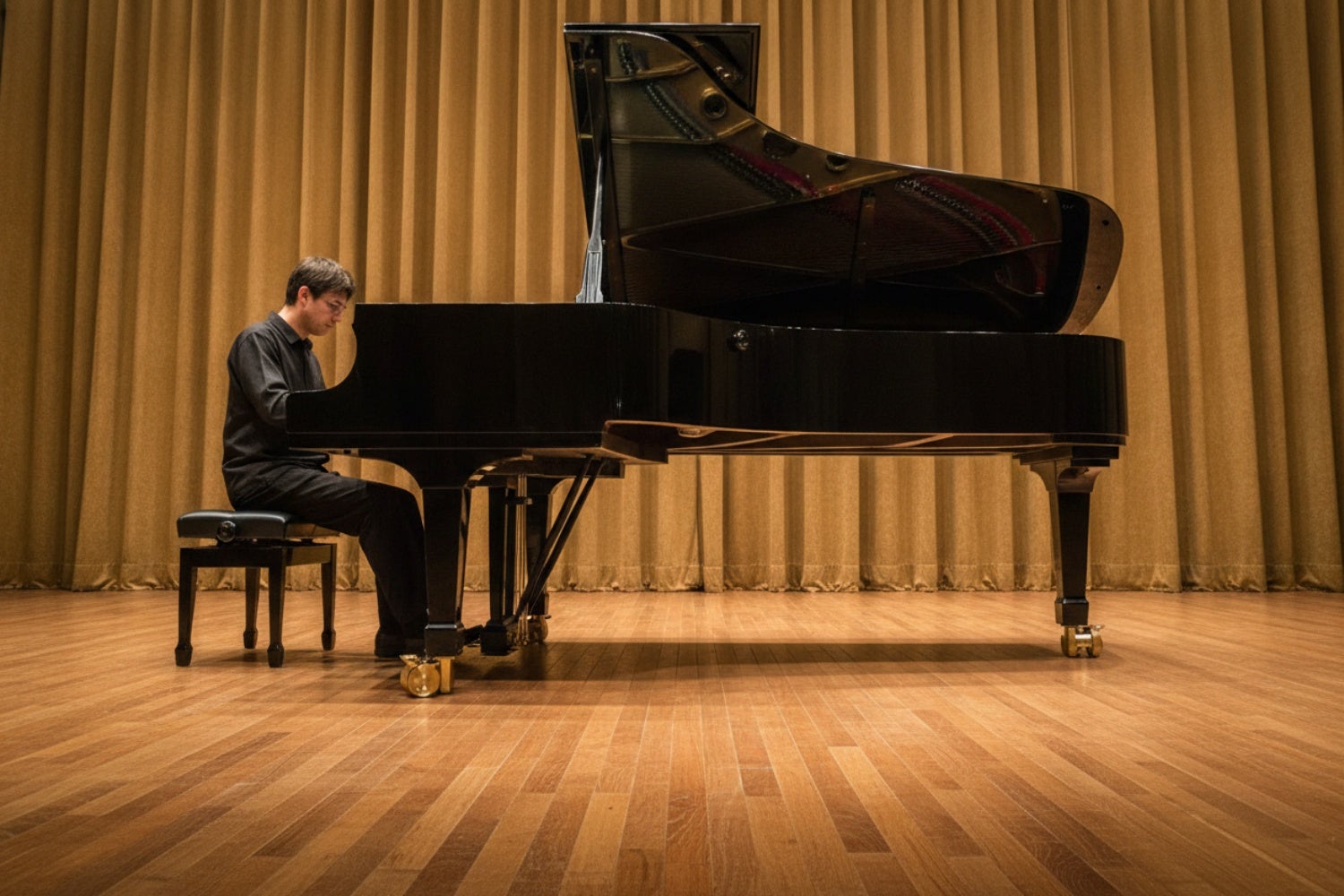
Sit down at an upright and the soundboard radiates sound both forwards and backwards. At the front, the cabinet panels filter out the high frequencies, while the sound projected backwards bounces off the wall and interferes. That cancellation gives the upright a more enclosed sound compared with a grand. On a grand, the lid reflects the sound sideways out into the room.
On top of that, a grand generally sounds bigger, fuller and louder. Longer strings, a larger soundboard, more room to resonate. In short: more direct and fuller. Even if you don’t know what to listen for, you’ll usually hear it within the first few chords.
Then there are the pedals. The right pedal does the same thing on both types of piano (read our blog on piano pedals). The middle pedal on a grand, however, is usually a sostenuto. It sustains only the notes you’re holding down at that moment, while everything else is damped as normal. On an upright, that’s usually a practice pedal: a strip of felt drops between the hammers and the strings, the sound is heavily muted and you can practise quietly. More expensive uprights, such as the Yamaha YUS5, do have a proper sostenuto.
The left pedal serves the same purpose on both, but it works differently. On a grand, this pedal shifts the entire action, keyboard included, slightly to the right: the sound becomes softer and the tone rounder. On an ordinary piano, the hammers are simply moved closer to the strings. A similar effect, but not quite the same. More on this in our pedals blog.
» The three piano pedals: what are they for?
So is a grand always better?
On paper, the grand wins. It’s generally regarded as the better instrument, and after the previous two sections you’ll understand why. But ‘generally’ is a slippery word. A good upright can easily beat a cheap, old or small grand. Some baby grands even have a smaller soundboard than a top-of-the-range upright. Lying down alone is no guarantee.
And then there’s the living room. An upright slides against the wall and takes up very little floor space. A grand claims a large part of the room. It’s also more expensive, partly because it costs more to build. At the same price, you’re often better off with an upright. So: always play it yourself before you buy. Every instrument is different, even within the same type.
Digital piano or digital grand?
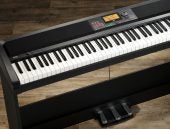
Digital pianos come in two forms: the regular upright shape and the grand shape, also known as the digital grand. But the whole story above revolves around horizontal strings and falling hammers, and a digital piano has no strings. So the advantages of an acoustic grand don’t automatically come with the shape of the cabinet.
A digital piano, even if it looks like an upright acoustic model, is first and foremost designed to imitate a grand piano. You can see this in everything: how the keys respond to your touch, how the pedals work and the fact that the digital sound is usually modelled on some expensive acoustic grand. If you opt for a digital piano that also looks like a grand, you get a few added benefits: a) it looks gorgeous and b) the sound is usually richer and more spacious because there’s more room for the built-in speakers.



No comments yet...