
What size violin do I need? 1/4, 1/2, 3/4 or 4/4 explained
Published on Tuesday 3 November 2026
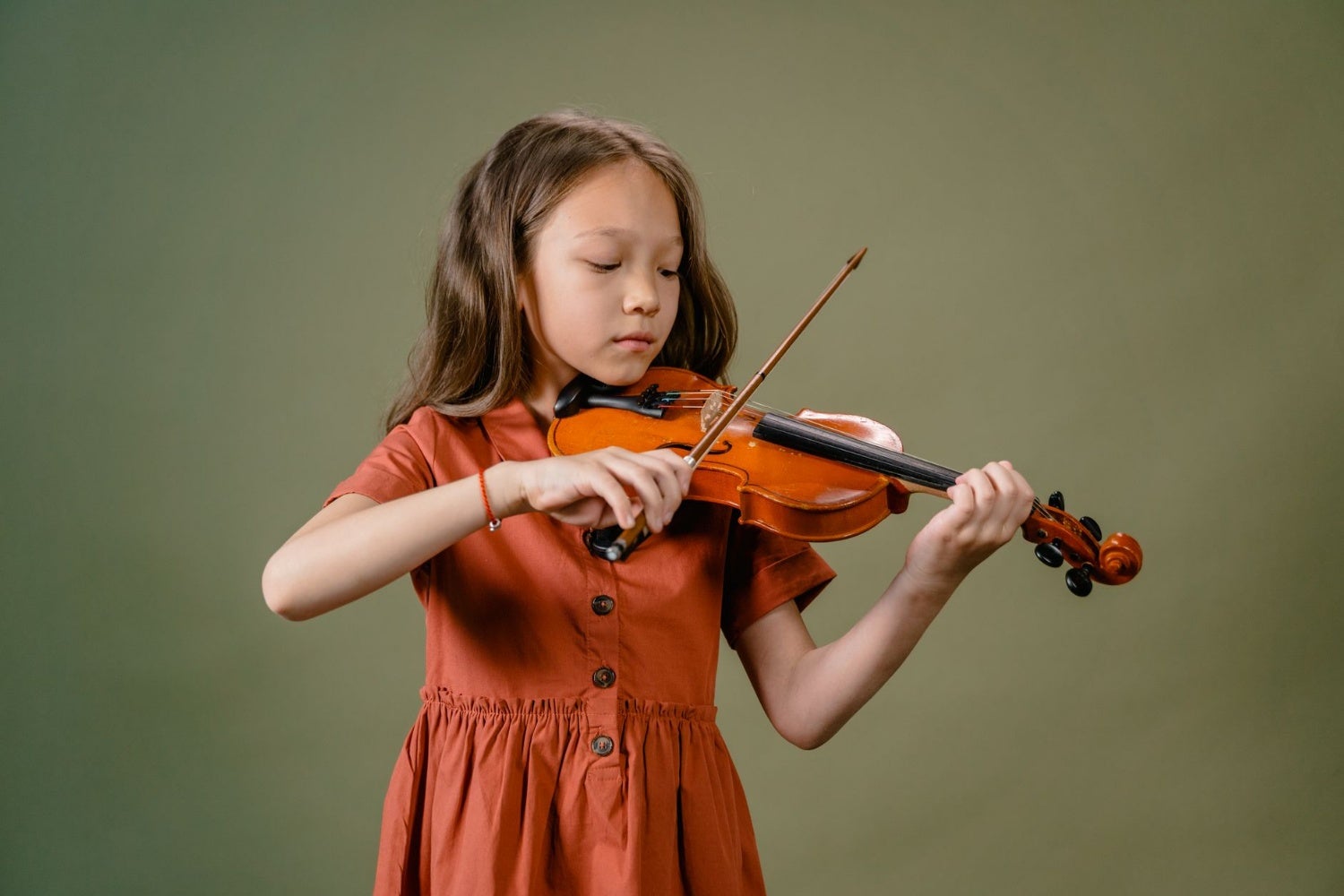
The size of violin you need depends on your child’s arm length, not their age. Instruments are also regularly bought to grow into: an eight-year-old with a violin that’s just a touch too big, “because otherwise we’ll need another new one next year”. Understandable, yet exactly the wrong approach. A violin has to fit the player’s body; if in doubt, go for the smaller one.
From tiny to full size
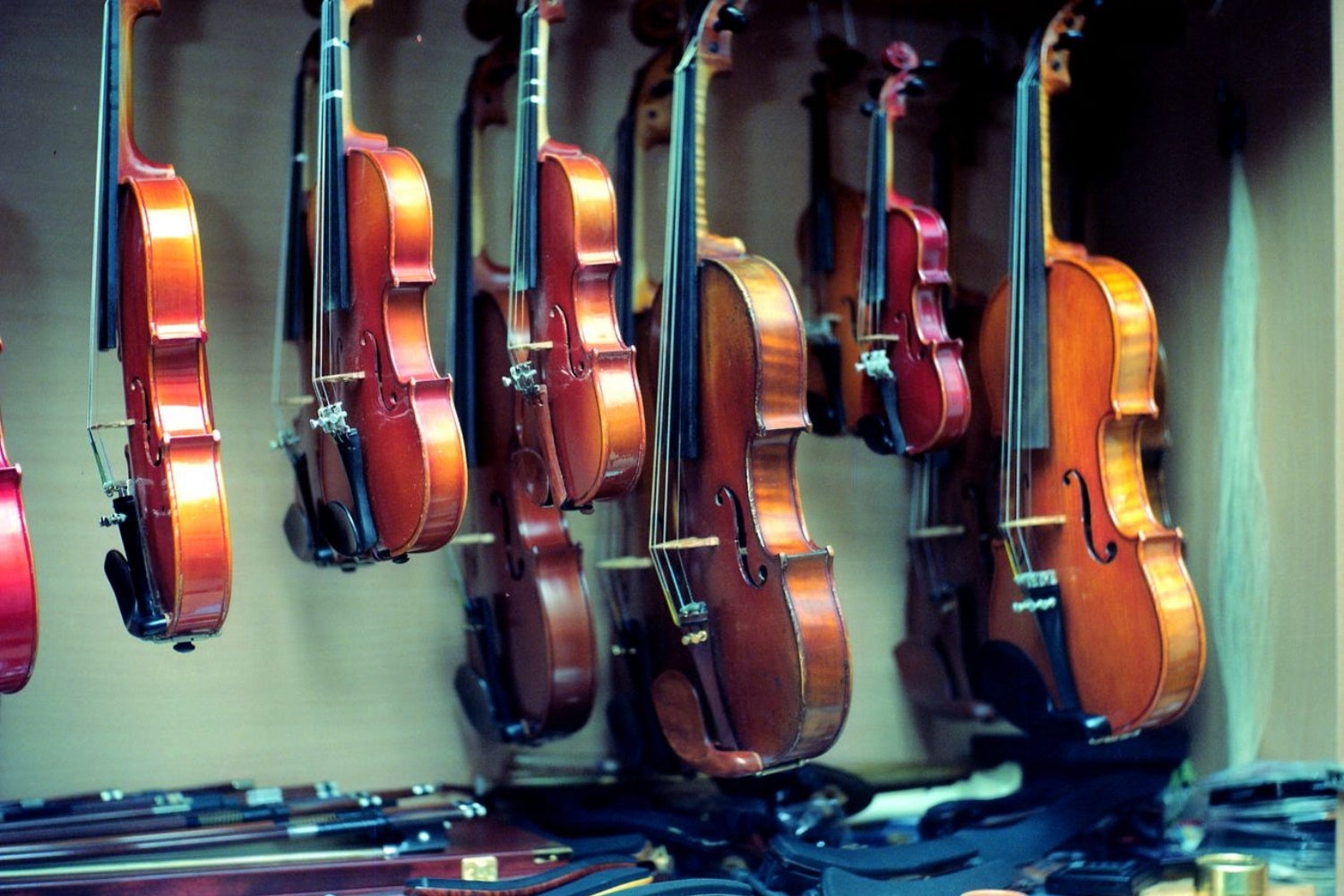
The range runs from 1/16 via 1/10, 1/8, 1/4, 1/2 and 3/4 up to 4/4, the full size. There’s also a lesser-known in-between size: the 7/8, sitting between 3/4 and 4/4, mainly played by petite adults. Most people only know the four sizes in the title, but for young children the smallest sizes are no rarity.
When choosing a size, age is mostly a distraction. Two seven-year-olds can easily be a whole size apart, as long as the violin matches the reach of their arm. The body determines the size, not the calendar. Better a tall six-year-old on a size “for older children” than a small teenager cramped up on a full size because that’s what’s expected.
» View all children’s violins
» View all violins
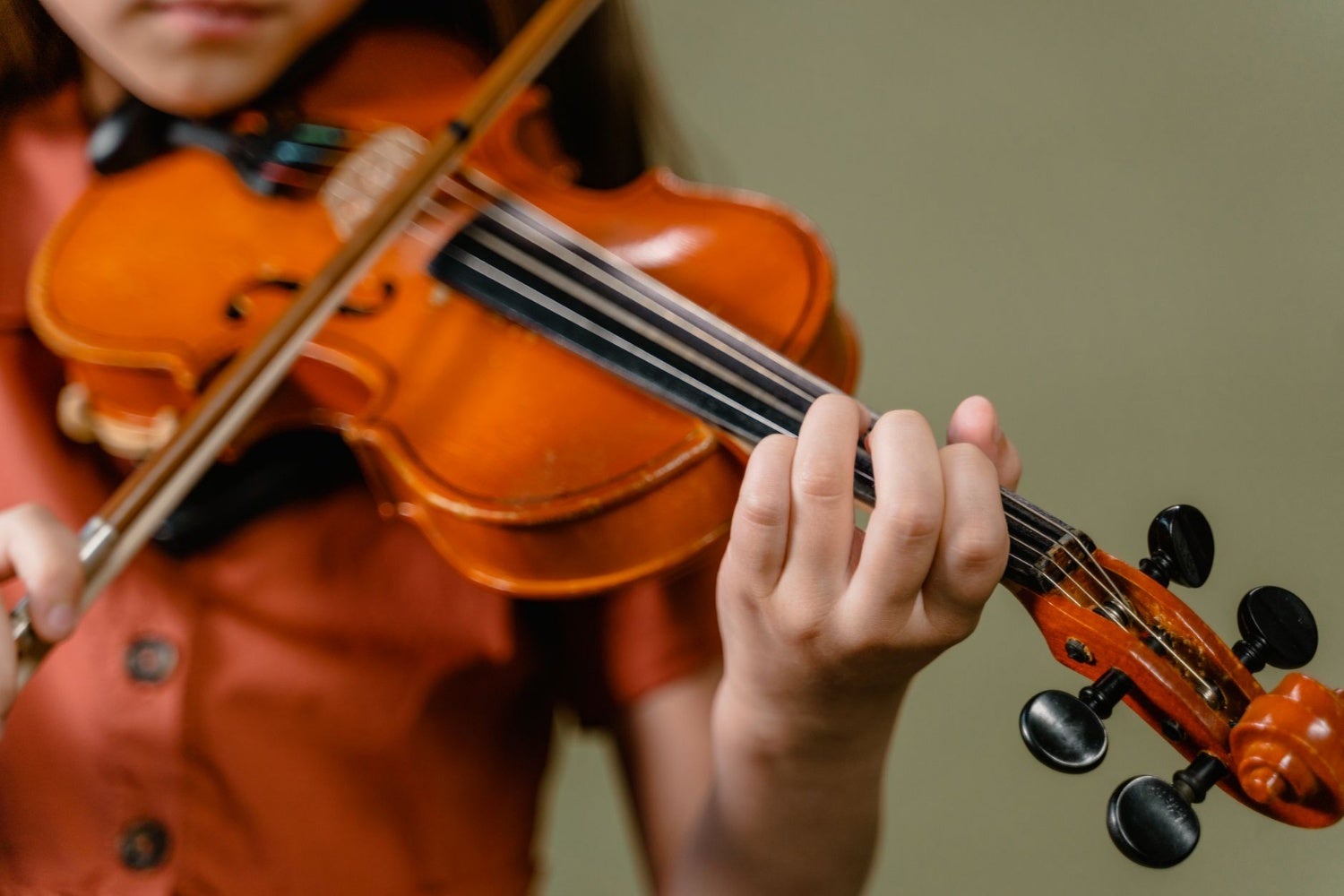
The scroll grip: a test you can do in seconds
Place the violin on the collarbone against the left shoulder, as you would when playing, and stretch the left arm along the neck towards the scroll. If the hand can wrap around the scroll with the arm extended and the middle finger reaches into the pegbox, this is the right size. If the fingertip only reaches the end of the scroll, the violin is too big.
No violin to hand? Then use a tape measure from the neck along the outstretched left arm and compare that figure with a size chart from your shop or teacher. Check where that chart measures to, because not everyone uses the same end point, and just a few centimetres can make a whole size’s difference. With a real violin in hand, you’ll get a much better picture.
The most important rule: if you fall between two sizes, choose the smaller one. Not “to grow into”, not “so we’ll get more use out of it”. It’s like buying shoes a size too big: you don’t run any faster in them, you just trip more often. A slightly-too-small violin plays perfectly well; a slightly-too-big one fights against you.
When to move up to a bigger size
Children almost always start small and work their way up to 4/4 step by step. Repeat the scroll grip every six months, ideally with the teacher, as they’ll spot from the posture that it’s time well before you will at home. If the arm wraps comfortably around the scroll and the fingers reach into the pegbox with ease, it’s time to look at the next size.
Why not skip a step? Because a violin that’s too big does real harm. It’s too heavy, the arm has to overextend, the posture slumps, and before you know it a nine-year-old is complaining of pain in their neck and arm. The whole bowing technique goes haywire. A PE teacher would never let a child train with adult weights, and yet we do exactly that with violins surprisingly often.
Each intermediate step is also a training round: on a 1/2 and a 3/4, a child builds finger strength and technique in portions that suit their body, so the full size doesn’t come as a shock. A bigger violin generally sounds fuller, and good 3/4 instruments are available without much loss of tone, whereas a truly beautiful-sounding 1/2 is rarer. That’s why renting is a great option while your child is still shooting through the sizes.
Adults usually play a 4/4, but that’s not a given either. Petite adults and slender teenagers can be better off on a 3/4 or 7/8 for a long time, sometimes for good. There’s nothing childish about that; a violin that fits will always sound better in your hands than a bigger one.
Do strings and bow grow along too?
A smaller violin has a shorter distance between nut and bridge, and therefore shorter strings. That’s about more than just length: a string is designed for a particular scale length, and on a much shorter violin a 4/4 string can’t reach the right pitch without staying slack and dull. If you’re buying separate strings for a child’s violin, check that the size is printed on the packaging and don’t just grab a 4/4 set. If in doubt, ask the teacher or the shop; it’s answered in thirty seconds and saves you from a floppy string that will never sound quite right.
The same goes for the bow: the size of the bow goes hand in hand with the size of the violin, because both need to suit your child’s arm length. Your child should be able to draw the bow from frog to tip straight across the strings without overextending the arm or twisting the shoulder. Shorter arms therefore call for a shorter bow.
Children’s violins usually come as an outfit, with a matching bow and case, and when you move up a size, the whole outfit moves up with it. That’s why I advise parents not to keep the old small bow “for later”: as soon as the arms are longer, it’s simply too short.
» Which violin strings are best to buy
» View all violin strings
» View all violin bows






No comments yet...