
-
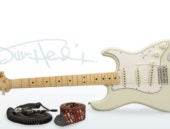
When the greats of this world use a particular guitar from their collection time and again, they often develop a special bond with it. The instrument will often end up with a name or nickname, and a real cult following can grow around it. In this blog, we dive into the story of a special electric guitar: Izabella, Jimi Hendrix’s iconic white Fender Stratocaster.
-

In classical music, violins take pride of place. But the violin has also found its way into pop music, and in styles such as folk rock it’s practically indispensable. How do you play this bowed instrument, and how difficult is it? And what should you watch out for if you want to combine violin and pop? A closer look at a legendary instrument!
No responses | in: Musician -
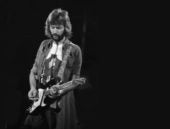
In this blog, we dive into the story behind one of the most iconic guitars in the world: Eric Clapton’s Blackie. Although the nickname is derived from the black body, the rest of this Fender Stratocaster is hard to describe. Blackie is a ‘partscaster’, or in Slowhand’s words: a “mongrel”.
-

Is it time to bring in an image consultant? Or do you not need one as a musician? One thing is certain: a meal in a restaurant can taste amazing, but if the presentation isn’t appealing, it feels less appetising. The same goes for musicians and bands. Image and identity matter. It’s an extra form of expression, adds a new dimension to your band and your music, and above all, it makes you recognisable.
-

The ukulele (spelled ‘ukulele’ in English) is a small, four-string musical instrument fitted with nylon strings. You’ll recognise it by its bright, cheerful sound. Most of the time, you play chords on it—and those are relatively easy to learn thanks to the ukulele’s compact size and the small number of strings. Originally, you’d mainly come across ukuleles in folk music, but these days they also regularly show up in pop bands and as an accompaniment instrument for singers. In this article, you’ll read about ukulele history, tuning, types and much more.
No responses | in: Musician -
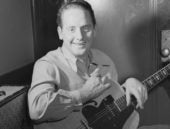
In this blog, we’re not answering the question “what is a Les Paul?”, but who was Les Paul? Guitarist and inventor Les Paul (1915 – 2009) made an important contribution to the development of the electric guitar (the famous Gibson Les Paul) and to popular music, both musically and technically.
-

Diction, pronunciation and articulation are often overlooked topics in the singing world. But that doesn’t make them any less important. In fact, they’re the foundation of good singing and a strong performance. Here’s how that works!
-

The wind controller, or wind synth, is a synthesiser for wind players who want to pluck, hammer and bow. Saxophonist Louis Gerrits knows all about it. There’s always work for the wind controller, he says. Mind you, the real controller isn’t the instrument, but the player.
No responses | in: Musician -

Experiencing and conveying the lyrics is essential for a strong vocal performance. The basic principles are fairly quick to explain, but in practice it can be very labour-intensive. You can also look at lyric delivery in a broader context—think performance and the way you, as a singer, position yourself in ‘artistic life’. Singer Ellen Evers has a very clear vision on that.
-
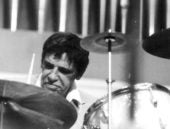
Buddy Rich (1917-1987) is regarded by many as the greatest drummer of all time. Either way, he’s a true drum legend and is often seen as one of the key pioneers of technical drumming. Buddy’s roots are in jazz, but his drum techniques have made their way into every genre.
-

Managers: are they even still a thing in the music industry? And what exactly is their role? But just as important: what is the artist’s role? A lot of artists and bands don’t know when the right time is to start working with a manager. Usually, they still need to practise much harder and gig more often before it makes sense to bring in management. On top of that, musicians often jump in far too quickly when they’re approached. Manager and lecturer Martijn Crama shares his advice!
-

Silent Night is one of the oldest Christmas hits that still blasts out of the speakers in many homes during the festive season. Fun fact: the song was written by a young Austrian priest, Joseph Mohr, who first performed it on guitar in December 1818 at St Nicholas Church in Oberndorf. With just three chords, Silent Night is a doddle to learn on guitar. Guest blogger Teo from Chordify explains how!
About Bax Music
Bax Music is your go-to online music store in the UK with more than 48,000 bits of gear and accessories in stock. More than 1,000 brands and a 26,000m2 warehouse packed with musical instruments, DJ and studio gear, headphones, speakers and lighting. Ordered before 10 PM? Receive delivery in 2 - 4 business days.
Subjects
Sign up for the Bax Music Blog Update!
Just fill in your email address and we'll drop a fresh instalment of blogs in your mailbox every month so you never have to miss out again.