
-

“That’s major!” some might exclaim when hearing that one of their mates has had a day of it. But in terms of music, Major can refer to something that feels a lot more cheerful, while minor tends to have a more sad vibe. But is this always the case? And how does this difference actually happen? In this blog, I’m going to be saying a lot about how ‘Major’ and ‘Minor’ actually works in music so that you can not only hear the difference, but actually understand it and why it happens at all.
Comments Off on Major & Minor: Hearing and Understanding the Difference | in: Miscellaneous, Music Theory, Musician -

And so we come to the third edition of our blogs about reading music. In the last two, we covered the C-Major scale and the Minor scale, which hopefully gave you a better idea of how to read notes on a stave. We also showed you how to find all of these notes on a piano, keyboard, and guitar. If you’re a drummer, you can find some helpful tips for reading drum notation in our blog, Drum Notation 101. In this blog though, we’re going to cover the mystery surrounding rhythm, tempo, and measure. Of course, if you understand all of this already and want to dive a little deeper, then feel free to check out our written-for-purpose music books.
-

In this blog, you can learn how chords are built and how to read particular chord symbols and notation. Understanding this will only help you progress whether you’re playing a guitar, keyboard, piano, or in fact, most other musical instruments, or if you simply want to know what lies behind the magic of chords and how they actually work. You’ll also find a useful list of other blogs about chords and music theory, along with our collection of music books.
-

From newspapers and magazines to alternative-history science-fiction books, everything that originally came in a paper version can now be found online as well. The world of music is no exception. Paper is getting rapidly replaced by pixels and, while this is not always ideal, I’ve gone ahead and made a list of the pros and cons of digital sheet music and will tell you exactly where you can find online sheet music. After that, I’ll highlight various popular sheet music apps and their strengths, weaknesses and possible alternatives.
1 response | in: Musician -

As the foundation for any and all music, bass is the backbone of every song. But bass guitars are also one of the most exhilarating instruments to start off a song with. Guest-blogger Marlies is a bass aficionado and she’s kindly curated a top 10 of songs that have smashing bass intros.
-

Covering a song that has moved or touched you in some way can be a challenging endeavor. For starters, recording a cover or remake entails much more than just copying or repeating what you’ve heard. As with any musical performance, a song cover should be uniquely yours. Whether you want to cover a popular Beatles song or something that’s more obscure, doing your own version entails creativity, originality, and a certain level of boldness.
-

If you’re still getting familiar with playing your acoustic guitar, then changing the strings can seem a little bit daunting. But don’t be scared! You don’t need to pay a qualified technician to do it for you! Once you get the hang of it, it’s fairly easy and can be pretty satisfying. Simply follow our step-by-step string-changing guide and watch your self-confidence grow string-by-string. In this blog, we’re focussing on changing the strings of a standard steel-string acoustic guitar. If you play a classical or Spanish guitar and want to change your strings, you can find some helpful tips on how to do it here.
-
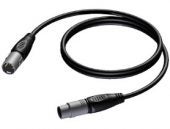
When you decide to upgrade your lighting set-up with a DMX controller, you’re going to need the right cables. And as a quick Google search will tell you, it’s all about two cables: DMX, and XLR cables. Here, we’ll explain the difference between both, and help you decide which one you need when, and where.
Comments Off on What’s The Difference Between DMX and XLR Cables? | in: Cables, Lighting & Decorations -

Whether you’re browsing the internet for a vocal microphone for the stage or a condenser for your studio, it won’t be long before you’ll run into the term ‘pickup pattern’, also referred to as ‘polar pattern’. You’re also likely to bump into terms like ‘cardioid’ or ‘omnidirectional’. In this blog, I’ll present you with the pickup pattern basics, include a few field examples, and tell you what you need to know when you’re looking to, ahem, pick up a new microphone.
-

If you’ve just set up your electronic drum kit and you’re just missing a set of sticks, then you’ve probably noticed that there’s an overwhelming amount to choose from. Different lengths, diameters, tapers, tips, material … If you’re just starting your epic drumming journey, it can be tough to pick through what’s out there. And, while some or all of these questions can be answered by our other blog: How Do I Choose the Right Drum Sticks?, we’ve put together this blog to help explain the kind of sticks you’ll need to play an electronic kit.
-

You don’t have to be a fully certified folk-fanatic to wrap your hands around one of these guitar-like string-instruments, but which one is for you? Here, we lay out the differences between the ukulele, mandolin, and banjo.
No responses | in: Musician -

Finding the right tracks is one of the most fun challenges that come with being a DJ. But where do you even begin your search? As you know, buying a lot of singles or multiple versions of the same song will start to add up sooner or later. Today, guest blogger Amar Amlani (DiceDJ) is here to tell you all the tricks of the trade, so you can continue, or start, to astound your audience with fresh beats.
About Bax Music
Bax Music is your go-to online music store in the UK with more than 48,000 bits of gear and accessories in stock. More than 1,000 brands and a 26,000m2 warehouse packed with musical instruments, DJ and studio gear, headphones, speakers and lighting. Ordered before 10 PM? Receive delivery in 2 - 4 business days.
Subjects
Sign up for the Bax Music Blog Update!
Just fill in your email address and we'll drop a fresh instalment of blogs in your mailbox every month so you never have to miss out again.