
Famous producers: George Martin – the maverick producer
Published on Friday 15 May 2026
On his long and winding road past productions, studio gear and producers, guest blogger Freek Roffel of www.freaky.studio now writes about George Martin, known among other things for The Beatles. Here, he tries to answer the question of whether the Fab Four would have gone as far without the influence of this famous producer (who often preferred to stay in the background). And did Martin actually do anything particularly special after The Beatles?

An ‘old man’ trying to herd four cats
George Martin (1926 – 2016) worked for record companies on—more or less—B-list productions. Back then, you could fit four minutes of music on a side of vinyl, so he learned to record classical works in sections, having to instruct the conductor how to end and then pick the piece back up on the B-side (seriously!). Until the day the man who would later be knighted as Sir got to produce the James Bond film Goldfinger. He was on the map—and then he was given the job of taking on four lads from Liverpool who’d been turned down elsewhere as “just another little band”. The Beatles were self-taught, George Martin was classically trained, and they couldn’t agree on a first single. The—seen from The Beatles’ point of view—older bloke in a three-piece suit had to guide this bunch of cheeky upstarts to everlasting fame.
Producing is a CRAFT and it HAS to be paid for
George became frustrated—like almost any man around forty. His work sold well, but he was on a salary. It did his head in seeing sales reps in brand-new cars because they could shift records, while he was the one making sure everything actually sounded decent on the release, for a modest wage. Now he wanted to earn some proper money—if he had to do it with rock ’n’ roll, so be it. And what does a man with an impending mid-life crisis do? Exactly: he becomes stubborn and creative! That’s my reason for writing this article.
 Abbey Road Studios, where almost all Beatles recordings were made (photo shows one of the studio rooms)
Why would you hire a studio for a week to record an album?
During Alan Parsons’ masterclasses I came across John Lennon’s remark above. So how did these opposing minds manage to create such beautiful things together? There’s a reason George Martin is often seen as more or less an unofficial band member. I’d argue that energy and rebellion were the key words. John, Ringo, George and Paul wanted to record “a hell of a lot of songs”, and the other George was fed up with the record-label establishment. While The Beatles started out with poppy rock ’n’ roll, their interests turned out to lean more towards a bigger, almost more exotic sound. George Martin knew exactly what to do with that. It even went so far that, for example, the only thing The Beatles played on Eleanor Rigby is the vocals—the rest is George Martin. That’s how a mix (I couldn’t resist) was born: classical structure, acoustic and then-modern electronic instruments, deliberately misadjusted equipment, and contrariness that made History. Sir George would sometimes deliberately slow down the tape machines because the sound fitted better—something that would later cause headaches during the re-issue of the Love album. Paul McCartney said after George Martin died: “He took our music, treated it kindly and respectfully, and did things with it we could never have imagined ourselves.” And to me, that sums up Martin’s contribution to The Beatles perfectly: he gave them a second chance and made sure they stayed creative by pushing the boundaries.
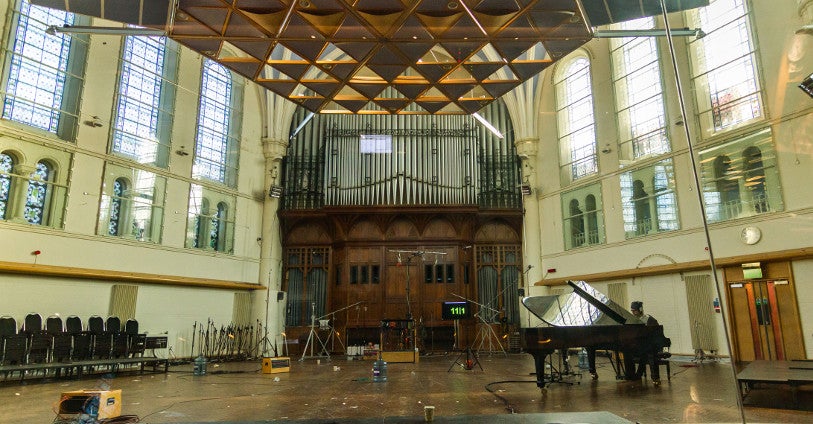 AIR Studios in London (2017)
Give me some AIR
George Martin eventually went independent and founded Associated Independent Recording. After The Beatles’ “Ltd” era came to an end, for instance, he worked with Paul McCartney on another James Bond film (Live and Let Die). Many artists would follow, and the AIR studio credit can be found on a great many albums. AIR ultimately had two locations: in London and in the Caribbean (Montserrat). But how “Martinesque” were his post-Beatles productions really? Well, for starters, the Montserrat studio did bring some exotic influences—clearly audible on Dire Straits’ Brothers In Arms—but that had less to do with George Martin himself and more with the studio. But when you hear Live And Let Die, the orchestration is unmistakably Martin. Jeff Beck has said he owes his career to George because he helped Jeff when he’d hit a dead end, by combining classical, jazz and rock ’n’ roll—clearly audible on the track Diamond Dust, where a classical piano, a string section, a jazzy Fender Rhodes and the eternally sliding notes of the Stratocaster are glued together by the drums. After Princess Diana died, George and Elton John recorded Candle in the Wind as a tribute. This was a (nearly prog-)rock track that George rewrote with Elton—again featuring the unmistakable orchestration of the former. Sadly, George Martin gradually became profoundly deaf. Even so, he later mixed the Love album with his son in 5.1 and stereo. He still had everything in his head, and his son had the ears—the producer’s most important “tools”. It shows that George Martin (by then 81) still had his affairs in order—another hallmark of a great producer.
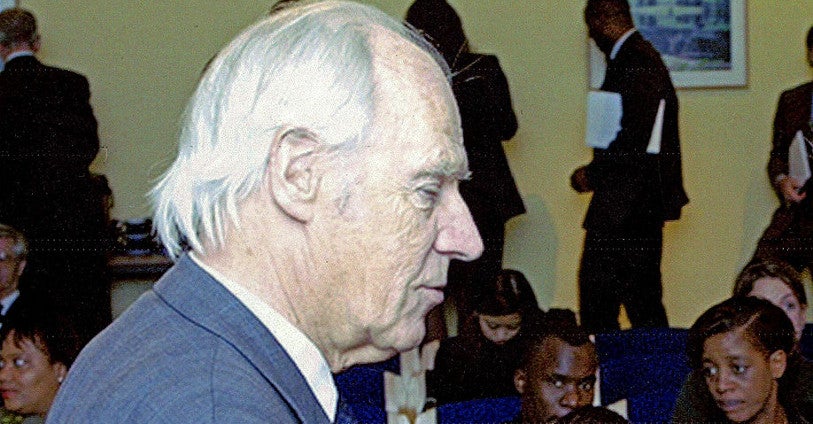 George Martin in 2007




No comments yet...