
Studio & Recording
-

If your current set of studio monitors isn’t able to deliver the deepest bass frequencies or if you’ve been noticing that your productions sound a little too boomy in rooms other than your own studio, then it’s probably time that, rather than upgrade to a pair of bigger monitors, you expand your set-up with a dedicated studio subwoofer. Read on to find out whether a sub is a solid investment for you and how you can optimally set one up.
Comments Off on Studio Subwoofers – The What & Why | in: Studio & Recording -

This might sound familiar: you’re at home trying to record audio using an audio interface, a microphone and some kind of recording software. The signal input meters of the software are barely moving so you turn up the gain, only to then sing one or two loud notes and be immediately confronted with the signal clipping as if possessed by the devil himself. If that does indeed sound familiar, you’ve no doubt asked yourself (and the internet apparently): how loud should I record audio?
-

In the music industry, it can be pretty difficult to get things done. With a long schedule of items to accomplish, productivity and a strong work ethic can often be extremely hard to obtain. In his work as a marketing manager for Moon Jelly Agency for multiple artists it’s Guest blogger Jeroen‘s duty to make sure all the requests of labels, events and the media are taken care of by the artists without them getting overwhelmed by the amount of tasks. A strong work ethic and an efficient workflow are key. So, in this article, we’re going to discuss how to improve your work ethic so that you can achieve your ambitions.
Comments Off on How to improve your work ethic to achieve your ambitions | in: Guest Blogs, Studio & Recording -

Guest blogger Guy Burton shares some points to consider before diving head first into the diverse universe of iPad music apps.
-
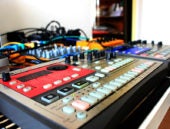
Guest blogger Guy Burton asks us to worry less about the technical details or equipment specifications, and focus on finding gear that fits your workflow, your space, and your personality.
-
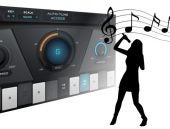
If you’ve spent the last couple of months practising to sing as perfectly as a real popstar, then I’ve got good news and bad news for you. The bad news is that you spent all that time honing ad-libs for nothing, but the good news is that you can actually buy pitch-perfect vocals! Granted, I’m overstating things a little here, but the question stands: is using pitch-correction software like Auto-Tune the invention of the century, or is it just cheating? Let’s dive into the matter and see what kind of exciting stuff you can do using pitch-correction software like Antares Auto-Tune, Celemony Melodyne and Zynaptiq Pitchmap.
Comments Off on Auto-Tune, Melodyne… Is Using Pitch-Correction Cheating? | in: Singer, Studio & Recording -

Ghost production is something that is often frowned upon within the general EDM community. But with artists in other genres considering it to be a routine part of the music business, Guest Blogger Jeroen Hillebrand from Moon Jelly Agency decided to take a look at how being a ghost producer can benefit your career in order to raise funds to achieve your ambitions. At the end of this article, the aim is to remove part of the stigma surrounding ghost production and to teach you methods of making money from it. And for those of you who are unaware, ghost production is essentially an agreement in which somebody pays a producer to create a track, and release under their own name. Typically, it’s done in the form of a flat fee.
-
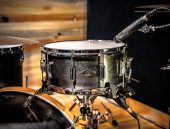
Out of all the instruments that exist, the drum kit is arguably the most difficult to record. Then again, a drum kit actually isn’t a single instrument; it’s a collection of loud percussion instruments that cover the entire audible frequency spectrum. As such, it’s not uncommon to record a drum kit using multiple microphones. In this blog, you can find out which microphones are the best for the job and how you should set them up.
-
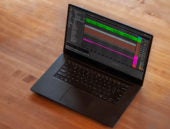
More and more people within the music industry are looking to turn their current endeavors into a full-time job. Whether it’s music production for vocalists, music licensing to TV and radio, or even live touring around the world, there are hundreds of ways that artists can make a full-time income from their career.
Comments Off on 5 reasons why you are not a full-time producer yet | in: Guest Blogs, Marketing & Business, Studio & Recording -

So you’ve been passionately listening to your favourite artists for years, have recently started making your own mixes and now you’re wondering how you can become a professional and successful EDM or pop music producer? Grand! As you know, the world of music production is home to some really big names and teams, so in this blog, guest-blogger Jens Oosterkamp (Jens East) shares some valuable tips and the story of how he started out in his bedroom and is now often approached by acclaimed record labels.
Comments Off on How to Make a Breakthrough as a Producer | in: Guest Blogs, Marketing & Business, Studio & Recording -

To make recordings on your computer, you need software. The natural thing to do would be to turn to a DAW, or digital audio workstation, which is used to produce music with the help of samples and virtual instruments. In the DAW universe, there are a lot of teams claiming they have the best software, and if you’ve never used one before, you might think they look quite complicated. To ease you in, I’ve written this blog that can help you find the perfect beginner DAW.
-
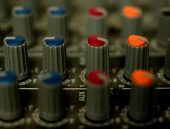
When using effects in your DAW recording software, it’s important to think about the routing. Do you need to sequence the effects as inserts? Does the order matter? And what are the advantages of an AUX send? In this blog, we offer answers to these questions and explain just how to make your music sound just as fat as the last YouTube hit, simply by placing an effect where you usually wouldn’t place it in the effect chain. You might also be glad to know that a lot of what’s discussed here can also be applied to mixing desks.
Comments Off on Mixing with Inserts & AUX Sends | in: Studio & Recording