
Studio & Recording
-
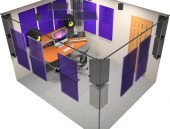
These days, any musician or producer is offered the tools they need to make good audio mixes. Audio interfaces sound more impressive than ever, recording software has never been so extensive, and a solid set of studio monitors has never cost less. But there might be one last thing missing: a great sounding listening and mixing room. Here, I’ll let you in on a few little secrets when it comes to acoustic treatment and where and why you should place any absorption panels and diffusion panels to improve the acoustics and perfectly neutralise the sweet spot. I’ll also explain the part that calibration software can play in setting you up with the perfect listening room.
Comments Off on Get the Best Out of Your Studio Monitors with Absorbers & Diffusers | in: Studio & Recording -
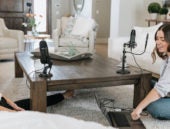
Everyone who’s privileged enough to have access to broadband internet and a fairly fast computer can launch a podcast or even an internet radio station of their own for a relatively small amount of money these days. However, the microphone built into your laptop isn’t going to cut it, and the acoustics of your soon-to-be studio space could probably do with a little treatment too – so read on to find out how you can get pro-grade podcast audio quality on a budget!
Comments Off on How To Make a Pro-Grade Podcast on a Budget | in: Studio & Recording -

A full choir can be seen as an enormous, singular audio source, that sometimes spreads out its sound over tens of metres, making for a pretty unique job when it comes to recording. How do you make sure that every choir member is captured while the choir sounds like a cohesive whole? In this blog, I’ll explain how just two or three cleverly positioned microphones can result in a balanced and clear stereo-recording.
-

While recording an acoustic guitar might sound like a straightforward job, getting a clear and natural-sounding recording can depend on a number of factors. The kind of microphone you use, the way the microphone is positioned, as well as the way the recording space reacts to the vibration of the strings, all play an important role in the final recording.
Comments Off on Recording the Acoustic Guitar: The Basic Rules | in: Guitarist, Microphones, Studio & Recording -
In theory, it’s definitely possible, but in practice it can be a little bit cumbersome. The advantage of using a USB microphone is that you have a great all-in-one setup without needing to use an audio interface. But if you want to use more than one USB mic, things get pretty complicated for your computer. Also, hooking two USB microphones up to a computer kind’ve defeats the purpose of using a USB microphone. But, can it actually be done?
Comments Off on Plug Two USB Microphones to One Computer? Is That Possible? | in: Microphones, Studio & Recording -

Despite the fact that setting up and teaching classes online is easier than ever in today’s digital age, there are lots of tutors, coaches and private teachers who struggle with the audio quality of their live-streams – even when their internet connection is working just fine. Since comprehensible speech is essential for getting any kind of message across, the sound needs to be spot-on. In this blog, I’m going to explain how you can take the audio quality of your online classes to the next level and, no, you don’t necessarily need to invest in a new microphone!
Comments Off on Teaching Online – How to Improve Live-Stream Audio Quality | in: Microphones, Studio & Recording -

There comes a time in every musician’s life when they are forced to confront a mixer for the first time. To the un-schooled user, these chunks of equipment can seem intimidating and complex, and while mixers range from the super-compact to the desk-sized gigantic, all of them are based on the same set of principles and will offer the same basic set of functions and connection options. In this blog, we offer a step-by-step explanation of the ins and outs of mixers.
-
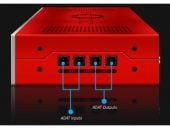
Heads up if you’re an avid, ambitious user or producer working from a home studio. In this blog, we offer you a number of suggestions that can help you expand your current audio interface. If you’re thinking about upgrading, don’t sell it just yet!
-

Headphones are the ideal mixing tool. Any noisy neighbours are silenced, the acoustics of your studio space no longer matter, and you can hear all those little hidden details of the audio. So, if headphones are so great, why do professional studios still use monitor speakers? Is there something wrong with mixing using headphones? In this blog, we explain it all!
-
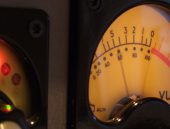
By making a few smart choices when it comes to tweaking the dynamics, any producer or sound technician can pull more impact out of their mix. Here, we offer 5 invaluable volume-boosting tips, and no – none of them involve turning the volume up.
Comments Off on 5 Ways to Make Your Mix Sound Louder | in: Studio & Recording -
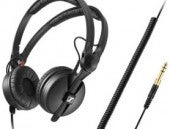
We wouldn’t be surprised if it’s one of the most frequently googled questions: “What are the differences between the various Sennheiser HD 25 headphones?” Sennheiser cleaned up the series a while ago, so it’s about time we put together a clear overview of the differences and similarities between the older and newer versions of this iconic range of headphones.
-

Most people never even think about vocal microphone hygiene, which is okay as long as you’re the only one using the mike. If not, it’s important that you clean your vocal microphone after use to prevent one singer from passing their germs on to the next. In this humble blog, I’ll explain how you can easily clean a microphone yourself.
Comments Off on How to Clean a Microphone | in: Live Sound, Microphones, Musician, Singer, Studio & Recording