
What are virtual analogue and hybrid synthesizers?
Published on Friday 15 May 2026

Virtual hybrid, er… what? Plenty of keyboard players and producers wonder what virtual-analogue and hybrid (i.e. analogue-digital) synthesisers are, and what the difference is. Guest blogger and studio expert Freek Roffel, from Freaky Studio, explains how these VA synthesisers and hybrid synths originally evolved from the ‘pure’ analogue synthesiser. And where does Freek’s preference actually lie: analogue, virtual analogue, or analogue-digital?
Analogue synthesisers
Back in the day, when synths were still in their infancy, manufacturing was pure hand-crafted work. Inside you’d find circuit boards with resistors, transistors and capacitors. Without going too deep into the tech, you can imagine that with an analogue instrument you’re sending electricity through those components. When you twist all those lovely knobs, you affect the current and the sound changes. But by the early nineties, almost everyone was crazy about samplers and “digital” was the buzzword. The analogue synthesiser faded into the background, partly due to the bankruptcy of a few major pioneers. After the hype that everything simply had to be digital, musicians discovered they sometimes missed ‘something’ that the old analogue boxes did have. Before long, the dinosaurs of the keyboard world became eye-wateringly expensive.

Prophet 5 circuit board detail (photo: Freek Roffel)
Virtual analogue (VA) synthesisers (analogue modelling)
The renewed demand for analogue sound was no longer easy to meet, often because the components used back then were no longer available for mass production. Around 1990, a number of manufacturers started working on virtual synthesis, with the analogue approach getting most of the attention. As processing power increased dramatically, programs—software, in other words—were written. These mimicked the characteristics of old resistors and other components. The best-known is probably the Nord Lead, but Yamaha and Korg were also working at the time on the Oasys and VP-1, which could handle multiple virtual synthesis types. However, they were so expensive that they never made it to the commercial market. These days I often get asked why I have so many synthesisers—something I firmly deny, of course. The answer: every device has its own character. Capturing those special traits proved quite tricky in the early days of VA synthesisers, although the Arturia Origin and Creamware Noah came very close. Some manufacturers took their own route with their virtual-analogue models, such as the Nord Lead and the Access Virus: not trying to copy one specific model, but creating a synthesiser with an analogue character.

Hybrid synthesisers (analogue-digital)
Because sound processors quickly reach their limits, many early VA synths were four- or eight-voice (polyphonic). That’s often not enough if you want to gig or impress your neighbours. Plus, a VA simply can’t imitate a piano very well, which is why sampling (digitising sound into the memory of such a device) remained popular. By then, musicians had already got used to that new analogue sound again—and the hybrid synth had already been conceived back in the 80s. With a digital-analogue synth like this, you start with samples or other digital sources, such as a digital oscillator, and you also use real analogue filters. If you run a sample through such a filter, you’ll hear a different sound than if everything stays purely in the domain of ones and zeros. Relatively cheaply, you get a synthesiser with far more voices—and if you want, you still get that analogue character. In the 90s the Waldorf Q+ came out, and more recently synthesisers like the Roland JD-Xi and JD-Xa, which offer a great deal, by the way.
Hardware or software?
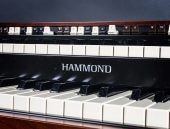
In general, I’m more inclined to choose hardware: a nice bit of kit with keys, flashing LEDs, you name it. The only question is why some musicians swear specifically by analogue. I notice that vintage synthesisers of the same brand and model often sound different. That usually comes down to the condition of the components. The interaction between the parts affects the overall sound. Modern analogue synths are built a bit more ‘neatly’, with new, fresh components, and therefore tend to sound more similar to each other. The clearest example is the tonewheels of a Hammond organ: there you can immediately hear that one sound generator influences the other. Modern synths often have settings to simulate that messy character. But you can do brilliant things with software too. Some packages are eerily accurate imitations of incredibly expensive vintage synths, while others produce sounds no hardware synth could ever manage. So you’ll have to search for what you want. With a VA, by the way, you’ll run out of voices less quickly than with a hybrid (if you want to use the analogue filter), but modern hybrids have enough polyphony to do beautiful things with digital filters too. Where you used to hear glitches while turning knobs, that’s long gone nowadays. On top of that, most musicians can now work with good effects and recording options—so even simple synths can sound heavenly.
My question to you is what you still feel is missing in terms of synthesis. What would your dream synthesiser need to do? What would it sound like? I’m curious!





No comments yet...