
Electric guitar or bass guitar: which instrument suits you best?
Published on Tuesday 13 October 2026
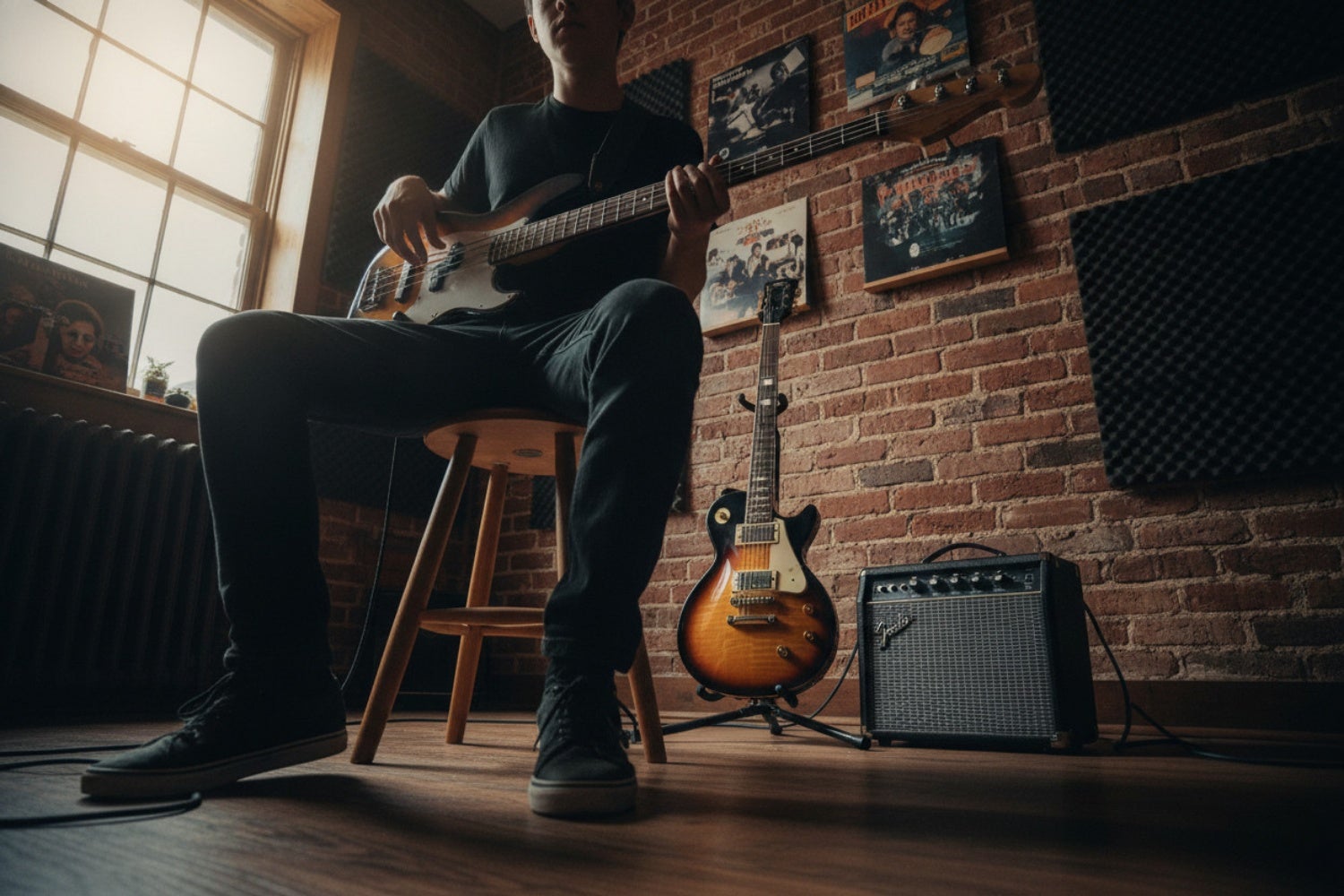
Starting out on electric guitar or bass guitar? At first glance they look like family: four or six strings, a neck with frets, an amp behind them. But in a band, they do something completely different. ‘Which instrument is the easiest to start on?’ isn’t really the right question, because guitar and bass both have their own technical challenges. The real question is simpler than you think: what do you think is cool?
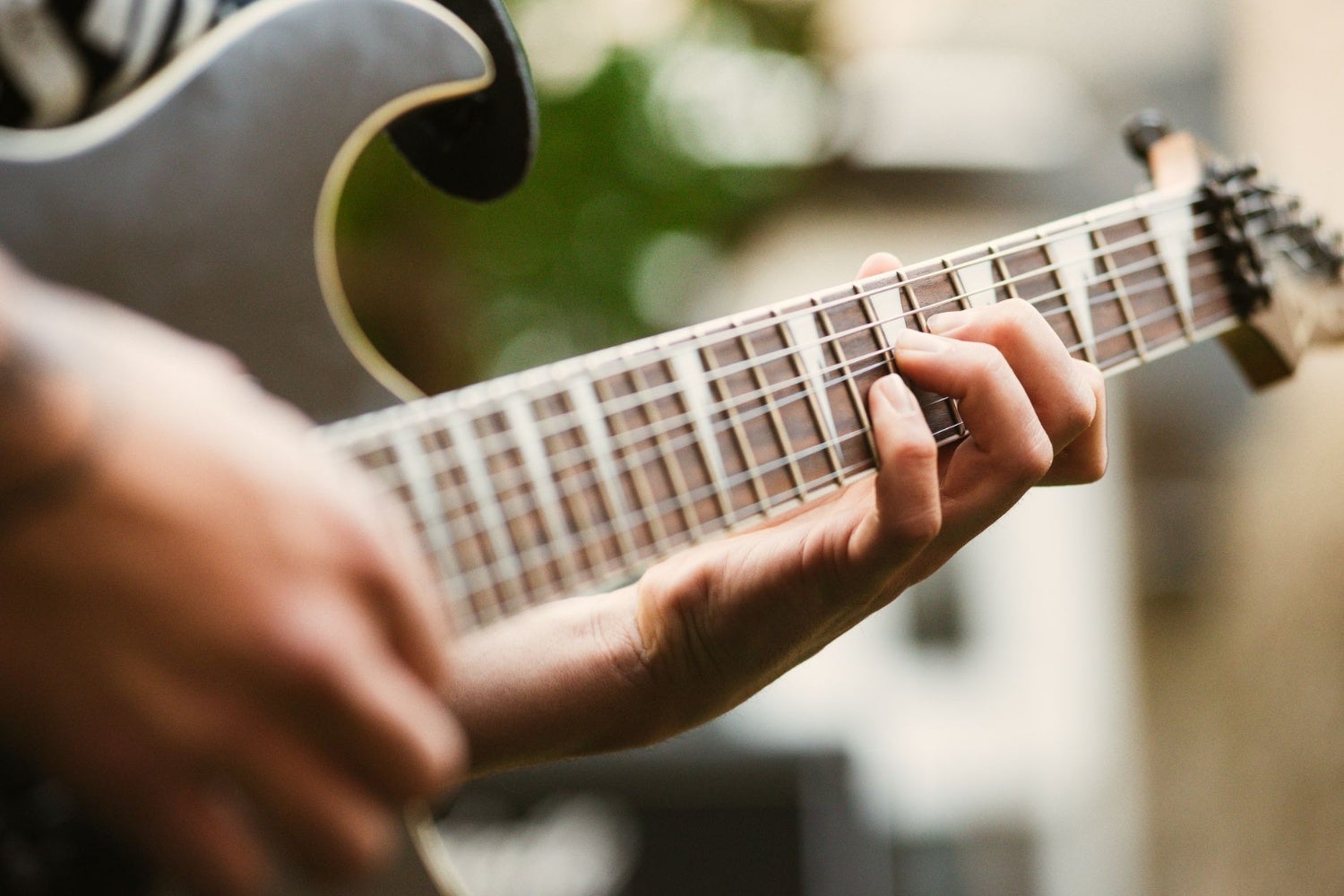
Electric guitar
Which instrument suits you?
#1. Who do you focus on when you listen to music? If you find yourself listening out for the guitar riffs in every song, you probably already know the answer. Or are you more the type who loves the driving power of the drums and bass?
#2. Do you mainly want to play at home, or join a band as soon as possible? At home, a guitar is more self-sufficient: chords and melody come from a single instrument, so a song sounds complete even when you’re playing on your own. A lone bass line, on the other hand, sounds a bit bare, so you’ll soon find yourself wanting a band (or a backing track).
#3. What about your hands? The bass is bigger and the frets are further apart. That’s the challenge at the start. Tip: if you have small hands, try a short-scale bass before you write the instrument off.
But the most important rule is simply this: what gets you excited? If you see and hear a musician play and you can’t wait to pick up that instrument yourself, you’ve got your answer.
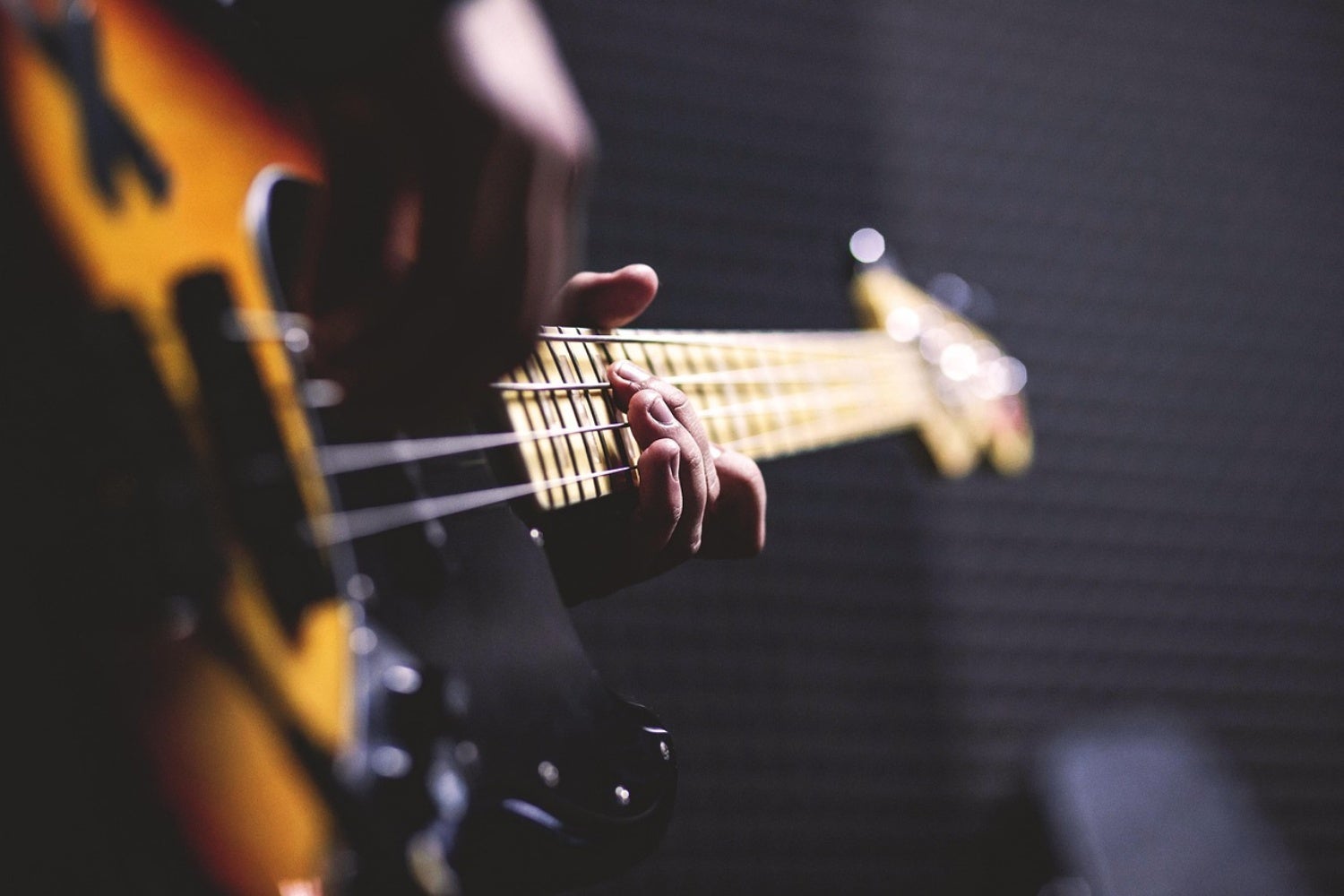
Electric bass guitar
The roles in the band
In a band, guitar and bass do very different things. The bass guitar forms the foundation together with the drums, known as the rhythm section: a good bassist locks their notes in with the kick drum and gives the band a floor to stand on. The guitarist plays the chords, the melody and, when the moment calls for it, the solo on top of that. Think of it like a football team: the striker is the star (the guitarist), but without the defensive midfielder (the bassist), the match would never have amounted to anything.
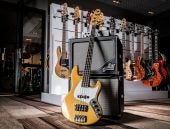
You can see and hear that difference in the instruments themselves. A bass usually has four strings, tuned E-A-D-G. Incidentally, that’s the same tuning as the four lowest strings on a guitar, only an octave lower. So they’re clearly related. The guitar has six strings: E-A-D-G-B-E. Because of the bass’s low notes, its neck is generally longer, which makes the whole instrument bigger.
So the question isn’t which instrument is cooler, but which place in the band you want to take. Do you love standing at the front with a riff the whole crowd sings along to? Or do you get a kick out of feeling the entire band lean on your notes?
» View all bass guitars
» View all guitars

Difficulty and learning curve: quick start or long build-up?
The first few weeks are usually kinder on bass guitar. A simple bass line often consists of root notes, with one note on every beat. On guitar, you first have to get chord shapes into your fingers, and then play them without any strings buzzing or sounding dead. That usually costs a beginner guitarist more time and more sore fingertips.
Physically, though, the bass asks more of you. Because the frets are further apart, you don’t spread your left hand across four frets as you would on guitar, but across three. For this, you use the 1-2-4 pattern (also known as the Simandl method): your index finger, middle finger and little finger each take one fret, while your ring finger supports your little finger and rarely gets used on its own. You can pluck the strings with your fingers or with a plectrum, whichever you prefer.
Further down the line, it becomes a different kind of difficulty. A good bassist stands out through timing and restraint: the real skill lies in playing fewer notes, at exactly the right moment. Too many notes is the classic giveaway of a guitarist who’s just picked up a bass. The guitarist, in turn, has to get bends, vibrato and fast changes sounding smooth.
» Bass guitar technique for beginners
» Learning to play guitar chords for beginners
How much does it cost?
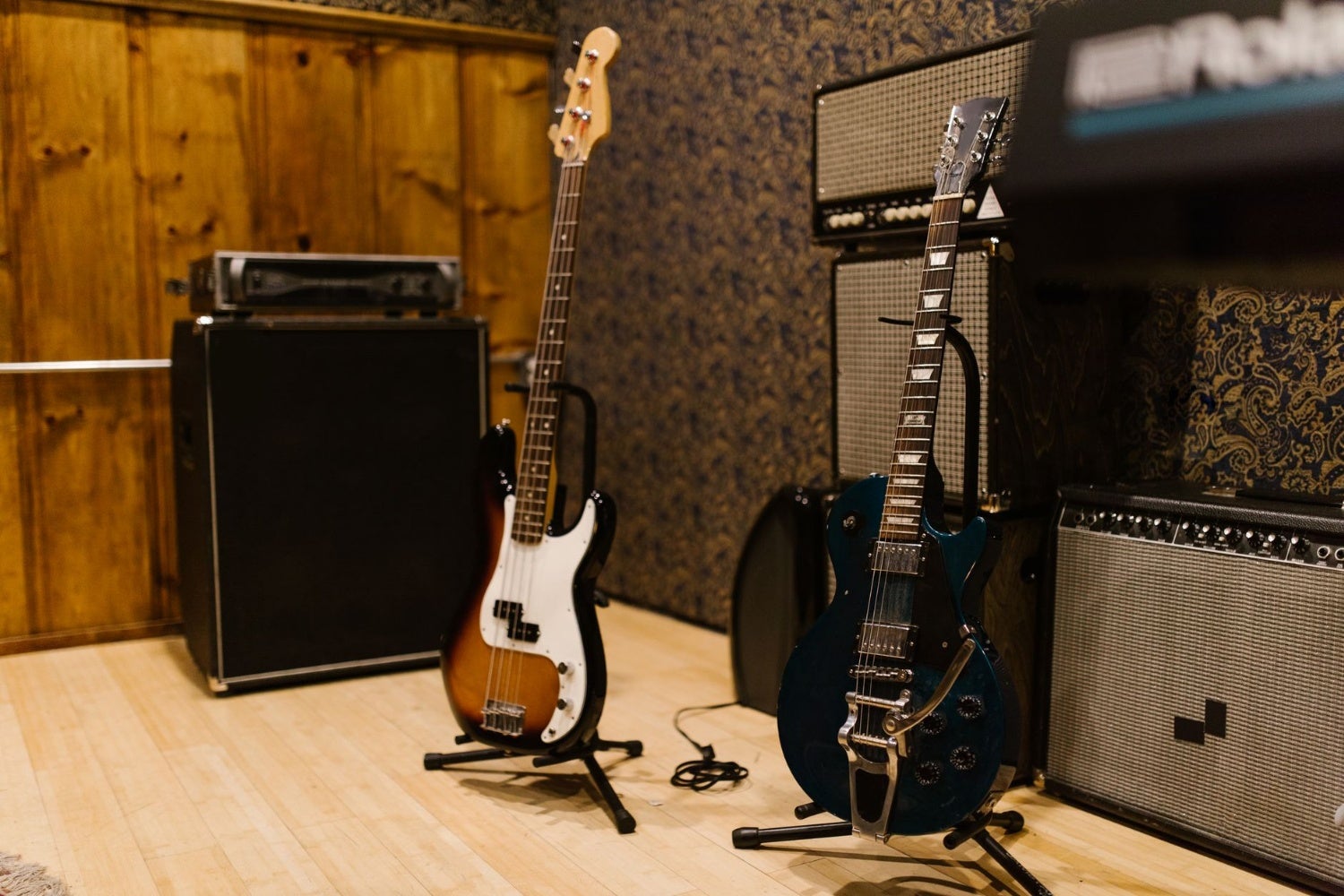
In terms of gear, an electric guitar and a bass are much of a muchness: in both cases, you need the instrument, an amplifier, a cable, a strap and a tuner. If you opt for an acoustic guitar, you won’t need an amp or a cable.
For beginners, there are plenty of starter packs that put all of this in one box. When comparing them, pay particular attention to exactly what’s included in the pack: a tuner might seem like a minor detail, but you’ll be using it regularly. Your first set doesn’t have to be expensive either, because these days even budget instruments are far from toys.
» View all guitar starter packs
» View all bass guitar starter packs



No comments yet...