
Cajón or djembe: which hand drum suits you?
Published on Thursday 15 October 2026
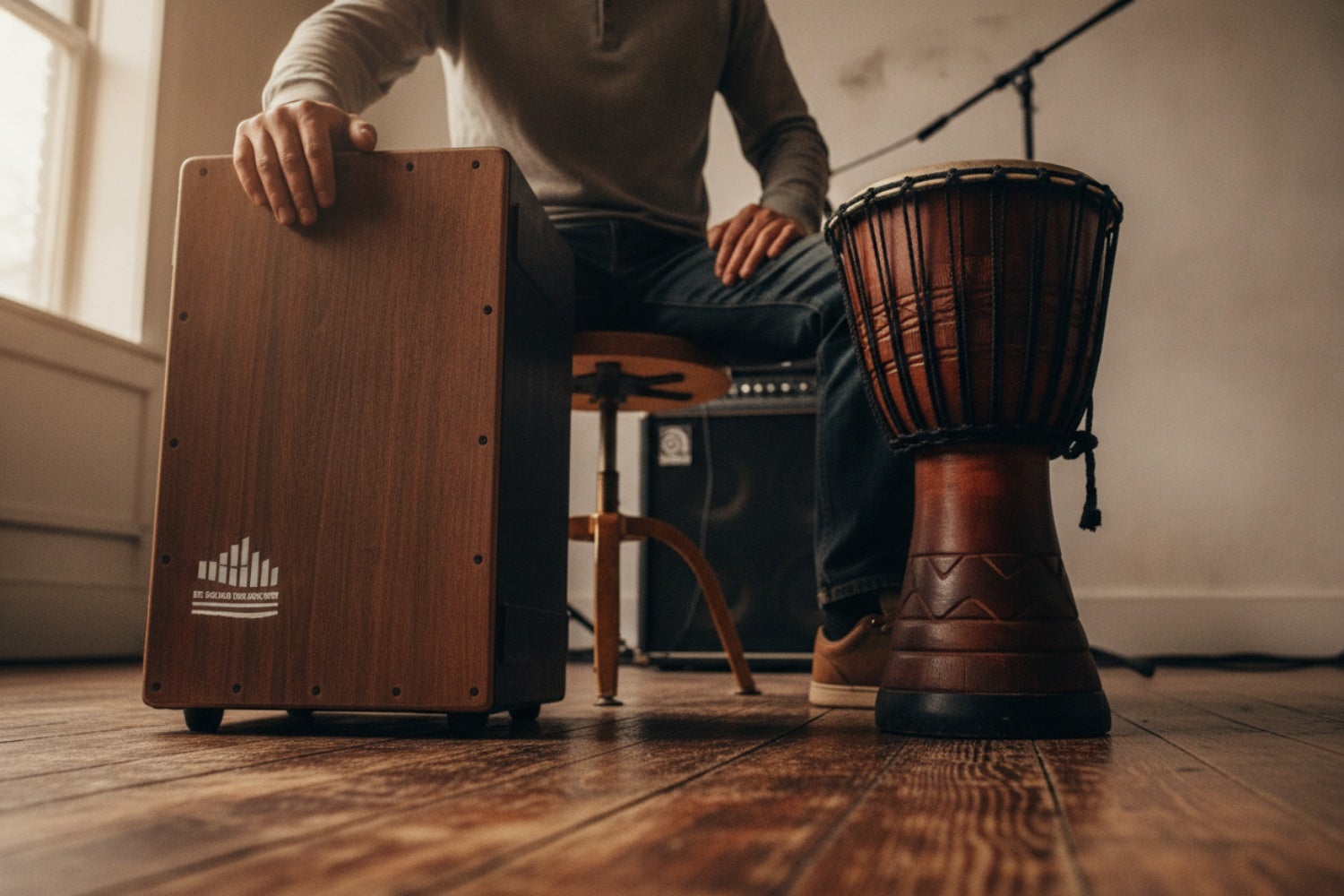
Cajón or djembe: the two most popular hand drums, yet very different beasts. One is a wooden box, the other a hollowed-out tree trunk with a skin stretched over it. Which one works best for a band, a campfire or lessons? I own both a djembe and a cajón myself and use each for different purposes.
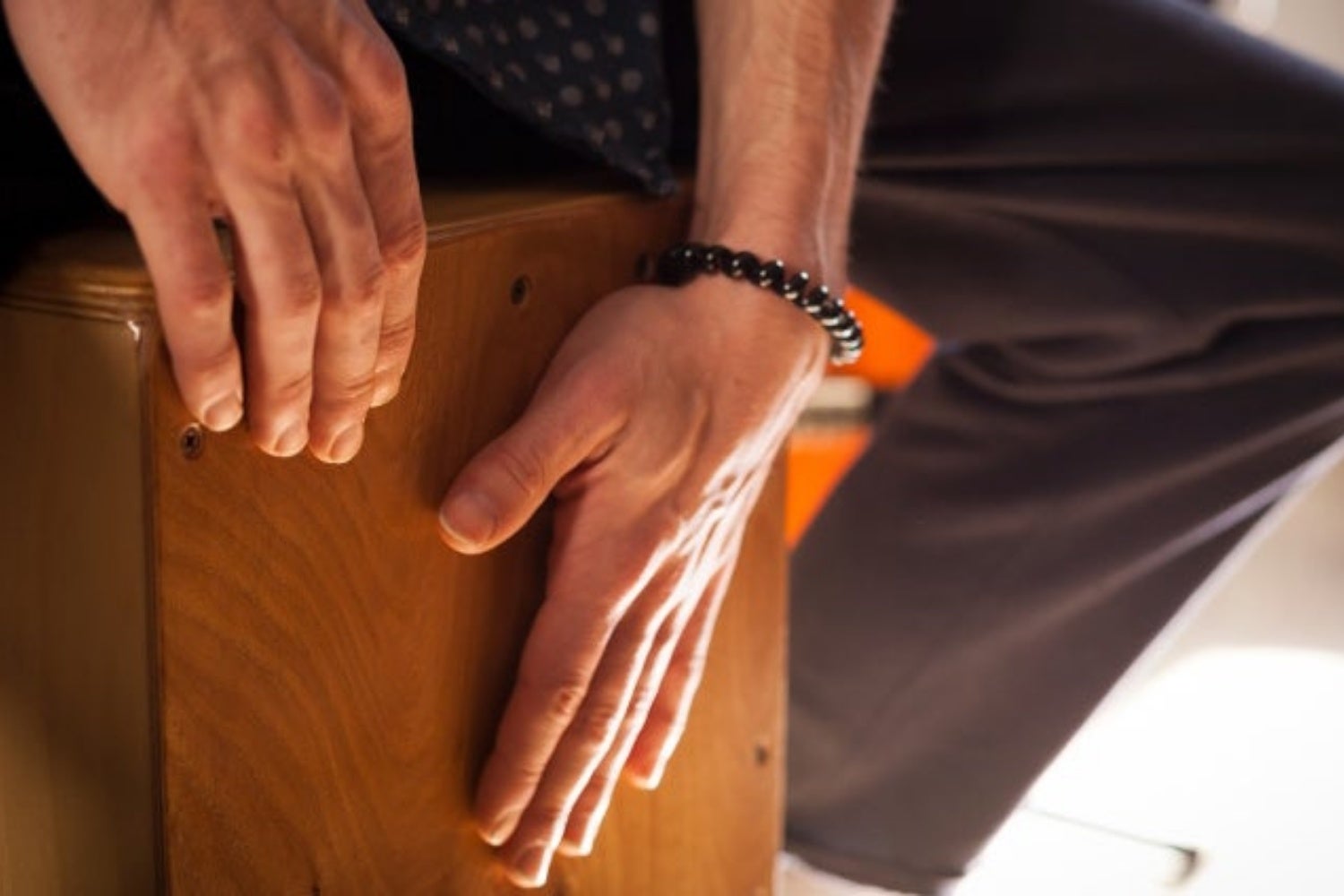
Cajón
A box and a tree trunk: sound and origins
Cajón is Spanish for box, and that’s exactly what it is. The instrument comes from Peru, where enslaved people beat out their rhythms on whatever crates were to hand. Strike the middle of the playing surface and you’ll hear a deep bass tone, almost like a kick drum. Tap near the top edge and you’ll get a sharp, snare-like crack. There’s a good reason musicians call it a drum kit in a box.
The djembe comes from West Africa, from the Mandinka region around Mali. Traditionally, it’s a hollowed-out piece of hardwood with a goatskin head, pulled taut with rope. These days you’ll also find fibreglass bodies, synthetic heads and bolt or cable tuning. Wood sounds fuller and warmer, while fibreglass sounds tighter and louder.
And that brings us straight to the big difference. The cajón is the pair of jeans of the percussion world: it goes with pretty much everything, from flamenco to singer-songwriter and from pop to world music. The djembe is more like a bright orange coat. It certainly gets you noticed, but according to experienced players it sounds a little African in an acoustic pop band. Sometimes that’s the whole idea, sometimes it isn’t.
» View all djembes
» View all cajóns
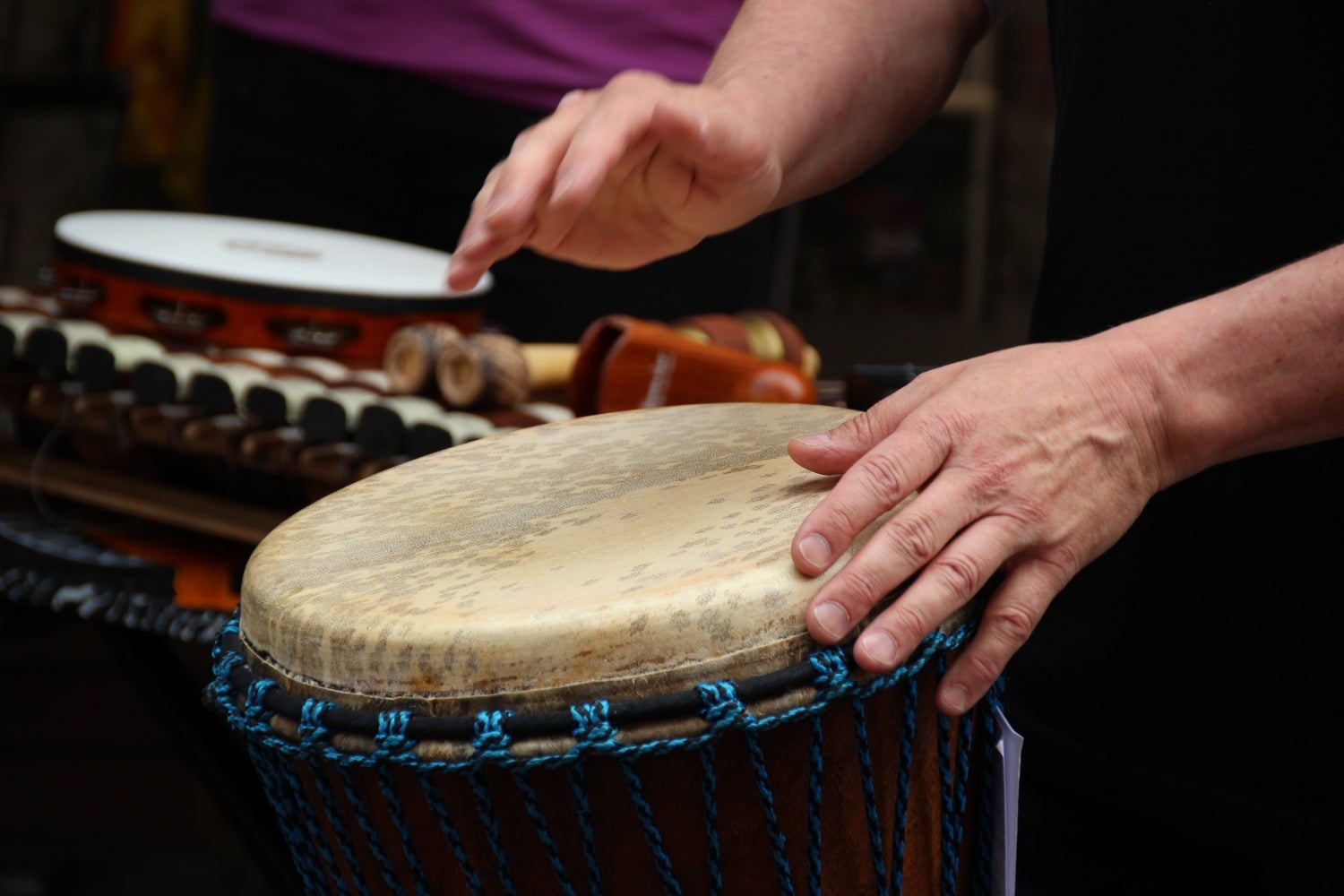
Djembe
Playing technique and learning curve
You play a cajón sitting down, with the playing surface between your knees. Tilt it back slightly: that way the angle of the playing surface better matches the natural position of your arms and back. You’ll find the bass tone in the middle and the slap at the top edge. Fifteen minutes of practice and you’ll have a basic beat down.
You play the djembe with your hands, either sitting or standing, and that’s where the real work begins. A clean, clear stroke doesn’t come easily: hit it slightly wrong and it sounds dull, or your hands turn red after ten minutes. The djembe world is split into two camps: purists who only play West African rhythms and musicians who use it for anything and everything. Both say the same thing: start with the West African tradition, because what you learn there will serve you everywhere.
Want something usable quickly for next week’s rehearsal? Then you’re best off with a cajon. Would you rather spend a few months working on your hand technique for an instrument that carries to the furthest corners of the room? Go for the djembe. You don’t need to read music for either.
» How do you play the cajon?
» Learn to play cajon rhythms – The basics
Volume and versatility: band, campfire, church and lessons
When it comes to power I can keep it short: the djembe wins. A soloist can easily be heard above an entire percussion ensemble, and even on a stage without microphones it comes across better than a cajón. The cajón is more modest, and in a living room or alongside a gentle guitar that’s more of an advantage than a drawback.
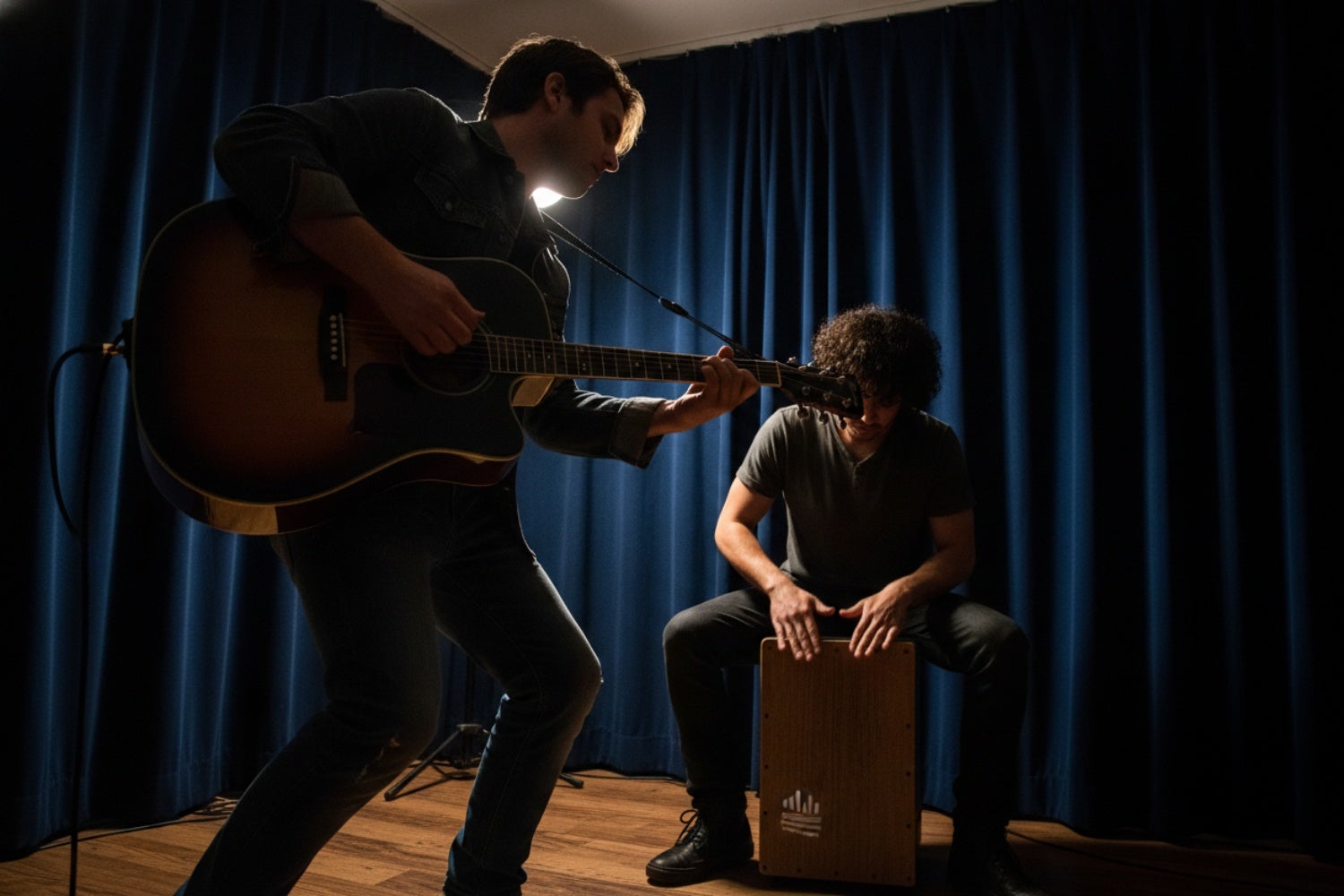
In a band the story is reversed. For light acoustic pop or rock gigs, most experienced percussionists reach for the cajón, because it takes over the role of the drum kit. Play alongside a singer-guitarist and nobody misses the drummer. The djembe only works there if you deliberately want that African sound.
Around the campfire you’ve got plenty of noisy people and a crackling fire. A djembe cuts through all that with ease, you can play it standing up and it invites everyone to clap along. A cajón, on the other hand, sounds disappointingly weak in that kind of setting.
What about church services? A cajon sounds like a simplified drum kit: a deep bass in the middle (like a kick drum) and a snare-like crack at the edges. That makes it a great fit for modern worship songs, which are essentially pop songs at heart. You can also control the volume nicely, which comes in handy in a church with lots of reverb.
And then there are group lessons. The djembe is, at its roots, a true group instrument. Traditional rhythms consist of several interlocking parts: one group plays a basic pattern, another a counter-rhythm, and the teacher plays solos or signals over the top. Even when everyone is playing simple parts, it already sounds fantastic, and that’s hugely motivating.
» Drummer and percussionist in a band – How to work together
Bongos
Bongos
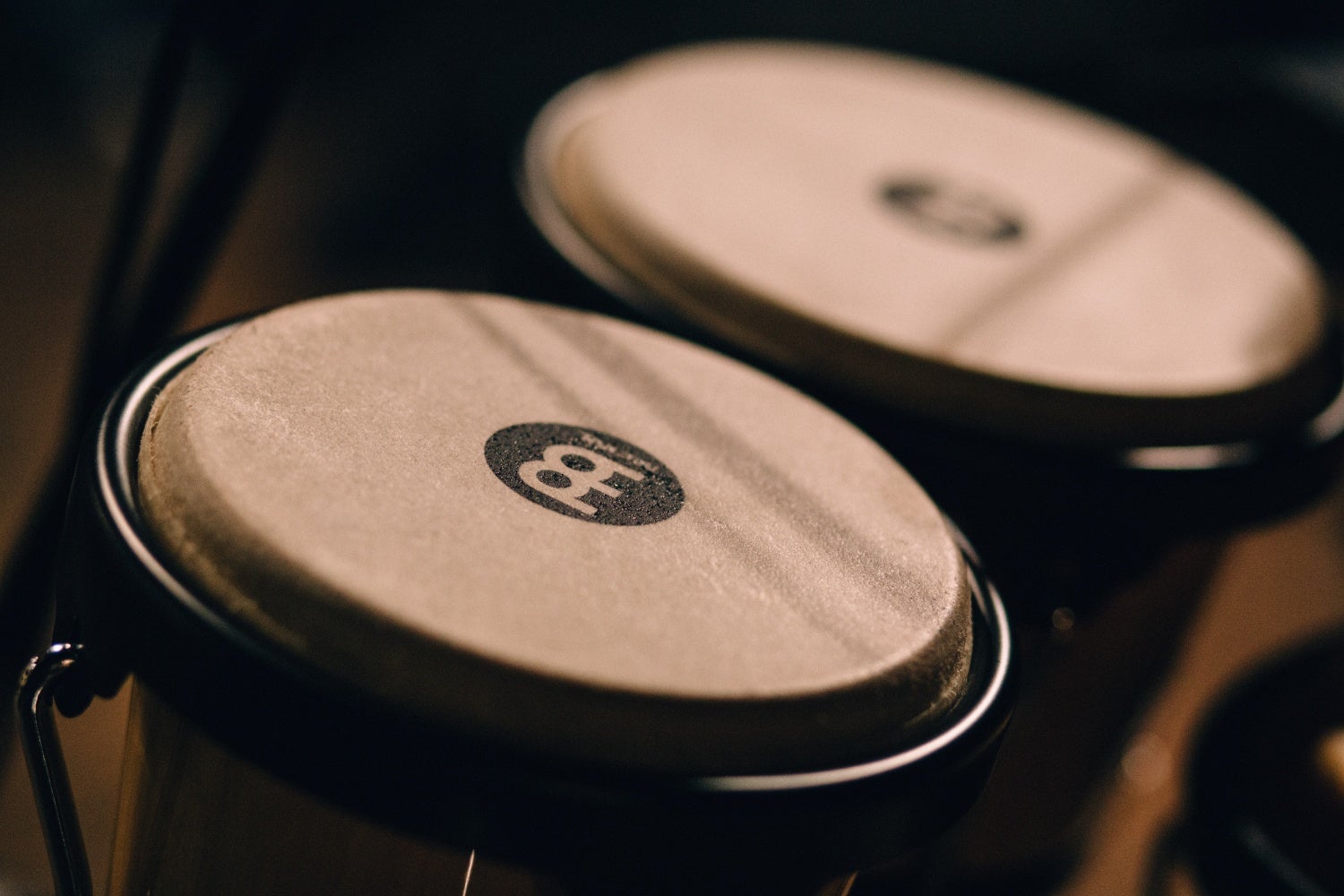
Bongos are two small drums joined together, which you clamp between your knees. They come from the Afro-Cuban tradition and belong to salsa and related styles. The sound is high and punchy, with very little bass. That makes them more of an addition than a replacement: great alongside a cajón or in a percussion section, but on their own they won’t carry an acoustic band.
» Try the Interactive Cajon Selection Guide
» View all bongos
» Which percussion instrument is best for me?




No comments yet...