
Drummer
-

While I write this, I’m browsing Spotify for different drum sounds. Take the new Lamb of God album, You Got Me from The Roots and Get Lucky by Daft Punk. All of them feature incredible drum mixes and all of them have a completely different sound. This alone makes it pretty clear that this blog could never provide a one-size-fits-all manual to mixing drums. What it can do is offer a few tips and techniques to help you lay down a good and solid drum sound that can work as a foundation for your unique mix.
Comments Off on Mixing Drums – 6 Tips for Getting a Solid Foundation Sound | in: Drummer, Studio & Recording -

Performing out in the open can be challenging when it’s windy. Not only can wind literally carry the sound of the band in the wrong direction and make it harder to hear, but a light gust can easily send your sheet music flying. Luckily, there are a few simple solutions to tackle the latter, no matter what kind of music stand you use.
-

It’s a classic issue in the life of drummers. You hit the smallest, highest pitched tom and your snare makes a buzzing sound in response. Even when you try to dampen the snare with a bit of tape, a slip of paper or card, or even a tea towel, the snare wires still vibrate when you don’t want them to. So, how does this even happen and how can it be solved?
-

Since we get so many questions about it, it’s about time we tackle an age-old debate in drum-land with a dedicated blog about bass drum holes. The question is: should your resonant head have one and why (not)? Allow me to explain!
-
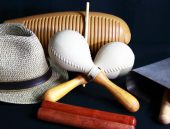
The world of percussion is home to a near-infinite range of unique sounds, yet many pop and rock musicians seem to pay it no mind. Maybe it’s because they don’t know their way around percussion gear, or perhaps they simply don’t know how to put any to good use. Either way, since rock and pop music can benefit greatly from percussion in terms of rhythm, melody and even harmony, here’s a list of seven solid percussion instruments along with a quick rundown and examples of well-known tunes they feature in.
-

If you’ve already checked out our Bass Drum Pedal Buyer’s Guide and want to learn even more about kick drum pedals, then this in-depth blog is the next logical step. Once you know exactly what the beater, footboard, spring tension, chain-drive and cam do, adjusting or upgrading your kick pedal will be much easier.
-

What’s great about drumming is that you can hone your skills without having access to an actual drum kit – something that doesn’t fly if you’re a violinist, trumpeter or guitarist. In this blog, I’ll provide an overview of all of the drumming-without-a-drum-kit options out there, ranging from air drums, tabletop kits and practice pads to fruit crates, travel cajons and your own body.
-

While a drum kit without cymbals can happen, you’re unlikely to actually come across one, and there’s a very good reason: treble. Without the cymbals, the low-pitched, mid and bass-heavy sound of any drum kit will start sounding colourless and bland within eight bars. The cymbals also play an essential role when it comes to communicating timing and transitions with the other band members. Here, we’ll take a brief look at drum kit cymbals so you can get to know what they sound like, what they’re for, and what you can do with them.
-
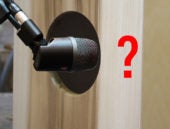
Back in the eighties, the first cajons started to appear in western pop music, causing an entire generation of sound engineers to scratch their heads in confusion. In the time since, plenty of proven methods have been developed to amplify and record the cajon, and here, we explain them all – so both sound engineers and percussionists can get the best out of this versatile beat-maker.
-
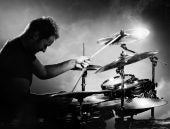
Ask a few drummers how to set up a drum kit, and you’ll immediately notice a trend: none of them have the same answer. Any drummer’s setup is, of course, an incredibly personal thing simply because, as you grow as a musician, you quickly get to know what works for you and what really doesn’t. What all drummer’s will have in common, is the need for an ergonomic setup. In other words: a setup that allows you to get the most out of your kit without sacrificing too much in terms of efficiency, comfort and… well, your health. And that’s exactly why this blog exists: to serve as a short and neat guide to achieving an ergonomic setup.
-
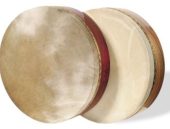
From the bendir: an East and North African drum that’s been going for centuries and is still played today, to the bodhran: a traditional Irish drum which some music historians posit is a distant cousin of drums like the bendir, frame drums or hand drums in their various different forms are an integral part of vastly different folk music from all over the world.
-
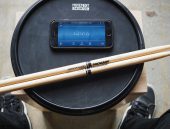
In this blog, guest-blogger and drummer Wietse Hendriks shares some of knowledge on drumming in irregular timings, like 5/4 and 7/8. Wietse explains how to count along and, most importantly, how to master the skill as a drummer – examples, explanations and drum exercises included below!