
Does the colour or finish of a guitar affect its sound?
Published on Tuesday 29 September 2026
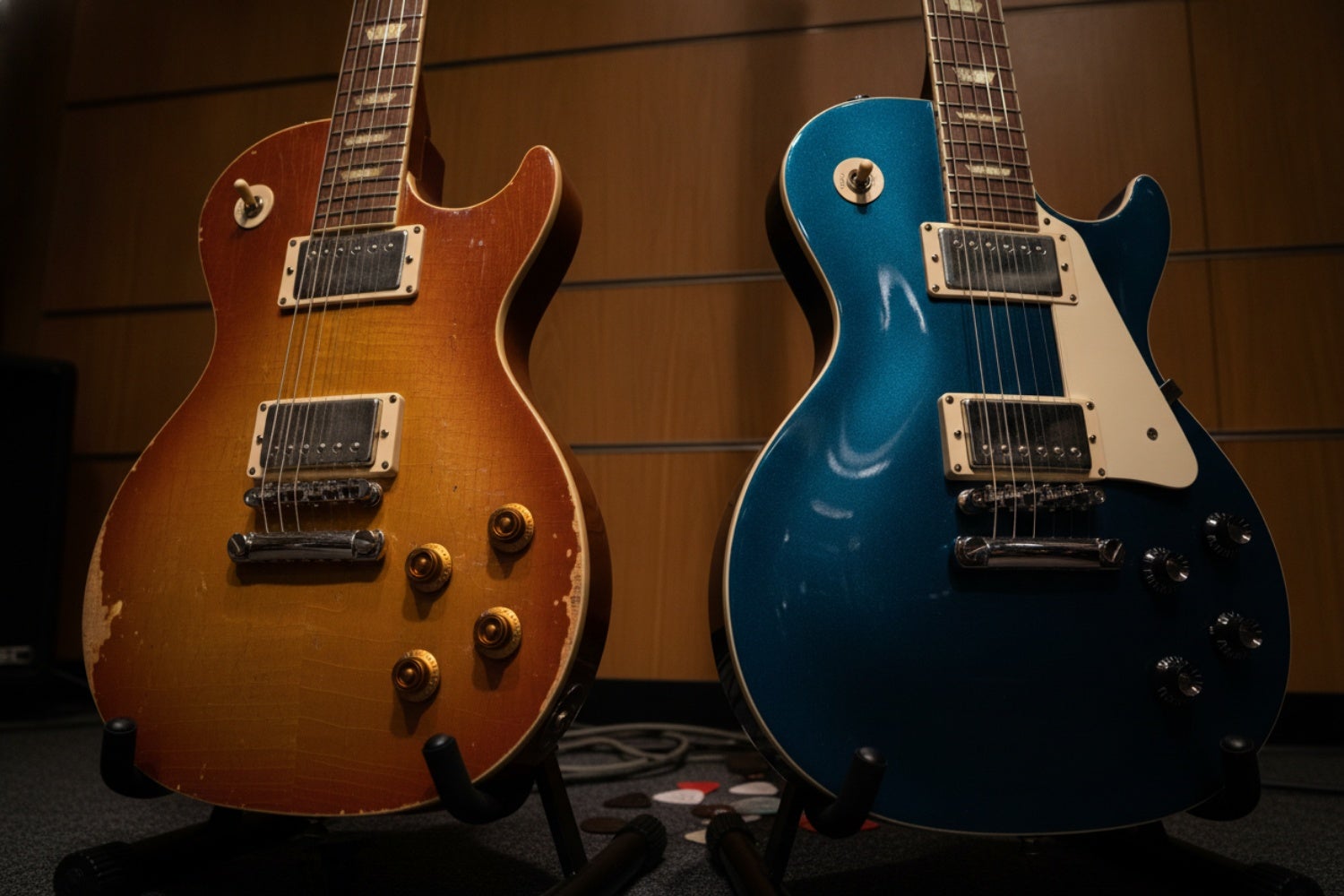
The colour of a guitar has no effect on its sound, and the finish has only a slight one at most. That difference is so small and so disputed that you’re better off choosing on looks, feel and how the guitar ages, especially with an electric guitar. Even so, the debate between nitro and poly fans has raged on for decades. There’s a grain of truth in it, just not where you’d expect.
Colour is a coating, not a source of tone
I have to confess that I chose my first electric guitar purely on colour: it was red, and that was enough. Looking back, it made no difference to the sound whatsoever. The colour sits in the finish or in a stain that soaks into the wood. The pigment is part of the finish, not a separate layer that does anything to the sound on its own. What guitarists and builders do argue about is the finish that colour sits in: the type of finish and how thick the coat is.
What a finish does to vibrating wood
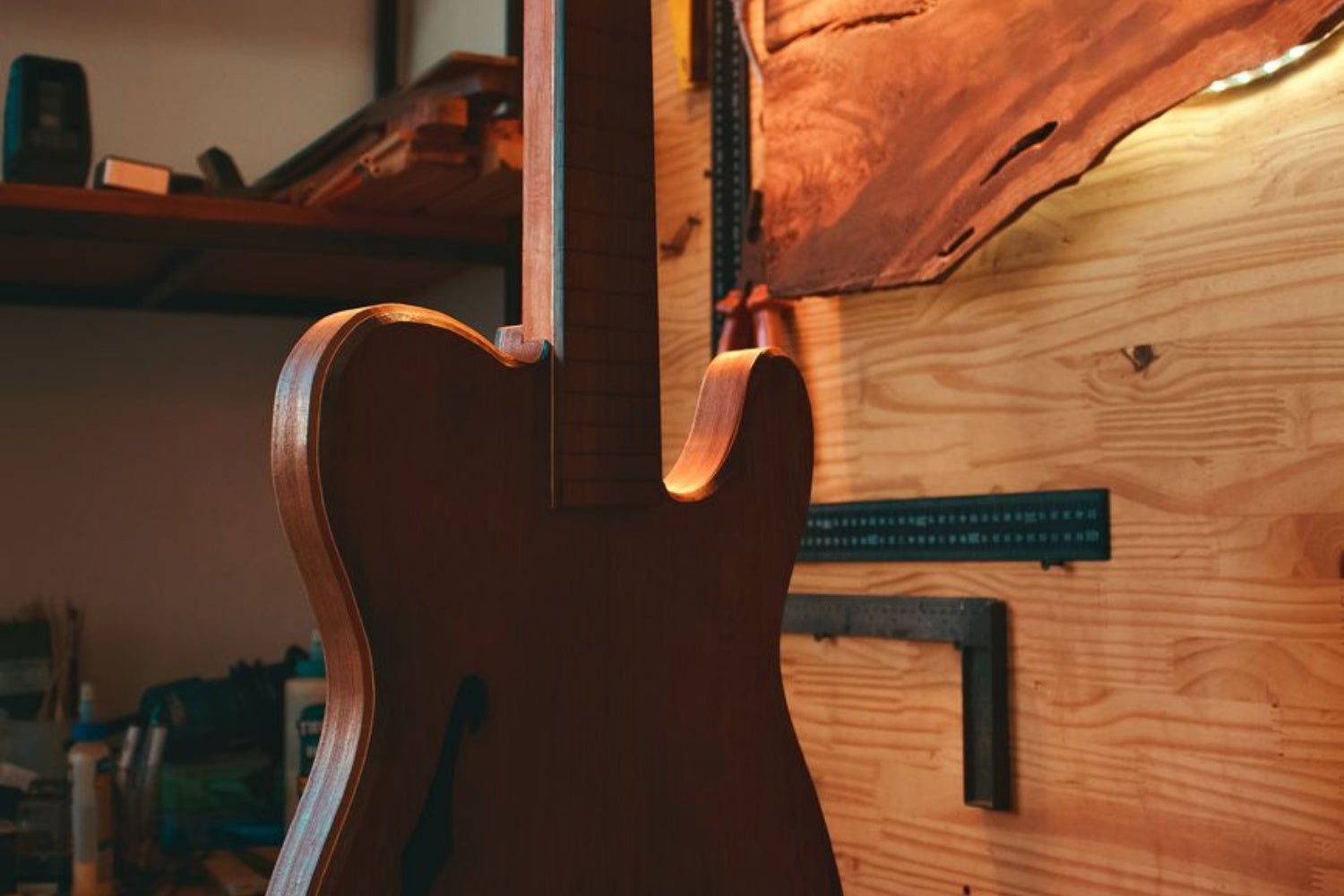
Tap a wine glass with a spoon and you’ll hear a clear tone that rings on for a long time. Rest a finger against it and the tone dies away more quickly. That’s roughly how a finish works on wood: every coat adds a bit of mass and dampens the vibration slightly. Acoustic guitar builders have known this for a long time and take it into account when finishing their instruments.
It’s been researched, too. In a published study, strips of spruce, the wood you’ll often find on the top of an acoustic guitar, were treated with a sealer and various finishes, including shellac and nitrocellulose. Researchers then measured the frequency at which the strips resonated and how quickly that vibration decayed. The finish turned out to have an effect on both.
However, the biggest uncertainty in the measurements wasn’t the type of finish, but how thickly and evenly it had been applied. A good finisher looks for the balance where harsh (often high) frequencies are tamed with as little loss of overall resonance as possible. Coat thickness and craftsmanship therefore matter at least as much as the type of finish. One important caveat, though: this concerns the thin tops of acoustic guitars, not a solid body.
Nitro and poly: the real difference lies in ageing
Nitrocellulose is the classic finish of vintage guitars. It’s an evaporative lacquer: the solvent evaporates and the coat dries. Over the decades, nitro becomes duller and harder, and fine cracks start to appear. Polyurethane and polyester cure chemically and are ready within a few days. These reactive finishes are considered more durable, and a guitar with a poly finish still looks almost new after years.
That makes nitro behave a bit like a pair of jeans: where your arm rests or your belt rubs, it wears through and picks up character. Many vintage enthusiasts attribute part of the sound of old guitars to that aged finish. That’s a belief, not a proven fact. A sixty-year-old guitar also differs from a new one in other ways, such as the pickups and hardware of the era.
A clear-cut difference in tone between finish types has never been demonstrated, and even builders refuse to rank finishes by sound. Fender generally uses a polyurethane finish on its guitars, and that certainly hasn’t made those instruments any less popular.
» View all guitar care products
» Guitar maintenance: wood conditioning, temperature and humidity
With an electric guitar, you can choose on taste
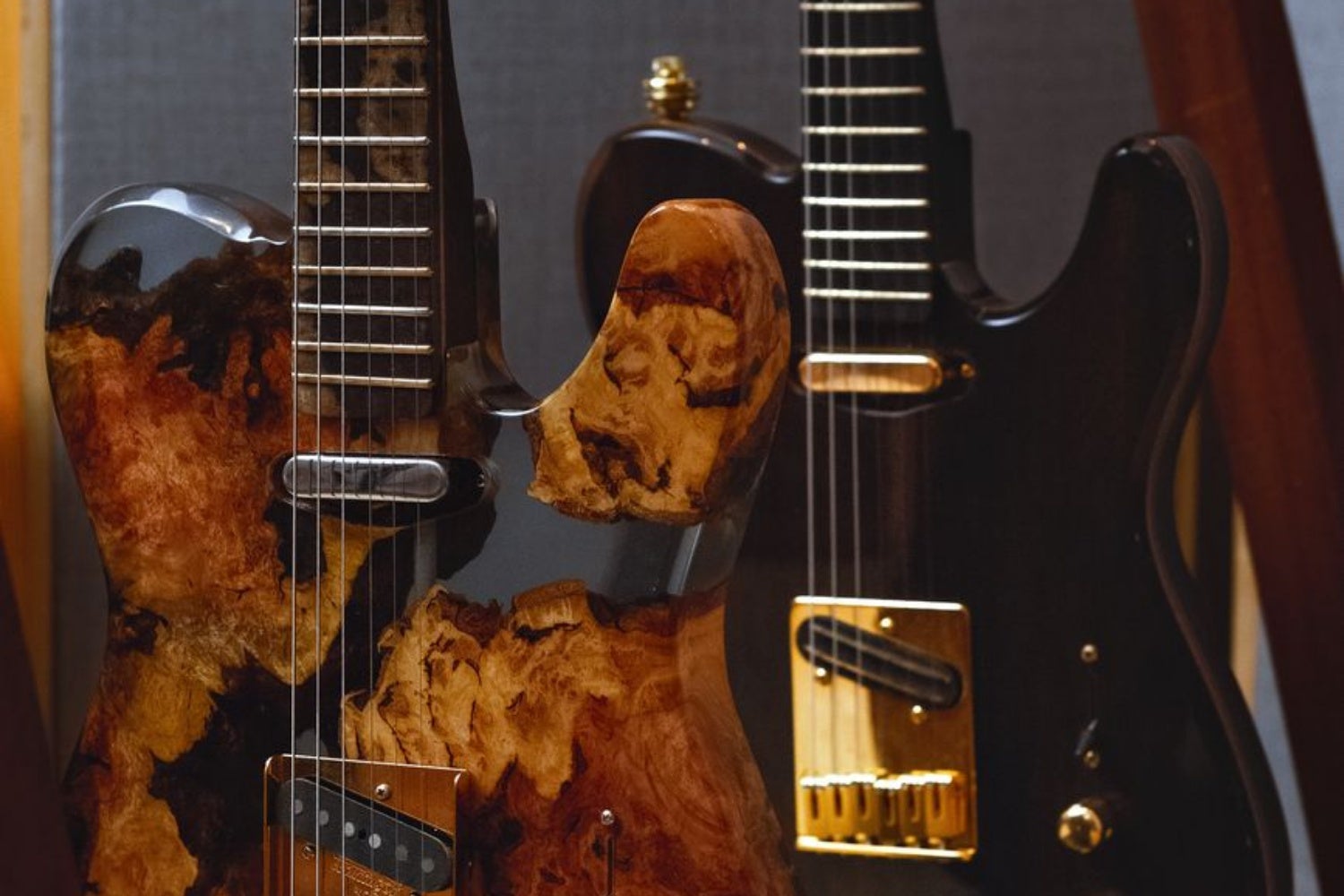
With a solid-body guitar, things work differently. The strings vibrate above the pickups, which capture that vibration and send it to your amp. The wood plays a part, but not nearly as directly as the thin top of an acoustic guitar. What’s more, there are no reliable test results showing an audible difference between finishes on electric guitars.
My advice: choose your electric guitar based on what appeals to you. If you love a guitar that grows with you and develops wear marks, nitro is the one for you. If you want it to still look immaculate in ten years’ time, poly is the way to go. And if you really want to shape your tone, look at pickups, strings and your amp. They have far more influence on your sound than the colour of your body.
» View all electric guitars
» 5 ways to make your electric guitar even better right now
 The Electric Guitar: History, Sound and Playing Techniques
 Want to turn LPs into MP3s? Here’s How to Digitise Your Vinyl
 How to Breathe: For Vocalists & Musicians
 “Why Doesn’t My Guitar Stay in Tune?” – The 10 Usual Suspects
 Playing Keys in a Band: What You Need to Know
 Acoustic or Electric Guitar? Where’s the Best Place to Start?
No comments yet...